

It began like any ordinary school morning in Istanbul’s Basaksehir district. Children aged ten to thirteen were settling into their classrooms at Seyh Samil Imam Hatip Secondary School, chatting, opening their books, preparing for another day of lessons and friendship. Then, just before nine, a girl in a school uniform arrived at the gate. She was fifteen years old, a pupil at a different school in the neighbouring Kucukcekmece area, but to the outside world she looked as if she belonged there. Authorities later said she was carrying a knife. In a matter of minutes, the familiar rhythm of a working school day was shattered into something unrecognisable. The attack left nine pupils caught in the chaos: eight children were injured, and ten-year-old Eslem Sare Bulut, a child who had been simply sitting in class, was gravely wounded. Emergency services rushed her to Basaksehir Cam and Sakura City Hospital, but despite everything doctors could do, she died. The shock of her death was felt across Turkey and far beyond. There is something deeply unsettling about the image of a teenager wearing a school uniform as a disguise, moving through corridors meant to protect children, while carrying a knife. School walls are supposed to be symbols of safety, growth and hope. On that Monday morning, they became the site of grief. Parents across Istanbul and every city in the country who saw the news must have held their own children a little tighter. It is the kind of event that defies easy understanding, leaving only questions and sorrow in its wake.
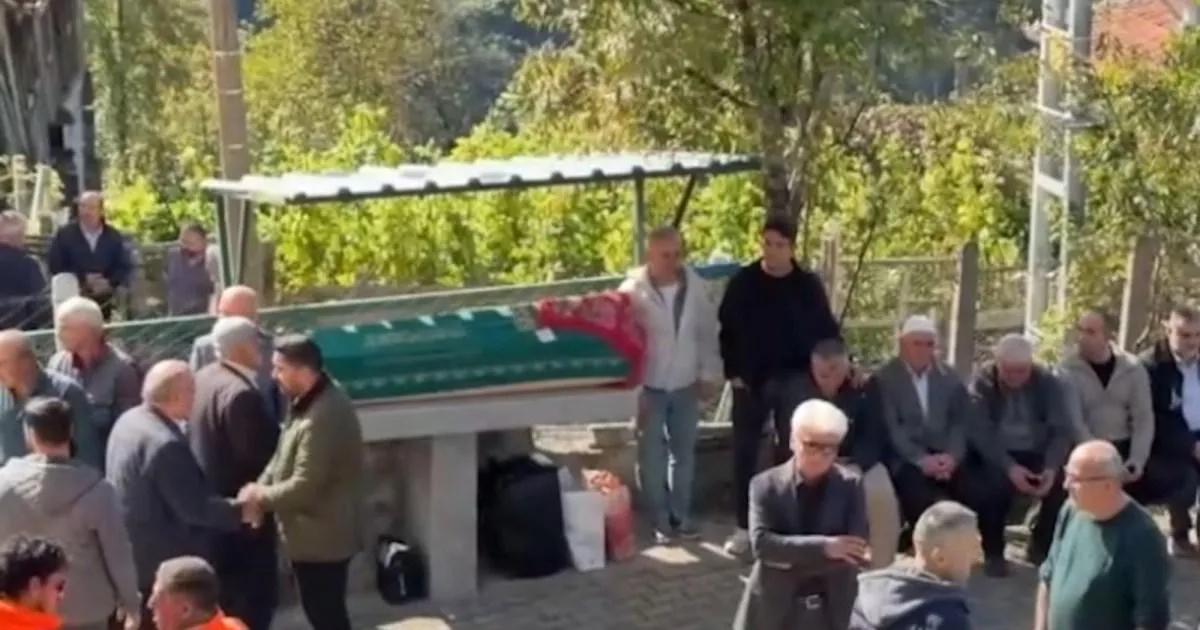
The little girl who died was Eslem Bulut, known to her family and friends as Eslem Sare. She was only ten years old. According to reports, she was in her classroom when the attack began. Her life ended far too early, at an age when the world should still have been full of wonder, games, homework, dreams and the simple reassurance of being loved. In the days after the tragedy, her body was handed back to her family following post-mortem procedures, and then taken to Konuklu village in the Ulus district of Bartin Province, in northern Turkey, where she was laid to rest. Her funeral took place on 7 October, and it was attended by hundreds of people. Outside the village mosque, prayers were recited while her father, Feyzullah, and her mother, Seyma, struggled to remain standing. The pain on their faces was impossible to hide. They were supported by psychosocial support teams from the Education Ministry and the Family and Social Services Ministry, who had been sent specifically to comfort the grieving couple. Relatives, local residents and officials gathered around them, including Deputy Education Minister Celile Eren Okten, Bartin Governor Nurtac Arslan and former Justice Minister Yilmaz Tunc. After midday prayers at Guvendik Neighbourhood Mosque, Eslem was buried in the village cemetery amid tears and the quiet sound of mourning. A decade of laughter, love and growing up was reduced to a small grave in a cemetery, while her family were left with nothing but memories and questions. No parent should ever have to stand at a child’s grave. No village should have to bury one of its youngest souls under such terrible circumstances.
As the grief unfolded, the identity and background of the suspect began to emerge. She was a fifteen-year-old girl from a high school in Kucukcekmece, and she reportedly lived in the Kayabasi neighbourhood where the attack took place. Authorities identified her by the initials F.M. The attack took place at around 8.40am, when she arrived at the secondary school wearing a school uniform, presumably to avoid suspicion. She allegedly attacked pupils with a knife, leaving eight children aged between ten and thirteen injured. The suspect was apprehended by school security staff and handed over to police. In a development that stunned many, her mother and father were also detained. According to Turkish media, all three were subsequently remanded in custody by a court. The reasons for the attack remain unclear, and no motive has been publicly confirmed. That unanswered question is perhaps the hardest part for the families affected. How could a fifteen-year-old girl, still close in age to her victims, plan such an act? Where did the knife come from? Were there warning signs that someone missed? These are the kinds of questions that can keep a community awake at night. The legal process will now have to determine what happened, why it happened, and who may bear responsibility, but no verdict can undo the damage. The detention of the suspect’s parents suggests that authorities are looking beyond the attack itself, asking whether there was any failure in supervision or care that might have contributed. Yet it is impossible to look at a fifteen-year-old suspect without also thinking about her age, her inner life, and the extraordinary pain or confusion that must have led her to such violence.
Turkish authorities moved quickly to respond to the horror. Istanbul Governor Davut Gul confirmed that the suspect was a pupil at another school and said she had entered the premises wearing a school uniform. He described how she came to the secondary school dressed that way and carried out a knife attack on the children there. In a statement, the governor offered condolences and said that authorities would continue working to improve school safety. He also called on families to take responsibility for their children, a remark that many heard as a plea for parents to pay closer attention to what is happening in young people’s minds and lives. The Education Ministry appointed inspectors to investigate the incident, while the Interior Ministry also assigned senior inspectors to examine the circumstances surrounding the attack. These official steps were necessary, but they also felt cold in the face of a child’s death. The promises of increased security, inspections and reforms are meant to reassure a frightened public, but for the families of the victims, no inspection can bring back Eslem or erase the memory of that morning. There is a deeper form of safety that no security guard can provide, one that comes from mental health support, early intervention, and the willingness of adults to listen. The Istanbul governor’s words, directed at families, reflect a growing awareness that school violence is not just an institutional problem. It is a social and emotional one, rooted in the lives of children long before they appear at a school gate. Still, the tragedy raises uncomfortable questions about how a stranger with a weapon can enter a school building so easily, even wearing a uniform. The investigation will no doubt examine security protocols, but the larger lesson may be about the hidden distress in teenagers that can go unnoticed until it explodes.
Beyond the investigation and official statements, there is the slower and quieter work of healing. The eight other students who were injured in the attack are not names in a report; they are children who are now facing physical wounds and emotional scars that may last years. They are classmates who saw something terrifying and will carry that memory with them. Their parents are caught between relief that their children survived and grief for a child who did not. The school community has been left in shock, struggling to return to any sense of normality. Psychosocial support teams have been promised, but trauma does not disappear with a few counselling sessions. It appears in nightmares, in sudden silences, in the way a child flinches at an unexpected sound. The entire community in Kayabasi, and the wider public, is now living with the reality that violence can happen anywhere, even in the places we trust most. There is a particular cruelty to this attack: the suspect wore the uniform of the school, blending in with children, making it impossible for anyone to know what was about to happen. That sense of betrayal of trust is profound. Parents in Turkey have been reminded, in the most painful way possible, that schools are not sealed off from the world. They are places where real children live with real emotions, pressures, friendships and struggles. If such a tragedy has any meaning, it must be to encourage a deeper conversation about the mental health of young people, about the need to create environments where a child in distress can speak up and be heard, rather than turning to violence.
In the end, the story of Eslem Bulut is not just a story about an attack, a suspect, or an investigation. It is a story about a ten-year-old girl whose life was taken far too soon, and about the people who loved her and now have to find a way to go forward without her. Her father and mother stood at her grave, unable to remain on their feet, supported by strangers and officials who could only offer their presence. The village where she was buried will forever be marked by this loss. The classmates who survived will carry the memory of what happened, and the city of Istanbul, and the whole country, will have to reckon with what this tragedy says about the world children are growing up in. The best response to such darkness is not just security measures and inspections, but a serious commitment to understanding the pain that can lead a child to violence. It means teaching empathy, strengthening mental health services, and building communities where no young person feels invisible or alone. It means remembering Eslem’s smile, her laughter, her promise, and letting that memory inspire something good. She should not be remembered only as a victim. She should be remembered as a child who deserved a future. As her family buried her in the village cemetery, they were surrounded by people who refused to let her die forgotten. In the weeks and months ahead, the challenge will be to ensure that her death is not just another headline, but a turning point in the way society protects its children. Grief takes time. Justice will take time. But the memory of Eslem Bulut, a little girl who went to school on an ordinary day and never came home, must remain at the centre of everything that comes next.