


A Champion of Justice: Navi Pillay’s Nobel Peace Prize
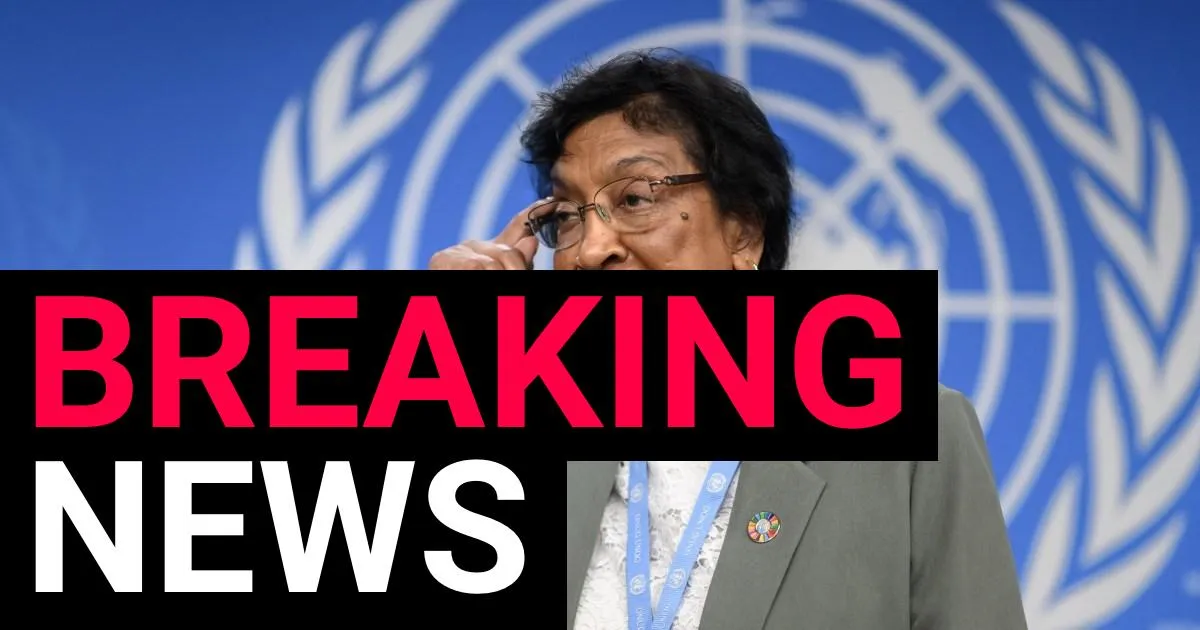
In a world that often feels fractured by conflict and division, there are rare individuals whose lives stand as quiet monuments to the power of principle. This year, the Nobel Peace Prize has found its way to one such person — South African jurist Navanethem “Navi” Pillay, a woman whose career has been defined not by the pursuit of power, but by the relentless defense of human dignity. At 85 years old, Pillay now joins the ranks of history’s most celebrated peacemakers, an honor that feels not merely earned, but almost inevitable given the trajectory of her remarkable life. Her journey is not one of glittering celebrity or political spectacle; it is a story of courtroom battles, of defending the voiceless, of standing firm against the tide of injustice when it would have been easier to look away. From the dusty courtrooms of apartheid-era South Africa to the marble halls of international justice, Pillay has carried with her a constant and unwavering moral clarity that has finally received the recognition it so richly deserves.
The Norwegian Nobel Committee, in bestowing this honor, recognized a lifetime of service that has fundamentally reshaped how international law operates in practice. Jørgen Watne Frydnes, speaking on behalf of the committee, noted that Pillay has “significantly enlarged the scope and impact of international law” through her work as a judge on the International Criminal Court and as the former United Nations High Commissioner for Human Rights. But perhaps the most touching tribute came in the committee’s description of Pillay as possessing a “firm moral compass” — a quality that seems increasingly rare in a world of shifting political allegiances and convenient compromises. It is this moral grounding that has guided her through decades of difficult decisions, from her early days defending anti-apartheid activists under a regime that criminalized dissent, to her landmark ruling against the United States for its treatment of detainees at Guantanamo Bay. Throughout it all, she has remained unshakeable in her conviction that the law exists not to serve the powerful, but to protect the vulnerable, and that justice must be blind to status, wealth, or nationality.
Behind the celebration, however, lies a complex political backdrop that makes this year’s award particularly noteworthy. The announcement comes amid immense pressure from President Donald Trump, who has repeatedly claimed that he “earned” the Nobel Peace Prize for his diplomatic efforts, including his role in brokering the Abraham Accords during his first term. Trump has made no secret of his desire to be handed what is widely considered the world’s most prestigious award, and his administration’s relationship with the Nobel Committee has been fraught with tension and public criticism. Yet the committee has remained steadfast in its independence, choosing instead to honor a woman whose life’s work stands in stark contrast to the transactional nature of modern diplomacy. While Trump boasted at the United Nations in September of having “ended seven un-endable wars” during his second term, the committee’s selection of Pillay sends a clear message about what its members truly value: quiet, principled, and sustained commitment to human rights rather than loud proclamations of victory.
The previous year’s laureate, Venezuelan opposition leader María Corina Machado, offers another fascinating thread in this year’s Nobel narrative. Machado, who received the prize for her courageous promotion of democratic rights in Venezuela, has faced relentless threats from the government and has been forced to live in hiding — yet she has chosen to remain in her country, a decision that has “inspired millions” according to the committee. In an unusual gesture that captured the world’s attention, Machado reportedly gave her Nobel medal to President Trump as a symbolic offering, though the Nobel Committee was quick to clarify that the honor itself cannot be transferred or gifted. This intersection of peace laureates — one a South African jurist who spent her life in the courtroom, the other a Venezuelan activist fighting for democracy from the shadows — illuminates the diverse and often dangerous paths that lead to the world’s most hallowed recognition. Both women, in their own ways, embody the courage that Alfred Nobel envisioned when he established his legacy. Their stories remind us that peace is not simply the absence of war, but the active, often painful work of building societies where justice is not a privilege but a right.
For those unfamiliar with the Nobel Peace Prize, its origins are as fascinating as the laureates themselves. The prize was established by Swedish industrialist Alfred Nobel, the inventor of dynamite, who in his will directed that a portion of his enormous fortune be used to honor those who have done “the most or the best work for fraternity between nations, for the abolition or reduction of standing armies, and for the holding and promotion of peace congresses.” The criteria, famously vague and open to interpretation, have allowed the committee tremendous latitude in selecting winners — from political leaders and activists to organizations and, in one year, a single individual whose name was announced with confusion and controversy. The winner receives not only worldwide acclaim but also an 18-carat gold medal, a diploma bearing the committee’s citation, and a substantial cash prize currently amounting to 11 million Swedish crowns — roughly £860,000. The decision rests with a five-member committee, composed largely of retired politicians, who are appointed directly by the Norwegian Parliament — a structure designed to insulate the selection process from political interference, though it has not always succeeded in doing so.
As the world congratulates Navi Pillay on this extraordinary honor, there is something deeply reassuring about her selection in these turbulent times. Her life reminds us that justice is not an abstract concept but a lived practice — something built through countless small acts of courage, through cases fought and principles defended, through refusing to yield when the forces against you seem overwhelming. Born into a South Africa where the color of her skin determined the course of her life, she rose to become the first non-white woman to serve on the country’s Supreme Court, the first African woman to be president of the International Criminal Court, and a voice that has been heard and respected in the highest chambers of global governance. Hers is a story of what happens when someone refuses to accept the world as it is and dedicates their life to what it could become. In an era of loud voices and simple solutions, Pillay’s steady, principled career offers a different kind of inspiration — a reminder that change comes not through bombast but through persistence, not through proclamation but through example, and that in the end, it is not power that endures, but principle. Her Nobel Peace Prize is not merely a recognition of past achievement; it is a challenge to all of us to consider what we are doing, in our own lives and communities, to advance the cause of human dignity and peace.