

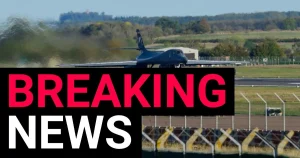

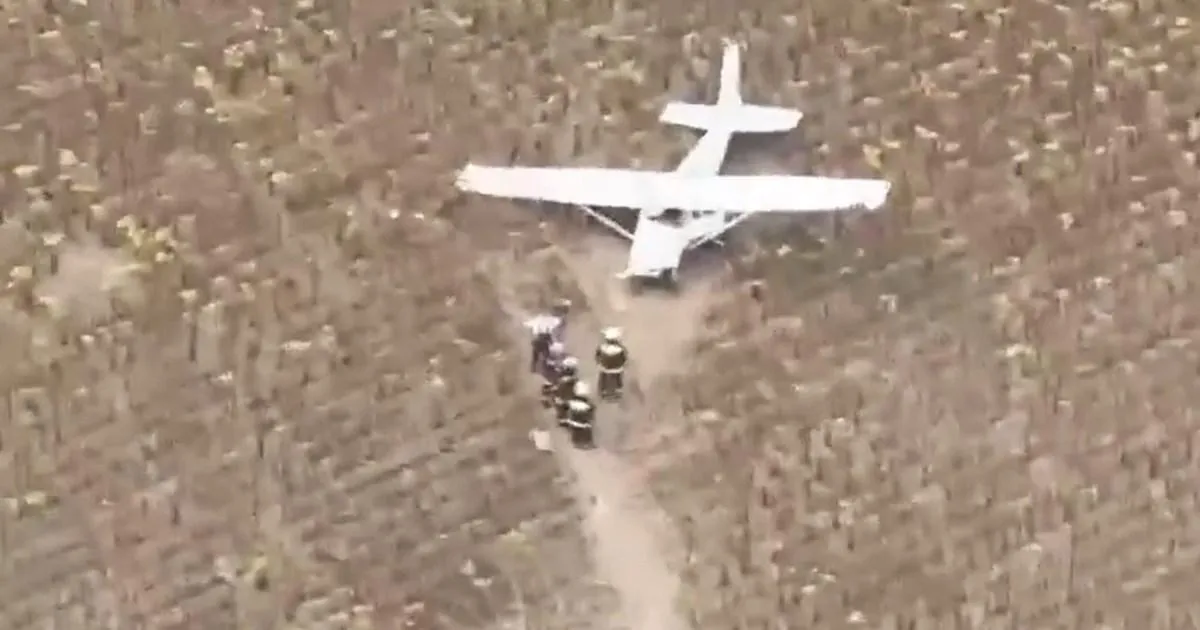
In the quiet agricultural heart of Hungary, where the Danube winds past small towns and fields stretch toward the horizon, an otherwise ordinary day was shattered by the sound of jet engines and the sight of a small plane behaving very strangely. The craft, a Cessna light aircraft, had no business being in the sky. According to authorities, it had just been stolen from a local airfield in Kalocsa. The pilot was a 24-year-old man, later found to be under the influence of alcohol. But he was not merely flying low over farmhouses or joyriding along the river. He allegedly took the aircraft into restricted airspace surrounding the Paks Nuclear Power Plant, Hungary’s only facility of its kind and the source of a significant portion of the nation’s electricity. Military radar operators picked up the aircraft as an unidentified track, and two supersonic Gripen fighter jets were scrambled to intercept. For the length of the flight, the small Cessna and its lethal-looking escorts shared the sky, a cinematic and deeply alarming spectacle. Witnesses could only imagine the tension in military command centers as radar screens showed a rogue aircraft weaving near a nuclear site. The incident ended not with a negotiated landing, but with a crash in a sunflower field in Tolna County, about 84 miles south of Budapest. By then, what had begun as a bizarre security breach had become a full-blown criminal investigation. And the pilot, having stumbled from the wreckage with minor injuries, had already made things worse by trying to steal a passing car.
To understand how this could happen, one has to appreciate the setting. Kalocsa airfield is not a major international airport bustling with security checkpoints and armed guards. It is a small regional airstrip, the kind of place where hobbyist pilots keep single-engine planes, where flight schools teach beginners to take to the sky, and where the biggest concern is usually the weather. Small airfields like this one are scattered across the Hungarian countryside, often protected by little more than a fence and a simple gate. Aircraft are routinely parked outdoors, visible from the road, and sometimes left unlocked by pilots who never imagine that someone would steal a plane. That apparent trust in human nature is part of the charm of the aviation community, but it also creates a vulnerability. On the day in question, that vulnerability was exploited with alarming ease. The suspect allegedly climbed into a Cessna, started the engine, and took off without authorization. Within minutes, Hungarian military radar detected an aircraft that was not following any recognized flight plan and was heading toward a zone that is strictly off-limits. The Paks Nuclear Power Plant sits on the banks of the Danube, a sprawling complex of reactors, cooling towers, and security perimeters. Its airspace is restricted for obvious reasons. A plane crashing into a nuclear facility could cause catastrophic contamination, environmental disaster, and loss of life. So when the stolen Cessna crossed into that protected zone, the response was swift and unambiguous. Two supersonic Gripen fighter jets were scrambled from their bases, roaring into the sky to intercept the rogue aircraft. From the ground, people might have seen the astonishing contrast of sleek military jets flanking a small propeller plane, a sight so absurd it could have been mistaken for a stunt. According to local reports, the pilot spent some time conducting what officials described as “manoeuvres” over the plant before eventually turning south. Whether those manoeuvres were deliberate, erratic, or the result of intoxication remains under investigation. But the simple fact that a stolen civilian plane could penetrate restricted airspace over a nuclear power plant is enough to keep security experts awake at night.
The end of the flight came not on a runway but in the middle of a sunflower field. Sunflowers are iconic in the Hungarian countryside, their golden faces turning toward the sun in vast, swaying expanses that normally evoke peace, summer warmth, and pastoral beauty. On this day, one of those fields in Tolna County became the scene of a crash. The Cessna made what authorities described as an emergency landing, though the impact was jarring enough to bend metal and leave the pilot with minor injuries. The plane skidded or plowed through the tall plants, leaving a trail of broken stems and churned earth amid the otherwise serene landscape. Then the pilot emerged. It must have been a strange sight: a young man, disoriented, smelling of alcohol, standing next to the wreckage of a stolen airplane in a field of sunflowers. Instead of waiting for help or surrendering quietly, he allegedly tried to flee the scene by taking control of a passing car. It was a desperate, almost farcical move, one that only deepened the absurdity of the situation. The attempt failed. Police officers arrived at the scene, subdued the man, and placed him under arrest. Given the circumstances, the fact that he suffered only minor injuries seems remarkably fortunate. The same could be said for the people on the ground and for the nuclear facility itself. There were no reports of radiation leaks, no explosions, no casualties. But the image of an intoxicated man stumbling out of a stolen plane after buzzing a nuclear power plant, then trying to carjack a random driver, would be almost comical if the potential consequences had not been so grave.
In the aftermath, Hungarian authorities moved quickly to piece together exactly what had happened. The national police force, Rendorseg, confirmed that the 24-year-old pilot had been arrested and that an investigation was underway. They also announced a joint inspection of Kalocsa airfield in cooperation with the country’s aviation authority, with similar checks scheduled at other airports across Hungary. The goal is to determine how the suspect gained access to the aircraft and whether security failures at small airfields allowed this incident to occur. Airfield security is a delicate issue. Commercial airports are subject to layers of screening, restricted zones, and surveillance, but recreational and regional airfields often operate on a far more casual basis. Planes are usually parked in the open, and access to the field may be limited only by a chain-link fence. Pilots often focus on protecting their aircraft from weather, not from theft. The idea of someone stealing a plane and flying it toward a nuclear plant seems so far outside the realm of normal risk that few people prepare for it. Yet it happened. The broader implication is sobering: if a drunk individual can steal a plane and fly it over restricted airspace without being stopped, what could a more determined or more sophisticated actor do? The Hungarian Defense Forces, for their part, demonstrated that they were watching. Defence Minister Romulusz Ruszin-Szendi described the episode as a “strange alert” in a Facebook post, praising the soldiers who responded. “The Hungarian Defense Forces are ready,” he wrote. “In the air. On the ground. 24 hours a day.” He added that the most important thing was that no one had been injured, and he thanked the defense forces for their quick response and stance. Those words were measured, but the underlying tension was obvious. The military had been forced to scramble fighter jets over a nuclear power plant because of a drunk man in a stolen Cessna.
The incident also raises uncomfortable questions about the safety of critical infrastructure and the nature of modern threats. Paks Nuclear Power Plant is not just any industrial site; it is a national asset whose security is tied to public confidence and national sovereignty. It supplies a large share of Hungary’s electricity, and its reactors are protected by layers of physical and procedural safeguards. But no security system can fully account for a flying machine that appears from a direction no one expected, piloted by someone whose behavior is completely irrational. While a small Cessna crashing into a reactor complex would not necessarily cause a nuclear catastrophe—modern containment structures are built to withstand significant impacts—the potential for damage to auxiliary systems, fuel storage areas, or cooling infrastructure is not something to dismiss lightly. The psychological impact of a rogue aircraft circling a nuclear plant is perhaps even more significant. It erodes the sense of safety that people need to feel when they live near critical facilities. The decision to scramble supersonic jets underscores how seriously authorities take any incursion. But the fact that the intruder was able to enter restricted airspace at all points to gaps that need to be addressed. Are radar systems at smaller airfields connected to military tracking networks? Are there protocols for grounding unauthorized flights quickly? What training do police and military personnel receive for a scenario involving an unpredictable, possibly intoxicated pilot? These questions are now on the table, and the answers may shape aviation and security policy in Hungary for years to come. At the same time, the human element remains front and center. This was not a coordinated terrorist attack or a sophisticated criminal operation. It was a 24-year-old man who appeared to be drunk and made a series of catastrophic decisions. His actions endangered lives, tied up military resources, and scarred a peaceful sunflower field. Yet he walked away with minor injuries—a fact that is both fortunate and unsettling. Fortunate because no one else was hurt. Unsettling because it suggests that sometimes, sheer luck plays a larger role in outcomes than planning or protection.
In the end, this strange episode is a reminder of how thin the line can be between ordinary life and extraordinary chaos. On any other day, a 24-year-old might be starting a career, planning a weekend trip, or sitting in a café with friends. Instead, he is now facing serious criminal charges, and his name will be associated with one of the most bizarre aviation incidents in Hungary’s recent history. The sunflower field where his flight ended will likely become a footnote—maybe a local curiosity, perhaps the subject of whispers in Kalocsa for years. But the broader lesson is not just about one man’s recklessness. It is about the systems we build to protect against the unexpected, and how quickly they can be tested by an event that no one saw coming. The Hungarian Defense Forces responded with speed and professionalism, and the fact that no lives were lost is a credit to their readiness. Still, the incident should serve as a wake-up call. Protecting nuclear facilities, small airports, and the public from unpredictable threats requires constant vigilance, honest assessments of security gaps, and a willingness to learn from close calls. It also requires acknowledging that human beings are fallible—prone to poor judgment, sometimes intoxicated, sometimes desperate. We cannot predict every crazy decision a person might make. But we can design our institutions, our radar systems, and our emergency protocols to handle the unthinkable. This time, the outcome was a damaged plane in a sunflower field and an intoxicated pilot in handcuffs. Next time, it might not be so forgiving.