


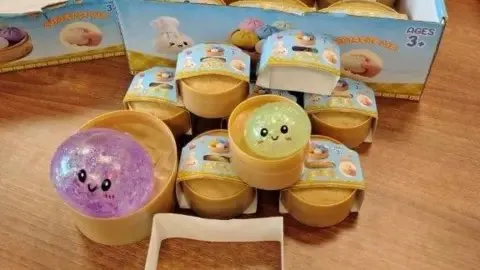
The recent urgent recall of the viral “Squishy Dumplings” toy serves as a sobering reminder of how quickly a harmless-looking childhood craze can turn into a serious health hazard. These soft, bao-bun-shaped toys had captured the hearts of youngsters everywhere, with collectors obsessively hunting for the elusive, rare shiny versions. However, the joy surrounding these Chinese-made collectibles has been abruptly overshadowed by the revelation that they contain a dangerous chemical substance. Retailers like Samsons Cash and Carry are now scrambling to pull these items from shelves, as experts have confirmed that the toys pose a significant chemical risk to any child who comes into contact with them.
At the center of this safety crisis is the discovery of benzene in the outer layer of the dumplings. Benzene is a volatile, colorless liquid that, while historically used in everything from cleaning solvents to cosmetics, is now strictly restricted due to its harmful nature. When inhaled or touched, it acts as a silent aggressor, causing irritation to the eyes, nose, and throat. More alarmingly, the scientific community has classified benzene as a group-one carcinogen, meaning it is known to cause acute myeloid leukemia and other blood-related cancers in humans. For parents of children who have been squeezing, tossing, and sleeping with these toys, the news is both horrifying and deeply frustrating.
Beyond the invisible chemical danger, the toys have also been the subject of a bizarre and dangerous social media trend. Influencers and children alike have been experimenting with heating the dumplings in microwaves, ostensibly to make them softer and more pleasant to touch. This practice has led to devastating consequences, most notably for a 10-year-old girl named Bella. When her toy burst under the intense heat, the scalding liquid trapped inside sprayed across her face, leaving her with injuries that may unfortunately result in permanent scarring. This incident highlights the terrifying reality of products being used in ways their designers never intended, especially when those products are fundamentally unstable.
The physical dangers of benzene exposure should not be treated lightly, as the effects can range from immediate discomfort to long-term systemic damage. Short-term exposure in the air can lead to persistent coughing, hoarseness, and difficulty breathing, while larger doses can cause the airways to swell and fluid to congest the lungs. If ingested, the chemical creates a burning sensation throughout the digestive tract, leading to severe nausea and vomiting. Given that children often handle toys and then touch their faces or mouths, the risk of accidental ingestion or mucosal contact is significantly heightened, making this particular recall a high-priority matter for families.
It is difficult to overlook the irony that a product designed to bring comfort and play has become a source of such anxiety. The history of benzene is a cautionary tale in itself; decades ago, it was a common ingredient in everyday items like aftershave and decaffeinated coffee. It took years of medical research to fully understand its carcinogenic profile and eventually ban its use in consumer goods. Seeing this chemical appear in a children’s plaything in 2024 feels like a regression in consumer safety standards. Parents are now left questioning the manufacturing oversight of cheap, viral toys that flood our markets, often with little regard for the toxic materials used on their surfaces.
As the recall continues to unfold, the most important takeaway for every caregiver is to prioritize immediate action over curiosity. If you have these dumplings in your home, do not wait for further instructions—secure them away from children and dispose of them according to your local safety guidelines. If your child has been playing with them regularly, it is worth a conversation with your pediatrician to address any health concerns. In an age where viral popularity often outpaces safety testing, this situation stands as a vital warning: not everything that goes “viral” is safe for our kids, and sometimes the most popular trends are the ones we should avoid at any cost.