



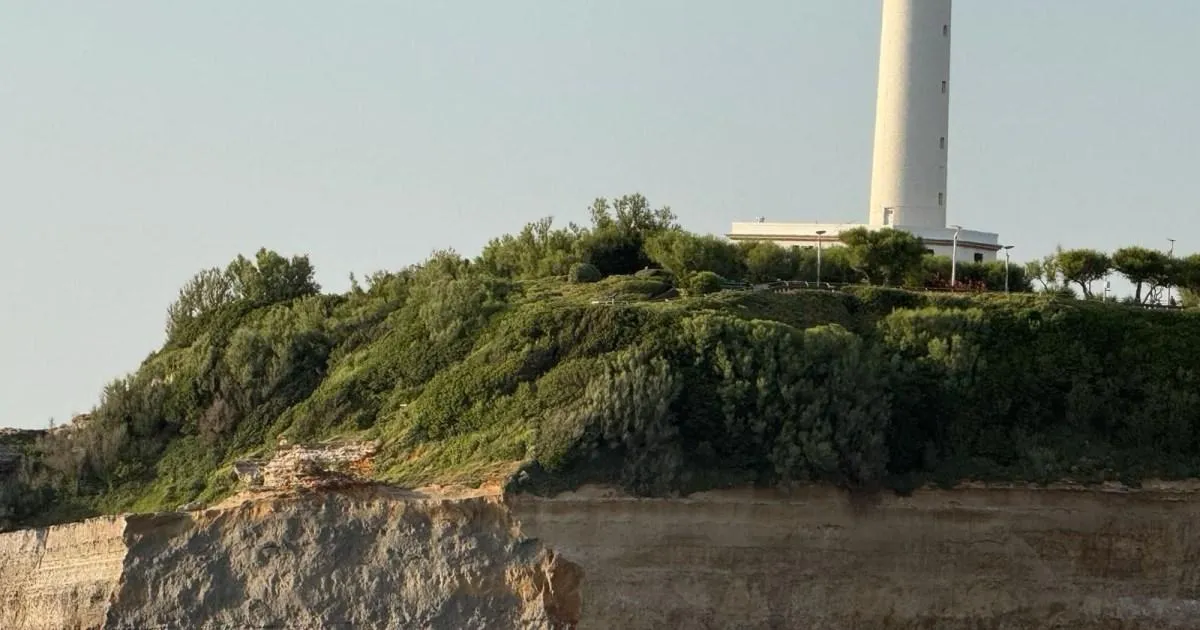
The serene beauty of Biarritz, a historic coastal gem in southwest France, turned into the setting of a harrowing tragedy yesterday evening. As the region grappled with a punishing, record-breaking heatwave, the iconic cliffs surrounding the Miramar lighthouse—a landmark dating back to the mid-19th century—suffered a catastrophic failure. Around 8:20 p.m., in an instant that felt like an act of nature’s raw fury, roughly 2,000 tonnes of rock gave way. The massive shelf plummeted into the Atlantic, sending a plume of debris and a violent spray of water cascading onto the beach below, catching a group of three divers completely off guard.
The scene described by witnesses was one of pure, disorienting chaos. Quentin Alberola, who was nearby when the slide occurred, likened the sound to a deafening explosion, noting that the sheer weight of the falling rock displaced enough seawater to send a crashing wave surging toward the shoreline. Vincent Pariset, who had been enjoying a tranquil evening paddleboarding with his daughter, described the terrifying sensation of watching a massive section of the historic cliff face simply disintegrate under the lighthouse. There were no warning signs, no tremors, and no time to prepare; the landscape simply vanished into the sea.
In the immediate aftermath, the beach transformed from a place of summer leisure into a frantic theater of search and rescue operations. As the dust settled and the authorities reached the site, they found a heartbreaking reality: one survivor had emerged from the water in a state of deep shock but miraculously unhurt. However, the debris field had claimed a heavy toll. Despite the rapid mobilization of emergency services, the recovery team discovered the body of a woman hours later, confirming the fatal nature of the landslide.
As the sun sets on the search efforts, a somber mood hangs over the seaside town. Rescue divers continue to scour the dark, turbulent waters in a desperate, systematic attempt to locate the third diver. With each passing hour, the hope for a rescue fades, and authorities now fear the individual is lost to the sea. The operation is complex and dangerous, as the structural integrity of the surrounding coastline remains uncertain following the collapse, necessitating a strict cordon around the Miramar area to prevent further casualties from occurring.
The incident serves as a sobering reminder of the volatility of our natural surroundings, especially during extreme weather events. While Biarritz has long been a sanctuary for European royalty and tourists alike, the cliffs that have framed its beauty for nearly two centuries proved unforgiving. Local officials have issued stern warnings to the public to avoid the area entirely, emphasizing the importance of staying clear of the search operations to allow emergency teams to work without obstruction. The silence in the restricted zones now starkly contrasts with the bustling crowds that usually define this stretch of the Grande Plage.
As we look toward the aftermath, the community of Biarritz is left to process the loss of a life amidst the backdrop of a changing, often unpredictable climate. The tragedy has effectively closed a chapter of the summer season, leading to a wider assessment of the safety of the city’s famous cliffs. While investigators and geologists will eventually determine the technical reasons behind the collapse, for the families and the rescue workers involved, the focus remains on the human cost. It is a stark moment of reflection for a town that usually celebrates the harmony between the land and the sea, now forced to confront the violent potential of the earth itself.