


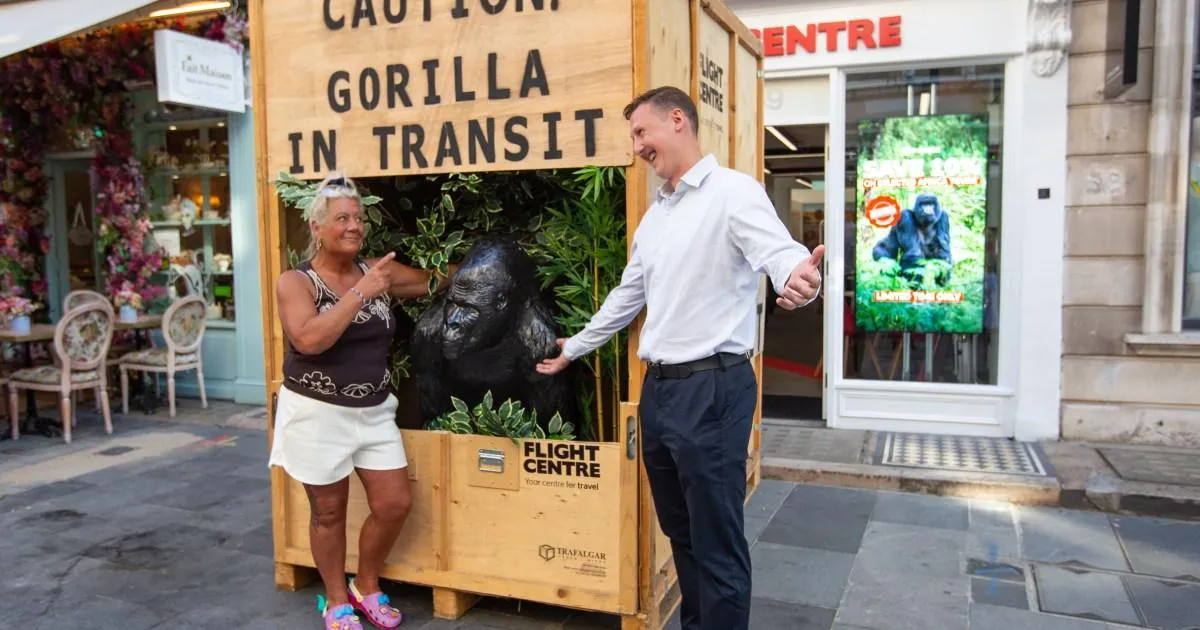
For twenty years, a four-foot fibreglass gorilla named Caesar has been a cherished fixture in the life of Adele Teale. For over a decade, Caesar stood guard at her home in Leeds without incident, eventually moving with her to Wakefield, West Yorkshire. However, earlier this year, the quiet routine of this devoted owner and her statue was upended when the local council issued an eviction notice following a neighbor’s complaint about the lack of planning permission. What followed was a viral journey of resilience, as Caesar became an unexpected sensation, proving that even a synthetic primate can capture the public imagination when faced with the threat of displacement.
The plight of the displaced gorilla caught the attention of Flight Centre, a long-haul travel specialist that saw an opportunity to turn a local bureaucratic dispute into a heartwarming story of community support. Recognizing that their own business is dedicated to helping people connect with the wonders of the natural world, the team felt that adopting Caesar was the perfect way to make a statement about conservation. According to General Manager Joe Beevis, the gorilla serves as a poignant reminder that while a statue can be a beloved companion, the most profound wildlife encounters are those experienced in the wild, protected by sustainable tourism practices.
The journey from Wakefield to the capital was nothing short of a celebrity tour. Before settling into his new high-end surroundings in London’s Mayfair district, Caesar was treated to an iconic sight-seeing excursion. He made stops at the architectural majesty of Big Ben, paid a visit to the political heart of the country at Downing Street, and even managed to take in the bustling atmosphere of Piccadilly Circus. The transition from a quiet residential street in Yorkshire to the prestige of South Molton Street was handled with great care by his new custodians, ensuring that Caesar arrived in style for his new residency.
Settling into his new habitat has been a surprisingly smooth transition for the statue. According to store staff, Caesar appears to be adjusting to the sophisticated rhythms of Mayfair life with ease, although the team jokes that he has already developed some rather opinionated views regarding the office air conditioning. The move is not necessarily a permanent end to his time in the north; rather, as his owner Adele puts it, Caesar is simply “heading to London for a bit.” It marks a new chapter for the fibreglass primate, allowing him to trade his suburban garden for a storefront where he can continue to delight tourists and locals alike.
For Adele, the bittersweet handover was eased by the knowledge that Caesar would be moving into the care of people who share her deep-rooted passion for animal welfare. Watching her friend of two decades find a prominent place in the city has been a rewarding conclusion to a stressful ordeal. She remains comforted by the fact that he has found a temporary home where he is not only safe from the council’s regulations but is also helping to spread a message of conscious travel. The collaboration serves as a testament to the idea that with a little creativity, even the most difficult situations can result in a positive new beginning.
To mark this unconventional arrival, Flight Centre has launched a promotional initiative, offering a discount on selected Africa tours through their partner, Intrepid Travel. By linking Caesar’s story to real-world conservation, the company hopes to encourage travelers to consider the impact of their adventures on the animals and communities they visit. Whether you are a fan of Caesar’s unique story or simply happen to be walking down South Molton Street, the iconic gorilla is now a permanent fixture of this corner of London, waiting to greet visitors with his steadfast, stoic gaze and his new, posh perspective on city life.