


The following is a summary of the tragic events that occurred on London’s Victoria Embankment, presented with a focus on the gravity of the situation and its impact on the city.
Early Thursday morning, a profound tragedy unfolded on one of London’s most vital thoroughfares, leaving the stretch of the Victoria Embankment near Waterloo Bridge cordoned off for an extended period. At approximately 2:06 a.m., emergency services were alerted to a situation involving a young man who had reportedly fallen from a significant height. Despite the immediate and tireless efforts of the London Ambulance Service to provide life-saving intervention, the man, believed to be in his twenties, was pronounced dead at the scene. This sudden loss of life has cast a somber shadow over the heart of the capital, serving as a stark reminder of how quickly circumstances can change in a bustling urban environment.
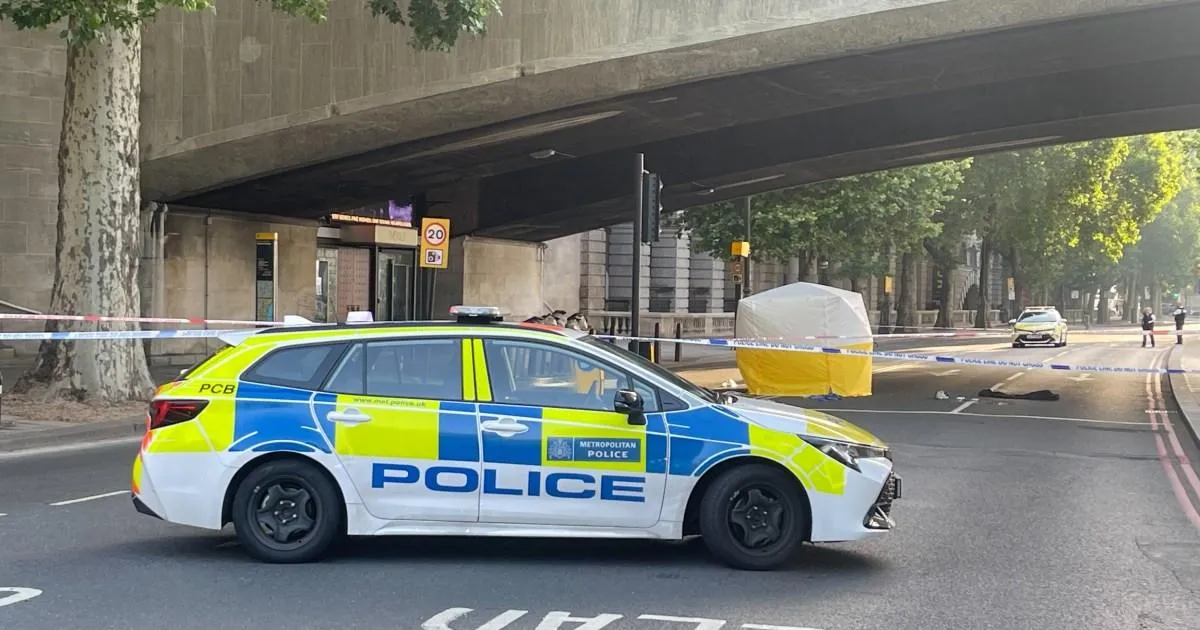
The Metropolitan Police have confirmed that while inquiries into the incident are still ongoing, at this stage, the death is being treated as unexpected rather than suspicious. Currently, officers are focused on the difficult task of identifying the man and notifying his next-of-kin, a process that brings an added layer of sensitivity and gravity to the investigation. A professional forensic team has established a presence beneath Waterloo Bridge, where a tent has been erected to allow investigators to piece together the events of the early morning hours with the care and thoroughness that such a tragedy demands.
The impact of this incident has rippled far beyond the immediate scene, causing significant disruption to London’s morning commute. The Victoria Embankment, known for its busy road and high-traffic cycle superhighway, remains closed, leaving both drivers and cyclists faced with major detours. Law enforcement officials have indicated that these closures may persist through the following day, as they work to ensure that the site is processed completely and respectfully. For those navigating the city, the reality of the closure has been a visible and persistent reminder of the tragedy that transpired just a few hours prior.
Beyond the primary cordon under the bridge, a secondary scene has been established further along the cycle path near Temple Underground station. Photos from the area highlight a scene of disarray, with police tape cordoning off a section of the path where debris and scattered emergency equipment serve as a quiet, haunting testament to the intensity of the struggle paramedics faced in their attempt to save the young man’s life. This secondary site underscores the broad reach of the emergency operation and the extensive nature of the response required to handle such a heartbreaking event.
As the city moves through the day, the logistical aftermath of the closures has triggered severe traffic delays across the central district. Westbound vehicles are currently being diverted toward Temple Place and around the King’s College area, while those traveling eastbound are being routed through Whitehall and the Strand. Predictably, this has led to a near-standstill in traffic near Trafalgar Square, turning the morning commute into a frustrating cycle of delays. For many Londoners, these logistical hurdles have become inextricably linked with the news of the fatality, as the city navigates the dual pressures of reconstruction and grief.
Ultimately, behind the headlines and the traffic reports lies the genuine loss of a young life, a tragedy that has left the local community and the emergency responders who attended to him shaken. While the authorities continue their formal investigations, the focus remains on the dignity of the deceased and the quiet process of informing those who will mourn him most deeply. The scene at Victoria Embankment today is more than just a closed road; it is a space reserved for the solemn work of truth and empathy, as London waits for more information and offers its collective condolences to those affected by this sudden and devastating loss.