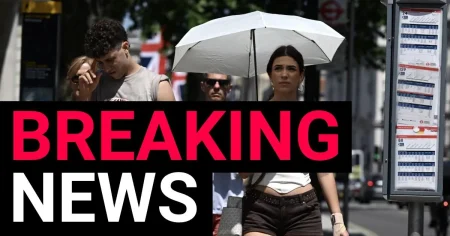



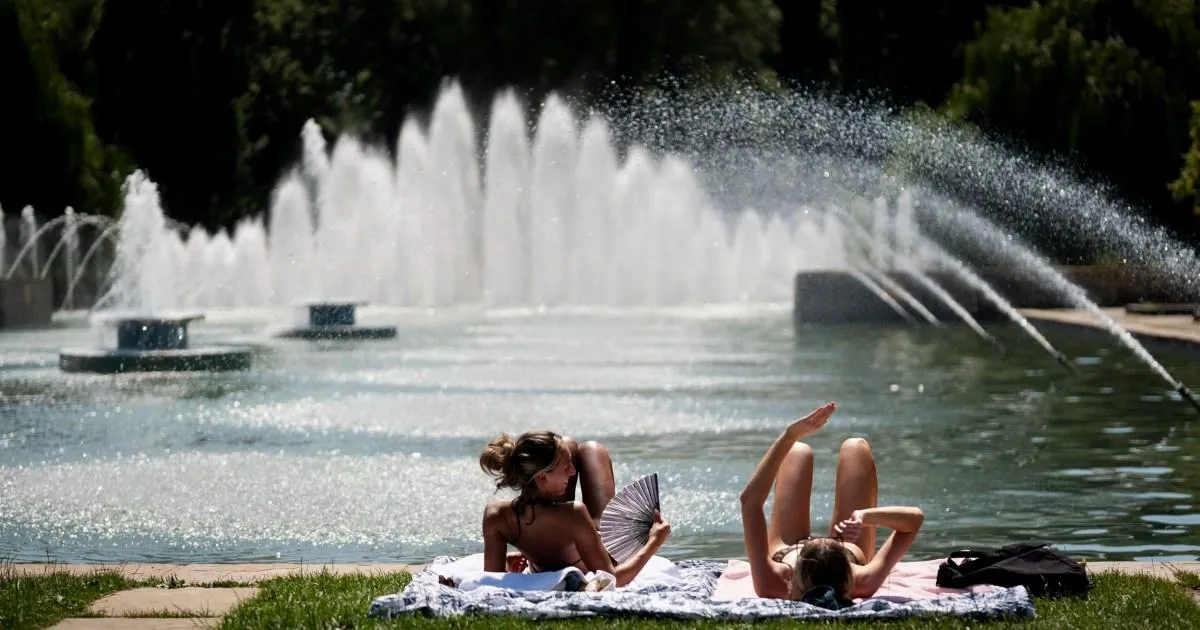
The current heatwave has pushed the UK into uncharted territory, leaving citizens across the country collectively asking: when will the sweltering misery finally end? With a rare red warning for extreme heat extended through Friday for London and the southeast, we are witnessing the breakdown of long-standing meteorological records. Just this week, the June heat record that stood firm since the legendary summer of 1976 was shattered, with temperatures reaching a staggering 36.1C in parts of Hampshire. The situation is exacerbated by “tropical nights,” where temperatures remain exceptionally high, robbing people of the sleep they desperately need to recover from the punishing daytime sun. It is a grueling cycle of heat and humidity that has left the nation feeling truly exhausted.
Meteorologists suggest that while the peak of this furnace-like weather is occurring mid-week, the respite will be frustratingly gradual. While Friday and Saturday will see a slight “climb-down” in the intensity of the heat, much of the southeast will remain in the low 30s. The long-range forecast offers a glimmer of hope as we head into next week, shifting toward a more typical British summer characterized by a westerly influence. This transition is expected to bring a mix of winds and scattered rain, particularly across the North West, finally snapping the relentless dry heat we have been trapped in. By early July, we can anticipate cooler, more seasonable air, though there remains a lingering chance that the south may still see occasional spikes of warmth.
The human side of this crisis is perhaps most visible within our critical infrastructure, which is proving woefully unprepared for such extreme climate events. The Royal College of Physicians has raised urgent concerns, describing the working conditions for medical staff as “unsustainable.” Many hospitals, schools, and care homes lack the basic cooling infrastructure necessary to handle temperatures that have reached upwards of 35C on some geriatric wards. Doctors are reporting a grim reality: medical machinery is overheating and failing, staff are operating on minimal sleep, and patients are suffering in sweltering, overcrowded rooms. These are not merely headlines; they are accounts of a system being pushed to its breaking point by a climate that is evolving faster than our facilities can keep up.
The toll extends far beyond our hospitals into the broader workplace, where the response to the heatwave remains wildly uneven. According to recent survey data from the Chartered Management Institute, nearly one in five employers have provided no specific measures to help their staff navigate the heat. While some companies have proactively relaxed dress codes or offered flexible working hours, these gestures are far from universal. Many professionals are still expected to function at full capacity despite offices turning into ovens. It raises a difficult conversation about the future of British working life: if these extreme heat events are to become our new normal, relying on “flexible attitudes” is no longer enough to protect the health and productivity of the workforce.
This crisis has ignited a much-needed national debate regarding our readiness for a changing climate. As temperatures continue to rise, the sporadic, reactive approach of “waiting for the heat to pass” is becoming increasingly untenable. Experts are calling for a fundamental shift in how we build and maintain our infrastructure, advocating for mandatory cooling regulations in hospitals and workplaces, and better heat-proofing for our schools. We are reaching a tipping point where these heatwaves can no longer be dismissed as anomalies or “nice weather” to be enjoyed; they are now significant public health events that demand long-term structural investment and legislative action to ensure no one is left vulnerable in the future.
Ultimately, while the incoming wind and rain will provide the literal relief we are all seeking, the metaphoric heat surrounding our lack of preparedness is unlikely to dissipate so quickly. We are learning the hard way that our infrastructure—designed for a temperate past—is straining under the pressures of a hotter, more volatile future. As the record-breaking mercury finally begins to drop, the focus of the conversation must shift from asking “when will it end” to “how do we prepare for the next one.” The endurance and resilience of the British public have been tested this week, but it is clear that for the sake of our health and our economy, we cannot rely on luck and cooler weather to get us through the next heatwave.