



It was supposed to be the kind of summer that sixteen-year-old Abigail Lainton would remember for the rest of her life. She was on a sun-soaked family holiday in the Dominican Republic, far from the quiet routines of home, with her siblings Carley and Bradley beside her and the promise of a bright future waiting back in England. Abbie, as she was known to everyone who loved her, was looking forward to receiving her GCSE results later in the summer—a milestone that marked the beginning of adulthood, of new opportunities, of all the ordinary and extraordinary things a teenager dreams about. But on July 27th, that future was violently torn away. During a day trip from the idyllic Saona Island, the tourist boat she was travelling on exploded without warning in the waters of Cotubanamá National Park. The vessel, carrying around 35 tourists, was suddenly ripped apart by a blast that tore through the deck and turned a dream vacation into a nightmare. In the chaos that followed, Abbie suffered devastating first and second degree burns across sixty percent of her body. She was rushed to intensive care in the nearby city of La Romana, but despite the desperate efforts of medical staff, she died at 9pm on July 30th, three days after the explosion. The world lost a bright, loving young woman far too soon—and a family lost a daughter, a sister, and a future that would never be.
The details of the explosion paint a harrowing picture of the terror that unfolded on the water. The boat was navigating the beautiful, protected waters of the Cotubanamá National Park, a place known for its pristine beaches and turquoise sea, when disaster struck. Survivors later recalled a sudden, loud popping sound, followed by fire spreading rapidly across the vessel. Among those on board were Gisell Segovia and her husband, Navin Torres, who had been concerned about the boat even before it left the shore. Torres remembered smelling what he described as “gasoline” and noticing that the vessel appeared overcrowded, but when they raised their concerns with the staff, they were assured that everything was safe. Those assurances proved tragically hollow. When the explosion happened, the deck was destroyed in an instant, leaving passengers scrambling for safety as flames engulfed the stricken boat. In a moment of instinctive heroism, Torres pushed his wife into the water to save her from the fire, and in the chaos that followed, he witnessed Abbie’s terrible injuries. He later described her as fighting like a “warrior,” saying that she “did not go out without a fight.” It was a small, powerful tribute to a young girl who, even in the most horrifying circumstances, showed a strength that left an impression on everyone who crossed her path.
The aftermath of the explosion was a scene of immense suffering and confusion. Twenty-four people were injured in the blast, and eleven were taken to hospital. Abbie was among the most critically wounded, and she was placed in intensive care at a medical facility in La Romana, where doctors fought to save her life. Her siblings, Carley and Bradley, were also taken to hospital after the incident, though their conditions were not publicly disclosed. For three harrowing days, Abbie’s family held onto hope, praying that the young woman with the infectious smile would pull through. But her injuries were too severe. An inquest held in the United Kingdom later revealed that her official cause of death was septicaemia, or blood poisoning, resulting from pulmonary edema—a devastating chain of events set in motion by the burns that covered so much of her body. The clinical language of the medical report could never capture the enormity of the loss. Abbie did not just die from a collection of symptoms; she died because a family holiday ended in a catastrophic accident that no one could have foreseen. As the news of her death spread, the grief began to ripple outward, from her immediate family to friends, schoolmates, and complete strangers who were moved by the tragedy of a life cut so brutally short.
In the days following Abbie’s death, the community that knew her rallied together in an outpouring of love and support. A GoFundMe page was created to help her family during the difficult days ahead, and within a short time, more than £26,000 had been raised toward a £30,000 target. The donations were a small but meaningful gesture, a way for people to say that they cared, that they were heartbroken, and that they wanted to ease even a fraction of the burden that her family now carried. Becky Jamieson, a family friend, spoke for everyone who knew Abbie when she said: “Abbie had her whole life ahead of her. She should have been enjoying the summer with her friends and looking forward to receiving her GCSE results. She was so loved by her family, friends and everyone who knew her. For Abbie. Forever 16, forever loved and never forgotten.” Those words echoed the feelings of an entire community, and even the Dominican Republic, far from Abbie’s home in England, felt the weight of the tragedy. A local official described the incident as “very tragic” and said it had “touched everyone on the island,” offering every assistance they could during the sorrowful time and sending prayers to the family.
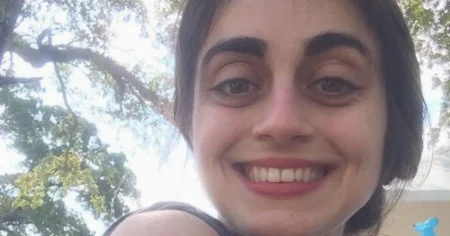
For those who had watched Abbie grow up, the loss was almost unbearable. She was a member of the Swindon Lightning Cheerleading club, and her fellow teammates were left heartbroken at the news. In a statement, the club described her as a much-loved member of their family, remembering her kindness, her infectious smile, and the unwavering encouragement she offered to everyone around her. “Her kindness, infectious smile, unwavering encouragement and love for cheerleading touched the lives of so many athletes, coaches and families over the years,” they said. “She brought so much light to our gym, and her loss has left us all heartbroken.” The imagery is striking—a young woman who brought light into a room, who cheered not only with her voice but with her entire being, and who made everyone around her feel seen and supported. Her school, the Tanwood School of Performing Arts, also paid tribute to the teenager, recalling how Abbie had joined as a “dinky dot” and become part of an exceptional group of dancers who formed strong friendships that spilled over to the audience when they performed together. The school remembered that she “always performed with a huge smile” and said that she would “always be in our hearts.” In both tributes, a clear picture emerges: Abbie Lainton was not just a victim of a terrible accident; she was a young woman who filled the spaces around her with joy, energy, and love.
Abbie’s story is one of profound sadness, but it is also a reminder of how precious and fragile life truly is. She was sixteen years old, an age when the world feels full of possibilities, when friendships are everything, and when the future stretches out endlessly ahead. She should have been spending the summer laughing with her friends, counting down the days until her GCSE results arrived, and planning the next chapter of her life. Instead, her family is left to navigate a world without her, holding onto memories of a daughter, sister, and friend who was taken from them in the blink of an eye. The explosion on that tourist boat was a senseless, heartbreaking tragedy, and the ripple effects of that day will be felt for years to come. And yet, in the midst of the grief, there is also love. The tributes from her cheerleading squad, her dance school, and the strangers who donated to her family’s fund are proof that Abbie meant something to the world. Her smile, her kindness, and her warrior spirit will not be forgotten. As her family friend said, she is “forever 16, forever loved and never forgotten.” In the end, that is the legacy Abigail Lainton leaves behind—not the story of how she died, but the memory of how she lived, and the light she brought into the lives of so many people during her short time on this earth.