

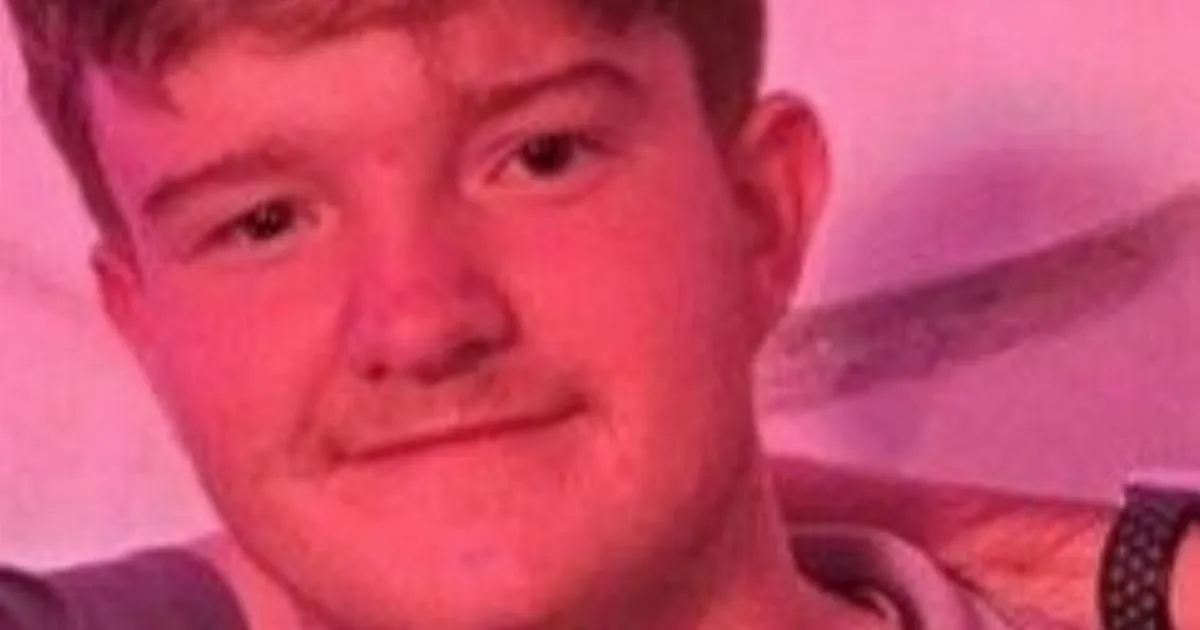
Kraków’s Rynek Główny is one of Europe’s most beloved old squares, a place of horse-drawn carriages, street musicians, and cafés spilling onto cobblestones, a medieval landmark that has stood at the center of Polish life for centuries. It has survived wars, occupations, and the changing borders of nations, and on ordinary days it feels like a place that will always be there, unshakable and alive. But that sense of permanence was violently interrupted one Saturday afternoon when a 24-year-old gunman named Michał Oksiński walked into the square and opened fire with a semi-automatic rifle at around three o’clock. In the span of a few terrible minutes, the scene turned from everyday bustle to chaos, blood, and terror. When the shooting ended, six people were dead and sixteen more were wounded. Among those caught in the crossfire was Harry Marchant, a 19-year-old from Haxby, a village just outside York, England. Harry was in the wrong place at the wrong time, a phrase that sounds almost too simple for the reality of what happened, but it is the only explanation anyone can offer. He was a young man, far from home, caught in a sudden storm of violence that he could not have anticipated. For his family in North Yorkshire, the hours after the shooting were an agonizing blur of worry, phone calls, and desperate waiting. Then came a small but vital piece of relief: Harry was alive, in a stable condition, and receiving ongoing hospital treatment in a Polish hospital. The news did not erase the horror, but it gave his family something to hold onto, a reason to breathe, and a fragile hope that he would eventually come home.
On Monday, North Yorkshire Police shared a statement from Harry’s family, and those words carried the weight of people trying to stay composed while their lives hovered in uncertainty. “We are pleased to say he is now in a stable condition, receiving ongoing hospital treatment,” the family said. “We can’t express how grateful we are to the first responders, medical team and the people of Poland for their help and care for Harry. We ask for our privacy to be respected as we support Harry with his recovery.” The statement is a reminder that behind every statistic in a mass shooting there is a family trying to find a way through an unthinkable ordeal. The gratitude they expressed was not just polite; it was real, because so many people acted with courage and compassion in the middle of the nightmare. Polish paramedics, doctors, police officers, and strangers in the square all played a part in saving lives. There is no way to measure what that means to a mother or father in York who can only wait helplessly by the phone. The family’s request for privacy is also a quiet plea for control in a situation where control has been completely taken away. In the middle of this, Harry’s hometown showed its warmth through the team he supports. York City Football Club sent a public message saying, “Everyone at York City Football Club would like to send their love and support to young supporter Harry Marchant. We all would like to wish Harry a speedy recovery, and we hope to see him back at the LNER supporting us very soon.” For a young man from a small community like Haxby, the football club is more than just a team; it is a place of belonging, of shared Fridays and Saturdays, of familiar faces and collective joy. That message, written in the middle of a global tragedy, was a way of saying to Harry: you are not alone, and there is a place waiting for you when you are strong enough to stand on the terraces again.
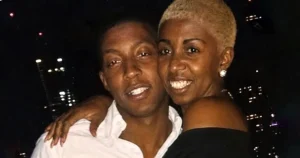
The attack did not only wound Harry; it stole the lives of people from three countries, and those deaths have left behind holes that will never be fully filled. The victims included three Polish women, aged 47, 53, and 61, a Polish man in his fifties, a 32-year-old British man, and a 51-year-old Austrian woman. Each of them was a person with a history, a family, plans for the future, and ordinary moments that they would never experience again. One of the Polish women, Izabela Woźna, has been mourned publicly with particular tenderness. She was 53 years old, a painter, a mother of four children, including twin eleven-year-olds. She came from Chodzież, a town in western Poland, and she had opened a new art exhibition at a venue on Sławkowska Street in Kraków the day before the shooting. Her artwork had been shown across Europe, and she had come to Kraków to share her latest vision with the public. Her life was built around color, meaning, and expression. The mayor of Chodzież, Jacek Gursz, remembered her with devastating simplicity: “She derived a great deal of satisfaction from her art and painting. She exhibited her work all over Europe. And she was certainly happy. She was in the wrong place at the wrong time.” That phrase has been used many times in the aftermath of violence, but in Izabela’s case it captures the cruel randomness of what happened. She was not a soldier, not a politician, not a stranger to compassion. She was a woman carrying her own hopes and achievements into a city that loved art, and a man with a rifle reduced all of that to a headline. Her children, especially the twins, will now grow up with the memory of a mother who was taken from them without explanation, without warning, and without justice. The other victims have not all been named publicly, but they are no less important. Somewhere in Britain, a family is grieving for a 32-year-old man who did not come home. Somewhere in Austria, another family is beginning the long work of mourning. In Poland, three children have lost a parent, a community has lost a friend, and a nation has been reminded that violence can strike anywhere.
To understand what led to this slaughter, investigators have begun to piece together the gunman’s path, and the journey reveals an even darker story than the public attack itself. Michał Oksiński, 24, worked as a lathe operator, a seemingly ordinary job for a young man living in Ostrowiec Świętokrzyski, a town about 130 miles north-east of Kraków. But the night before the massacre, he killed his parents and his 21-year-old sister, Magdalena, in the family flat. Magdalena was in her third year at the Fine Arts Academy in Kraków, a student with her own creative future ahead of her. She had been visiting her family for the weekend, something entirely normal and unremarkable, and her brother turned that ordinary visit into a scene of unimaginable violence. The fact that he began by killing his own family suggests a private catastrophe that had been building long before he reached the market square. After those murders, Oksiński drove to Kraków in a black Subaru SUV, carrying a semi-automatic rifle. The journey from his family’s town to the city must have been surreal, a passage through the ordinary landscape of central Poland, past farms, villages, and roadside signs, while he carried a weapon and a plan to take more lives. Police say he began shooting “randomly” at civilians in the tourist-packed square. That randomness is part of what makes the crime so terrifying: the people he killed were not specific targets. They were simply there. They had gone to the square to meet friends, to shop, to walk, to live their lives. Harry Marchant was one of those people, and he was lucky in a way that others were not. Oksiński was described by neighbours as an “aloof” man who “always” wore black, someone who rarely spoke and kept his hood pulled over his head. He was a loner, perhaps, a person who moved through the world at an angle, but none of that explains how someone becomes capable of destroying his own family and then opening fire on strangers.
The attack itself lasted only three minutes, but those 180 seconds transformed the medieval square into a battlefield. Witnesses described hundreds of people fleeing in every direction, sheltering in shops and cafés, pressing themselves behind stone walls and overturned tables as gunfire rang out. Glass storefronts shattered into glittering fragments, and the sound of shots, harsh and unnatural, echoed through streets that are normally filled with music, laughter, and the clatter of daily life. Many people did not understand what was happening at first. A noise like a firework, a car backfiring, someone shouting, and then the terrible realization that this was real. Parents grabbed their children and ran. Strangers pulled injured people into doorways and tried to stop bleeding with whatever they had. Waiters told customers to hide under tables. In that chaos, Harry Marchant lay wounded, caught in the crossfire not because of anything he had done, but because he was in the path of a man determined to destroy as much life as possible. The shooting stopped only when one police officer fired at Oksiński, wounding him and ending the rampage. That officer’s courage almost certainly saved more lives, but it could not bring back the six people who had already been killed. Oksiński was taken to a hospital and died on Monday from his wounds. He will never face a trial, never have to answer for what he did, never have to look at the families of his victims. The absence of an explanation is a second wound for everyone who survived and everyone who lost someone. Police say the motive is still unclear, and that unanswered question will haunt the Polish city and the families across Europe for years to come.
Since the attack, investigators have searched for clues in Oksiński’s belongings, and what they found has added a disturbing political dimension to an already incomprehensible crime. At the family home, officers discovered seven firearms and a Gadsden flag, the yellow banner with a coiled rattlesnake and the phrase “don’t tread on me,” a symbol popular among American right-wing movements and anti-government groups. Oksiński wore military-style tactical gear during the attack, although officials have said he had no connection to the army. Polish politicians and commentators have described him as having far-right and ultra-nationalist beliefs, and prosecutors have opened an investigation into the shooting, saying such acts “constitute a terrorist offence.” That legal label matters, because it acknowledges that the violence was not just an isolated personal breakdown, but an attack intended to spread terror in a public space. For Poland, a country that has experienced the trauma of war and occupation, the shooting is a shockingly contemporary kind of horror, one that has become familiar across Europe and the wider world. In the aftermath, neighbours have spoken about the gunman in terms that make him seem almost ghostlike: strange, silent, always wearing black, never fully present in the community around him. “He’s a little strange. He never spoke. If he did speak—which was rare—he’d just say hello,” one neighbour recalled. “Otherwise, he’d keep his hood pulled over his head.” Those details chill the heart, but they do not provide a satisfying answer to the question everyone is asking: why did he do it? In the absence of truth, communities are doing what human beings always do after tragedy. They grieve. They help. They remember. In Kraków, flowers are being laid in the square and candles are flickering in the night. In Poland, hospitals are treating the wounded and families are burying their dead. In York and Haxby, people are thinking of a 19-year-old boy who is more than a victim, more than a headline; he is a supporter, a neighbor, a son, a brother, a friend. His recovery will not undo the damage, but it will be a small victory over the darkness. And one day, perhaps, Harry Marchant will walk back into York City’s stadium, take his seat, hear the roar of the crowd, and feel, for the first time in a long time, that the world has returned to something like normal. That will not heal Kraków, but it will remind everyone that love and community are still stronger than a gunman’s rage.