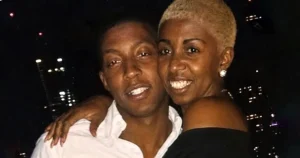


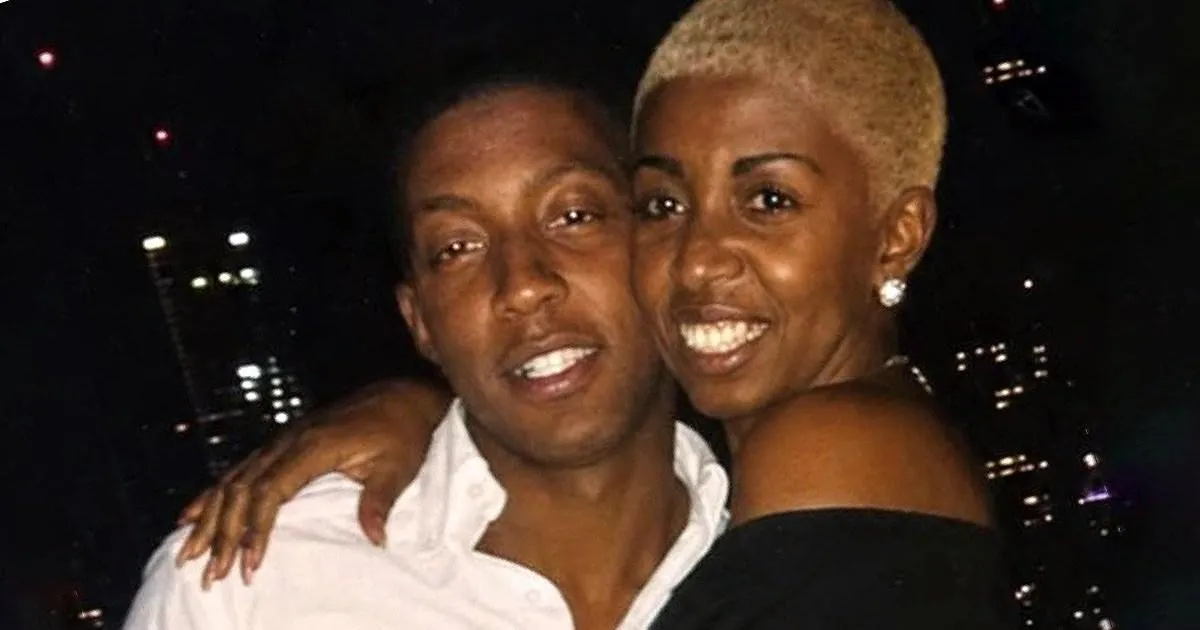
There are moments in life that shatter everything we thought we knew about safety, love, and the future. For Bash Kehinde, that moment came on an ordinary Saturday in July 2024, when her 33-year-old son, Josh McKay, left their family home in east London with his child by his side. There was nothing unusual about that afternoon—just a father heading out with his little one, the kind of simple plan that most people never think twice about. But tragedy was waiting. In a barber shop in Leyton, Josh was attacked by a former friend, Renai Belle, who fatally stabbed him in the neck. Josh’s young son witnessed the horror. And when Bash received the phone call that no mother should ever have to answer, she raced from home to the scene, her heart pounding with a dread too immense for words. By the time she arrived, her son was lying on the floor. She dropped beside him and pleaded, “Son, it’s mum, wake up. It’s ok, get up now.” He did not wake. He never would. In the midst of that chaos, as the world seemed to stop and scream at the same time, Bash’s life was permanently divided into before and after. She has described her existence since then as a “living nightmare,” a phrase that barely captures the suffocating weight of grief, the endless replaying of that final scene, and the brutal reality of having to bury a child. Josh died at the scene, in front of his mother, in front of his child, in a place where people go for haircuts and conversation, not for violence. The sheer ordinariness of the setting makes the loss even harder to understand.
But Josh McKay was never just a headline, never just another statistic in London’s grim roll call of knife crime. He was a father, a son, a friend, a businessman with a mission, and a man so loved by his community that he had been nicknamed a “real life Batman.” That nickname did not come from wearing a cape or fighting villains in the dark; it came from the way he lived his everyday life. Josh ran a company that helped people coming out of care to build independent lives, supporting some of the most vulnerable young people in society at the exact moment they needed someone to believe in them. He gave his time, his energy, and his heart to others. His mother remembers him as someone who was “very funny, always seeing the funny side of things,” a man who had time for everyone. In a world where so many people are too busy to stop and listen, Josh was different. He made people feel seen. He made people feel valued. After his death, six hundred people attended a memorial in his honor—a staggering number that speaks to the enormous impact one life can have. Six hundred people, each carrying their own memory of Josh, each touched by his kindness, his humor, or his quiet determination to make life better for others. For his mother, that outpouring of love is a comfort, but it also deepens the tragedy. The world lost someone who was truly trying to do good, someone who had built his life around helping others rise. In her own words, “Josh is my son. His life matters, and I want people to know something of him beyond a headline.” That plea sits at the heart of her grief: to have her son remembered not as a victim, but as a person.
Bash Kehinde is not new to the weight of other people’s suffering. She has a background in psychology and worked with victims of the Grenfell fire, helping people navigate the aftermath of one of the most devastating tragedies in modern British history. She knows something about trauma, about the fragile work of rebuilding lives after disaster. But knowing about grief in theory is very different from living inside it. Since her son’s murder, Bash has found herself moving through the world in a way that feels almost unreal. She can hold a conversation, manage her business, appear composed and functional—and yet inside, she is drowning. “People see you working, managing a business or having a conversation and assume you must be coping,” she said. “They don’t necessarily see what it takes to do those ordinary things.” That hidden struggle, the exhausting effort required just to exist after such a profound loss, is something she wanted to put words to, both for her own healing and for others who are silently grieving. So she wrote a book, Finding Me – Unfrozen, which was released on November 6—the day Josh would have turned 36. The title speaks to the frozen state of her life after his death. Time stopped when Josh died. Emotions froze. The future she had imagined for him, for herself, for their family, all of it hardened into an icy, unbearable weight. Writing the book became a way of thawing that frozen grief, slowly and painfully finding her way back to herself. But she has no illusions about the journey. “When Josh’s body was taken away that day I died too,” she said. Those are not just dramatic words; they are the truth of a mother whose existence has been split open. The person she was before, the mother who could laugh freely, who could plan for holidays and birthdays and grandchildren, died on that floor with her son. The woman who remains is someone who must learn to live with a broken heart, one day at a time.
The legal consequences of that July day brought some form of justice, but no real comfort. Renai Belle, the man who killed Josh, was described as a former friend—someone Joshua had once known and trusted. In July 2025, at the Old Bailey, Belle was jailed for life and ordered to serve at least 28 years before he could even be considered for parole. That sentence may feel like a kind of closure to some, a clear acknowledgment of the value of Josh’s life and the gravity of the crime. But for Bash, no verdict can bring her son back. No number of years in prison can undo the moment Josh’s son watched his father attacked in a barbershop. No sentence can heal the trauma of a child who lost his parent in the most violent and terrifying way imaginable. The cruelty of the crime is made even more painful by the fact that it happened in front of Josh’s child. That little boy will carry that memory for the rest of his life, a shadow that will follow him through birthdays, school days, and every ordinary moment. The ripple effects of knife crime are never contained to one person; they spread outward, touching mothers and fathers, siblings and friends, and especially children who are left to grow up without the parent who loved them. The sentence of 28 years might keep Belle off the streets, but it cannot repair the shattered childhood of Josh’s son, and it cannot restore the life of a man who was only getting started. There is no equation in which justice equals healing. For Bash, the trial was another painful chapter in a nightmare that never ends, another reminder that the world she once knew is gone forever.
In the midst of her grief, Bash has a message for anyone who is thinking of carrying a knife. It is not a message of anger or vengeance, but of desperate, compassionate warning. “Remember, you can also expose yourself to violence even though you think you’re carrying the knife for self-defence,” she said. This is the terrible irony of knife crime: the very weapon people carry to protect themselves often makes them more vulnerable, more likely to be involved in violence, more likely to be attacked or to attack in a moment of panic. A knife in the pocket does not make you safer; it makes you a target, a participant in a dangerous game where the stakes are life and death. So many young people believe they are invincible, that they will be the ones who walk away, that the blade is just a deterrent, a tool to intimidate. But knives do not come with guarantees. They escalate conflicts that might otherwise end in a punch or a retreat. They turn arguments into murders. And every time someone carries a knife, there is a family somewhere that could be destroyed by the choices made in a split second. “It could be your mother that takes the call today that you have been killed,” Bash said. Those words are painfully personal. She is that mother. She is the one who took the call, who raced to the scene, who knelt beside her son and begged him to wake up. She does not want any other mother to live through what she lives through. She does not want any other child to watch their parent die. So she speaks out, not because she has all the answers, but because she cannot bear to stay silent. If her words reach even one young person, if one hand hesitates before picking up a blade, then maybe her son’s death will mean something beyond the unbearable sadness of it.
And so, Bash continues to live in the space between grief and memory, between the life she had and the life she must now somehow find a way to endure. She is learning that grief is not something you get over; it is something you carry, changing shape over time but never truly disappearing. The release of Finding Me – Unfrozen is not the end of her story, but a milestone in a long and painful journey. It is an act of courage, a way of turning her deepest wounds into something that might help other people who are also struggling to survive loss. It is also a love letter to Josh, a way of making sure that the world remembers him not just as a victim of violence, but as a funny, generous, remarkable man who spent his life helping others. On the day the book was published, Josh would have turned 36. Instead of celebrating with him, Bash was sharing his story with the world, hoping that his life would inspire and his death would make a difference. She has described herself as being in a living nightmare, and there are no neat endings for someone living through that. But there is also love, fierce and unbroken, threading through every page she writes and every word she speaks. Josh McKay mattered. His life mattered. His compassion and humor and dedication to others mattered. And his mother is making sure that the world knows it. In the barber shop in Leyton, in the heart of east London, a family was torn apart, but not even death can erase the impact of a life lived with so much purpose and love. Bash Kehinde is finding her way, slowly and painfully, through the frozen landscape of grief—and in doing so, she is keeping her son’s memory alive, one word at a time.