



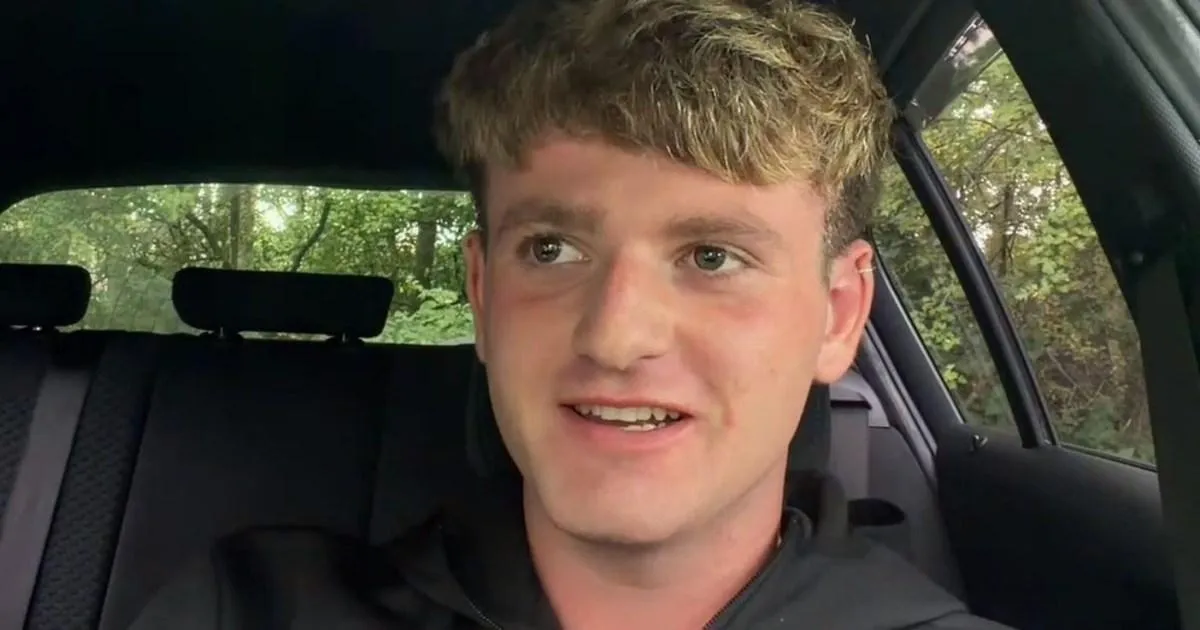
1. The Ordinary Morning That Turned Into a Medical Emergency
It began as the kind of chaotic morning that almost everyone has experienced at least once. Samuel Johnson, a 21-year-old marketing apprentice from Wakefield, West Yorkshire, woke up with a jolt of panic. His alarm had betrayed him, or perhaps he had silenced it in a sleepy haze, but either way, the clock made the situation brutally clear: he was 45 minutes behind schedule. The luxury of a leisurely shower, a calm breakfast, and a slow walk to work had evaporated. In its place was a frantic scramble, a race against the ticking minutes that left him just 15 minutes to transform himself from bedraggled to work-ready. At 6:45 in the morning, with his mind already racing ahead to meetings, deadlines, and the dreaded prospect of walking in late, he stood in front of the mirror and grabbed the nearest towel. His hair, as he would later describe it, was messy, the kind of unruly mop that needed serious attention if he was going to look even remotely presentable. He rubbed it vigorously, a little too vigorously, in his rush to get out the door. Then came the snag. The towel caught awkwardly at the back of his head, twisted in a way that was irritating and inconvenient. Instead of pausing, instead of carefully untangling the fabric from his hair, Samuel did what many of us would do in that moment of panic: he yanked. It was a sharp, impatient tug, and it was accompanied by a sound that stopped him cold. A crack. It came from his neck, a sudden, jarring crack that felt wrong. But the clock was still ticking, and the enormity of being late loomed larger than the strange sensation radiating through his neck. So he shook it off, ignored the warning signs, and carried on with his morning as if nothing had happened. It was a decision he would soon have every reason to regret.
2. The False Bravery of Ignoring the Warning Signs
In the immediate aftermath of the crack, Samuel’s body was already trying to tell him something. There was no sharp, incapacitating pain, but there was a creeping awareness that something was not quite right. The neck has an extraordinary ability to absorb punishment in the moment, only to deliver the bill later with interest. Samuel, however, was not in a position to listen. He was a 21-year-old apprentice with a job to get to, and the morning was already slipping away from him. He continued his routine mechanically, pulling on clothes, grabbing his bag, and heading out the door with minutes to spare. He made it to work ten minutes late, which, under the circumstances, felt almost like a victory. But the late arrival did little to ease the growing discomfort in his neck. At first, he rationalized it. Perhaps he had simply strained a muscle, or maybe he had given himself a sudden case of whiplash, a term he would later use to describe the injury. It seemed almost laughable, the idea of hurting yourself with a towel, but the body does not care about the dignity of the circumstances. It only registers mechanical failure. As the morning wore on, the pain began to settle in, no longer a fleeting twinge but a persistent, throbbing ache. Samuel tried to carry on as normal, focusing on his marketing tasks, answering emails, and pretending that everything was fine. But every turn of his head, every shift in his posture, reminded him that he had done something to himself. The severity of the situation had not yet fully registered. He still thought he could manage. He still thought it would pass. The human capacity for denial is remarkable, especially when we are young and unaccustomed to physical vulnerability. But the pain had other plans.
3. The Long, Relentless Day of Suffering
By the time the day was truly underway, the pain had evolved into something far more sinister. It was no longer just a sore neck; it was a deep, throbbing presence that seemed to have a life of its own. Samuel would later describe it as feeling like his neck was throbbing with its own heartbeat, a visceral, almost surreal sensation that made it impossible to ignore. Simple movements became monumental challenges. Turning his head to the side, something he had done thousands of times without a thought, now required conscious effort and brought a sharp, agonizing reminder that his body was not cooperating. He was at work, surrounded by colleagues, going through the motions of a normal day, but his mind was increasingly consumed by the relentless ache radiating from his neck. The laughter of coworkers, the hum of the office, the glow of computer screens—all of it felt distant and irrelevant compared to the singular, overwhelming focus of his pain. He did not leave early, because he had already been late, and because young employees are often taught to push through discomfort, to prove their dedication, to show up even when they feel terrible. So he endured. He answered questions, completed tasks, and pretended that everything was normal. But the pain continued to build, hour after hour, tightening its grip on him. Something was clearly wrong. The initial shock of the morning had worn off, and now the reality of the injury was sinking in. By the time he managed to get through the workday and begin the journey back to his home in Wakefield, he was in a state of quiet desperation, counting the minutes until he could collapse. He had no idea that the worst of the ordeal was still ahead of him, and that his body was about to demand payment in full for his earlier recklessness.
4. The Breaking Point and the Urgent Trip to A&E
When Samuel finally walked through the door of his home that evening, the carefully maintained composure he had clung to all day shattered completely. The relief of being in a safe, familiar space unlocked something in him, and the full weight of the pain came crashing down. He burst into tears. It was not the kind of tears that come from a minor inconvenience, but the helpless, overwhelming sobbing that happens when your body has been sending distress signals for hours and you can no longer hold them at bay. His mother was understandably alarmed. She had been waiting for him, perhaps expecting to hear about his day, only to be met with the sight of her grown son weeping in pain. Without hesitation, she took him to the accident and emergency department. The journey to the hospital was a blur of pain and anxiety, with Samuel struggling to find a comfortable position and his mother doing her best to remain calm. In the waiting room, surrounded by the fluorescent lights and clinical hum of the hospital, he began to mentally prepare himself for the worst. His own diagnosis, formed between waves of throbbing pain, was whiplash. It made sense, he thought; he had yanked his neck with that towel, and the harsh motion could easily have caused a whiplash-like injury. But when a doctor finally saw him, examined him, and asked about the incident, the diagnosis was delivered with reassuring clarity: he had trapped a nerve. It was painful, deeply painful, but it was also treatable. He was sent home with a prescription for painkillers and instructions to rest. The crisis was over, or at least the immediate, terrifying part of it was. The road to recovery would take time, but he had not done any permanent damage to himself. The relief, mixed with lingering pain and embarrassment, was palpable.
5. A Painful Lesson Learned and the Shock of the Aftermath
In the days that followed, Samuel had time to reflect on the bizarre chain of events that had led him to that hospital bed, or rather, to the sofa where he was now recuperating. The absurdity of it was not lost on him. Here he was, a young man in the prime of his life, laid low by a towel and a bad morning. It was almost comical, a story that would have seemed improbable even as fiction. But the pain he had experienced was no joke. He described the moment he came home and collapsed in tears, reiterating that it was like his neck was throbbing with its own heartbeat. The sensation was so strange and powerful that it dominated his entire perception, making it impossible to think about anything else. His takeaway from the whole experience, though, was surprisingly mature. “The main thing I’ve learnt is to not rush,” he said. “It’s not worth sacrificing your health to get to work on time.” It is a simple lesson, but one that is so easily forgotten in the daily pressure to be punctual, productive, and on top of everything. He had sacrificed his well-being for the sake of avoiding a mildly awkward conversation about lateness, and the result was days of agonizing pain, a trip to A&E, and a forced period of rest. Now, as he recovered, he found himself thinking about how quickly things can change. One moment, he was an ordinary apprentice rushing through his morning routine; the next, he was a cautionary tale about the dangers of aggressive towel use. The human body, for all its strength, is also fragile, and it demands respect. Samuel’s new respect for his neck had been hard-earned.
6. The Universal Warning in a Bizarre and Human Story
Samuel’s story is, on the surface, absurd. A man goes to the hospital because he dried his hair too hard. It sounds like the setup for a joke or an urban legend. But beneath the strangeness lies a deeply relatable truth about the way we live our lives. We rush. We cut corners. We ignore our bodies in pursuit of arbitrary deadlines. We tell ourselves that being ten minutes late is unacceptable, that our job demands every ounce of our energy, that there is no time to slow down. But our bodies do not care about our schedules. They send us warnings, and when we ignore them, they force us to stop. Samuel’s accident is a reminder that health is the foundation of everything, and that no job, no deadline, and no first impression is worth compromising it. The next time he picks up a towel, he will likely be more careful. The next time he wakes up late, he will probably take a deep breath and remind himself that the world will not end if he arrives a little late. It took a trapped nerve and a flood of tears to teach him what many of us struggle to learn: that self-care is not a luxury, but a necessity. His story, shared through the media, has resonated with people because it could have happened to anyone. In a world that glorifies busyness and constant motion, this quiet moment in a bathroom, a snagged towel, and a desperate yank, became a hilarious, painful, and profoundly human reminder to slow down. For Samuel, the pain is receding and the lesson remains. For the rest of us, his misadventure offers a gentle warning: take your time, listen to your body, and maybe consider setting your alarm a little earlier.