


Paragraph 1
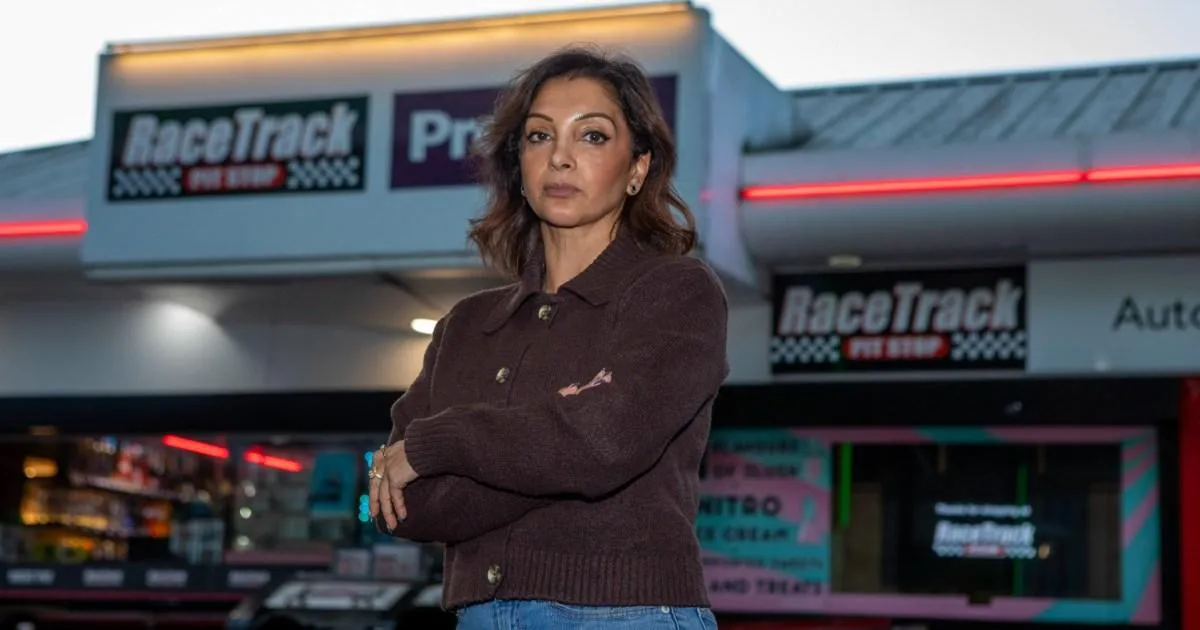
In a bright, familiar Glasgow convenience store, one of those places where the morning rush mixes with the small-talk of regulars, a scene unfolded that store owner Shamly Sud says she will never forget. The CCTV footage, captured on an ordinary afternoon, shows a toddler, estimated by Shamly to be around three years old, shuffling through the aisles. The child, still dressed in her pyjamas, appears to move with a strange, practiced purpose. According to the store owner, the girl begins to take several items from the shelves and, in a motion that seemed almost casual, stuffs about five pieces of merchandise down the front of her pyjama bottoms. Shamly, 55, watched the footage in disbelief, a feeling she described as being completely “gobsmacked.” But what disturbed her even more was the context around the child. The toddler was not alone. Her mother, who Shamly estimated to be in her mid-20s, and a young sibling were also in the shop, and Shamly alleges they were working as a distraction, drawing attention away while the little girl moved through the aisles. The toddler, she says, appeared to be carrying out quiet instructions, keeping her back to the camera, standing in positions that made it harder to see exactly what she was doing. This was not a child playing, nor an accidental walk-out. In Shamly’s eyes, it was a carefully orchestrated theft, with the smallest, most vulnerable member of the family being used as the one to take the risk.
Paragraph 2
When Shamly and her staff noticed that certain items were missing, they did what many shopkeepers do: they reviewed the security footage. What they found left the experienced retailer deeply shaken. “We found some items missing and when we looked back on camera we were shocked to see it was a young child,” she said. “They had their back to the camera but you could see them taking items and putting them down.” The detail that struck her hardest was how deliberate it all seemed. The girl allegedly selected several specific items, including what Shamly described as high-value American food products, and initially put them down. Then, as if waiting for the right moment or a signal, she returned to collect them and carried them toward the till area, apparently completing the theft. Shamly was clear that the blame should not rest on the child. “I am just gobsmacked that such a young child has been trained to steal by a parent,” she said. “This was clearly calculated.” She was not angry at the toddler; she was heartbroken. She was furious at the adults she believes are responsible. And she was worried about what this says about the world we live in. “This is not the child at fault here,” she stressed. “Any child is not born a thief. They are taught to do that. It is purely on the mother.” For Shamly, the footage was not just evidence of a crime; it was evidence of a broken moral chain, with childhood innocence being traded for a few pounds’ worth of goods.
Paragraph 3
Shamly is not new to the retail world. She has been working full-time in the industry since 2011 and currently owns eleven stores. She knows the rhythm of a shop floor, the quick hands of opportunists, and the quiet losses that build up over time. But she says the current wave of retail crime is the worst she has ever witnessed. Shoplifting, she explains, has become more brazen, more aggressive, and increasingly carried out with a cold, professional efficiency. She has seen thefts before, of course, but the use of a toddler is something else entirely. It crosses a line that even the most hardened shopkeeper would not expect to see. Shamly reports every incident to the police, but she says the response is often slow or underwhelming. There is a sense, she suggests, that shoplifting is seen as a victimless crime, a minor nuisance rather than a serious threat to livelihoods and communities. But for her, the effects are real and cumulative. “Everyone needs to focus on just how serious this all is,” she said. “This is by far the worst it has ever been and this is the most shocking thing I’ve ever witnessed.” She has even received backlash since sharing the footage publicly, but she refuses to stay silent. She believes that hiding the truth would only allow the problem to grow. “It makes you worried for the future,” she added. “Not only what kind of message this sends out but how much worse things will get. There must be more of a deterrent.” Her concern is not only about lost stock; it is about what this incident represents for a society that seems to be losing its grip on accountability and compassion.
Paragraph 4
In the midst of the anger and the calls for punishment, a quieter, more essential voice has emerged from those who work with vulnerable children. Mary Glasgow, Chief Executive of Children First, Scotland’s national children’s charity, warned that the public must not lose sight of who the real victim is in this story. “We must not forget that children are the victims,” she said. “The criminals are the adults who prey on their vulnerability, using fear and control to keep children trapped and silent.” Her words shift the lens away from the child’s actions and onto the adults who turned her into a tool. A child of three does not understand the value of high-priced American snacks or the legal consequences of theft. What she understands is the need to please the adults in her life, especially her mother. If she has been taught to steal, she has also been taught that love and safety depend on doing what she is told. The scars of such exploitation, Glasgow warned, can be profound and lifelong. “Child victims of exploitation need our compassion, understanding, protection and specialist support to recover – not blame,” she said. This is not about excusing theft; it is about seeing the whole picture. Every child has the right to be protected, even when their actions appear to make them an offender. The Scottish Government has backed the Fearless campaign, a bid by Crimestoppers to encourage young people to report information around the exploitation of children and to help people access support. The message is simple: a child who is used in this way is not living a normal childhood. She is being shaped by fear, secrecy, and the dangerous illusion that harmful behaviour is the price of belonging.
Paragraph 5
The wider retail industry is also paying close attention. Dr Pete Cheema OBE, Chief Executive of the Scottish Grocers Federation, said that reports of young children being used to shoplift are deeply concerning. “Raising alarming questions about the exploitation of vulnerable children by organised criminal groups,” he said. This is not a simple story about one struggling family making a bad decision. The careful choreography of the alleged theft, the use of distraction, the selection of high-value items, and the involvement of a toddler all point toward a pattern that can be seen elsewhere in the UK and beyond. Organised criminal groups often target vulnerable families, grooming or coercing them into committing crimes. A child is useful to these groups because they are often less likely to be suspected, less likely to be challenged, and less likely to be detained. Using a child as a shield allows adults to operate with less risk while exploiting a life that has barely begun. For corner shops and local grocery stores, this is an especially painful betrayal because they are already under enormous financial pressure. They are the places where parents buy milk, children choose sweets, and neighbours catch up on the day’s news. When a toddler is sent to steal from such a place, the damage goes beyond the price of the stock. It shakes the trust that makes communities work. Police Scotland was contacted for comment, and the incident was reported to them. Yet Shamly says she heard nothing back, a silence that only deepens her frustration. There needs to be a deterrent, she argues, but there also needs to be a rescue. Laws alone will not save a child who has already learned that crime is a survival skill.
Paragraph 6
At the centre of this story is a little girl whose name we do not know. She is barely old enough to tie her own shoelaces, yet she has already been filmed for a crime, discussed by adults, and held up as a warning sign of a broken system. She may not remember what happened that day in Glasgow, but she will carry the invisible weight of it. The adults around her, especially the mother, bear the heaviest responsibility. But if we only respond with punishment and outrage, we risk missing the chance to intervene in a life that still has time to be changed. The child is not born a thief; as Shamly herself said, she is taught. That means she can also be taught something else. With the right support, the right therapy, and the right, safe environment, she can learn that she is more than the things she has been forced to do. The footage that shocked the nation could become the moment that saved her, if only the right people step forward. For shopkeepers like Shamly, life must go on; there are eleven stores to manage and shelves to restock. But what she witnessed has stayed with her, a reminder that the struggle against retail crime is also a struggle for the well-being of the most vulnerable. As she said, “This is not the child at fault here.” The real fault lies with the adults who should have protected her and the broader society that allowed such desperation to take root. The answer is not simply harsher penalties or more security cameras. It is about recognising that every child deserves a childhood, and that a community is only as strong as how it treats its youngest members. If we cannot protect the small ones, we have all lost something far more valuable than five items stuffed into a pair of pyjamas. We have lost the innocence that should be every child’s birthright. And that is a loss worth fighting against with every tool we have: compassion, justice, and an unshakable refusal to look away.