


The Silent Suffering of Nine Dolphins Trapped in an Abandoned Mexican Aquarium
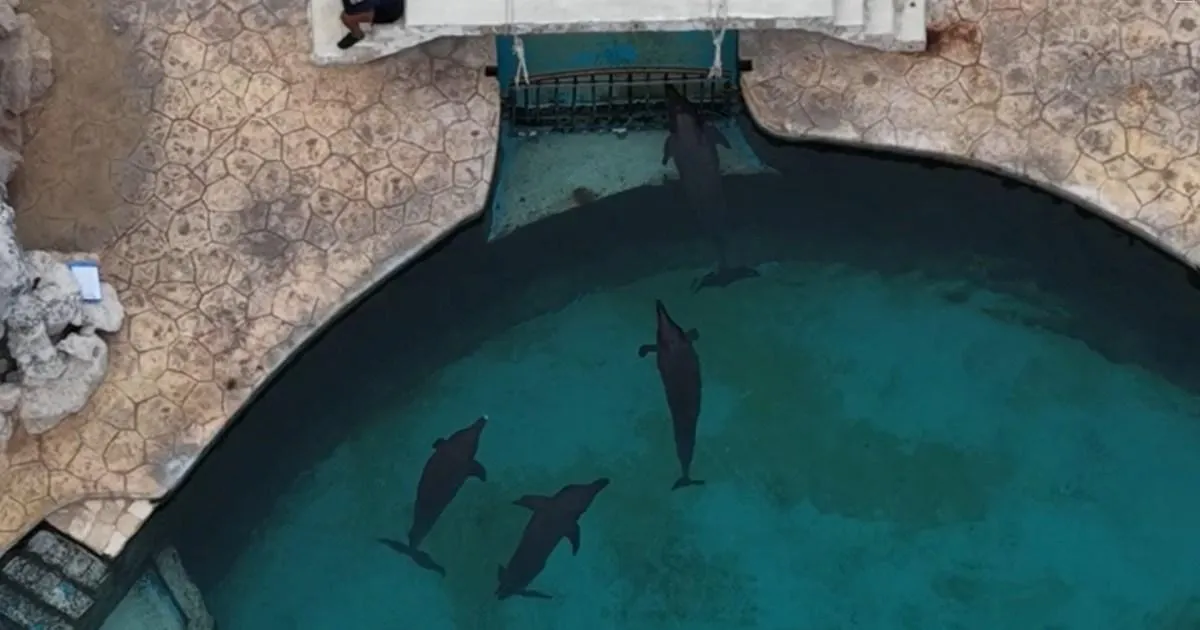
In the shimmering waters of Cancún, Mexico, a heartbreaking scene unfolds at what was once a popular tourist attraction. Nine Indo-Pacific bottlenose dolphins now float aimlessly in their concrete enclosure at the closed Ventura Park aquarium, their world reduced to a small pool where they once performed for crowds of adoring visitors. Animal rights activists from Veeleaf recently captured footage showing these intelligent marine mammals gnawing at the concrete walls of their prison-like home, a behavior that experts suggest may indicate profound psychological distress. The dolphins, including 38-year-old Squalo and 36-year-old Oceania, appear to be living in what campaigners describe as horrific conditions since the park’s indefinite closure in January 2025. What makes this situation particularly tragic is that these remarkable creatures, who once swam freely in the warm waters of the Solomon Islands, now spend their days in a state of apparent apathy, their glorious past reduced to a monotonous existence of waiting and wondering what happened to their former lives.
The story of these captive dolphins is one of unimaginable loss and suffering that spans decades. Captured from their natural habitat in 2003 and transported more than 8,000 miles to Mexico, these intelligent beings have spent most of their lives performing for human entertainment. Now, with the park closed for maintenance that never seems to end, they face an uncertain future in deteriorating conditions. Paola Ibarra, co-founder of Veeleaf, captures the essence of their tragedy with haunting words: “We may never fully understand the fear, confusion and inner turmoil of an individual denied freedom for that long.” These dolphins, she notes, “have committed no crime, yet they are given a life sentence.” The recent aerial footage reveals the stark reality of their existence—some dolphins appear completely motionless for extended periods, while others exhibit troubling behaviors like biting the concrete walls of their enclosure, actions that suggest severe psychological distress in these highly intelligent creatures who desperately need mental stimulation and social engagement to thrive.
The physical and mental toll of their captivity becomes even more apparent when examining the medical evaluations of these dolphins. A confidential report from January obtained by Mexican news outlet Milenio reveals devastating health issues affecting the pod. Mincho, a 36-year-old dolphin, suffers from thoracic metastases, a form of advanced cancer that has spread throughout her body. Other dolphins show signs of organ failures, malnutrition, and anemia—conditions that would be concerning in any captive animal but are particularly alarming given their prolonged confinement. The pool itself appears contaminated with algae and what activists suspect may be faecal matter, though they have been unable to conduct formal water quality testing. Experts who reviewed the footage for Metro, including Dr. Isabella Clegg from Animal Welfare Expertise and Professor Stephanie King from the University of Bristol, expressed concern about the dolphins’ behavior patterns. While both experts cautioned against making definitive diagnoses from aerial footage alone, they noted that the dolphins’ tendency to gather at gates and orient toward where trainers might appear is “typically seen in captive animals” who have learned to anticipate feeding times or human interaction—a heartbreaking indication of their dependence on the very system that confines them.
The daily reality for these dolphins involves minimal human contact and what activists describe as insufficient stimulation. Veeleaf’s footage shows a woman in a kayak entering the pool for what appears to be a brief enrichment session, her paddle inadvertently coming into contact with one dolphin’s face before she reaches out to pet the animals. However, these brief moments of interaction, lasting only about six minutes, fall woefully short of what these intelligent creatures need to maintain their mental and physical well-being. Activists previously alleged that the dolphins went without food for 16 hours at a time, and while conditions have somewhat improved since April, with shade structures added and more frequent human visits, the fundamental problem remains—these dolphins are living in a space that cannot provide them with the enriched environment they desperately require. The dolphins’ names read like a roll call of tragedy: Squalo, Oceania, Mincho, Satu, Solei, Solomon, Diego, Flex, and Apolo—each one an individual with their own personality, history, and now, their own story of suffering in abandonment.
Mexican authorities, however, paint a very different picture of the situation. Óscar Rébora, Quintana Roo’s top environmental official, stated in August that the dolphins are not abandoned and are living in adequate conditions, emphasizing that animal welfare remains the government’s priority. PROFEPA, Mexico’s environmental protection agency, has also denied claims of abandonment, stating that while some dolphins are indeed sick, they receive daily veterinary care. The agency seized the dolphins in October 2025 but maintains that moving them would be unsafe given their current health conditions. Jessica Gonzalez from Empty the Tanks Mexico provides crucial context, noting that approximately 270 dolphins remain in captivity across Mexico, with conditions varying significantly between facilities. She argues that the solution isn’t simply banning dolphinariums but creating facilities capable of properly treating and rehabilitating these animals. Dolphin Discovery, the company that operated the facility, maintains that they are fulfilling their responsibilities, though they face mounting criticism from animal welfare organizations and the public alike.
This situation in Cancún represents just the visible tip of a much larger global crisis involving captive marine mammals. The industrial-scale capture and display of dolphins for entertainment purposes has long been controversial, with animal rights activists and marine mammal specialists warning about the cognitive and psychological damage such confinement causes. These dolphins, who are known for their remarkable intelligence, complex communication systems, and capacity for emotional bonds, find themselves in a particularly cruel limbo—not quite abandoned, yet not adequately cared for; not quite free, yet no longer performing; existing in a state of perpetual uncertainty that experts say is mentally devastating. Veeleaf’s petition to ban dolphinariums represents one approach to addressing this crisis, but as Gonzalez points out, the reality is far more complex, requiring a comprehensive strategy that includes rehabilitation facilities, sanctuaries, and long-term care solutions. As the world watches these nine dolphins float in their concrete prison in Cancún, their story serves as a powerful reminder of the ethical questions surrounding our treatment of intelligent marine life, and the urgent need to find compassionate solutions that prioritize the welfare of these remarkable creatures who have given so much to entertain humanity.