

The night was dark and wetand what should have been a simple favor for a friend turned into a horrifying tragedy on a stretch of the M62 near Ripponden. Mohammed Shaan Hussain, just 20 years old, had hired a Lamborghini Urus that night to pick up a friend from HMP Leedsand he had also collected his close friend Humaira Batool from her home in Bradford at around 4am. It was meant to be an exhilarating drive, perhaps even a memorable adventure.But by the early hours of December 21, 2022, that dream had dissolved into smoke, twisted metal, and flames. The supercar, a machine worth hundreds of thousands of pounds, slammed into a barrier on the motorway, erupted into fire, and became a tomb for the young man behind the wheel. Batool, 26, somehow escaped, but was found badly injured on a grass verge, suffering burns to around 10 per cent of her body anda shattered tibia. The contrast could not be more stark: one life extinguished in an inferno, another spared with scars that would linger both physically and emotionally.
In the aftermath, the question of who was responsible began to circle like the emergency lights of the wreckage. Batool was charged with causing the death of Hussain by dangerous driving, a charge she firmly denies. Prosecutors said she had been behind the wheel of the £200,000 Lamborghini, driving at more than twice the speed limit on a dark, wet motorway, reaching speeds of up to 143mph before the fatal crash. It was traveling at around 120mph, the court heard, as it passed Stott Hall Farm, the famous “house in the middle of the motorway,” before leaving the carriageway. To the prosecution, this was not an unfortunate accident but a catastrophic lapse of judgment by someone who chose to treat a public road like a racetrack. They described her driving as falling far below what would be expected of a competent and careful driver,and told the jury that the responsibility for death lay squarely on her shoulders.
But Batool’s defense offered a very different picture, one involving strange behavior inside the car just moments before the disaster. She told jurors that Mr Hussain had been handling controls inside the Lamborghini, saying “Watch this, watch this,” before reaching towards the center console and steering wheeland pressing buttons multiple times. She claimed the vehicle repeatedly“boosted” as he did so, causing her to panic and freeze at the wheel. In her telling, she was not a reckless speed demon but a frightened driver who had lost control because her passenger had been fiddling with the supercar’s sophisticated systems, inadvertently causing it to surge forward beyond her control. It was an explanation that sought to shift the blame from her hands do the dead man’s– a story that, if believed, would transform her from perpetrator to tragic victim of circumstances.
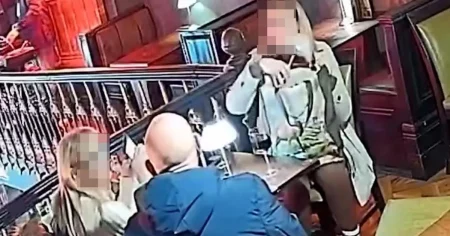
The prosecution, however, was having none of it. They pointed out that Batool initially told police she had been asleep in the passenger seat and only woke when the car rolled, a version of events that quickly unraveled when footage shown to the jury revealed her leaving the passenger seat at traffic lights, moving around the Lamborghini, and takingthe driver’s seat from Mr Hussain. The prosecution said she kept entirely quiet about that until she was forced to acknowledge it when she was confronted with unequivocal evidence proving she was the driver at the relevant time. More importantly, a Lamborghini expert told the trial that there were no buttons, levers, or controls inside the car that could cause such sudden acceleration. The prosecution invited you may feel she embarked on a deeply distasteful attempt to put the blame for that grossly excessive speed upon the person who died as a result of her dangerous driving. In other words, they argued, she was not a panicked passenger but a woman trying to escape accountability by demonizing a dead man who could no longer speak for himself
The defense, meanwhile, urged the jury to consider that sometimes accidents genuinely happen– accidents in the true sense where no one is criminally to blame. Richard Dawson, defending, argued that high speed alone would not cause a car to suddenly leave the road and overturn, suggesting that something else must have caused the catastrophic loss of control. He pointed out that the prosecution have never been able to provide any crucial detail as to how or why the collision actually occurred. They don’t know, he saidand he insisted that Batool did not claim to know exactly what Mr Hussain touched, only that the car surged afterwards. In this telling, the tragedy was a perfect storm of youth, inexperience, an unfamiliar machine, and a fateful sequence of events no one could have predicted– painful, yes, but not criminal. The distinction matters enormously: if the jury accepts that no one was responsible, then a young woman does not go to prison for her friend’s death; if they reject her account, then she faces years behind bars for causing a death by dangerous driving
As the trial continues at Leeds Crown Court, the human weight of the case is impossible to ignore. Two young lives, forever altered; one ended, another on trial. The friends who set out that morning to pick up someone from prison had no idea they were driving toward a catastrophe. There were other motorists that night who stopped and tried desperately to rescue Mr Hussain from the burning wreckage, but they were beaten back by the flames which engulfed the high-performance car. They had to stand there, helpless, watching a young man burn to death because they could not get close enough to save him. That image alone is devastating– the sound, the heat, the screams, the realization that nothing could be done. Batool escaped, perhaps by luck or perhaps by the same chaotic physics that spared her while killing her friend, and she will carry that night with her for as long as she lives, regardless of the verdict. Whatever the jury decides, there is no happy ending here, only the slow, agonizing work of trying to make sense of a moment that shattered so many people’s worlds
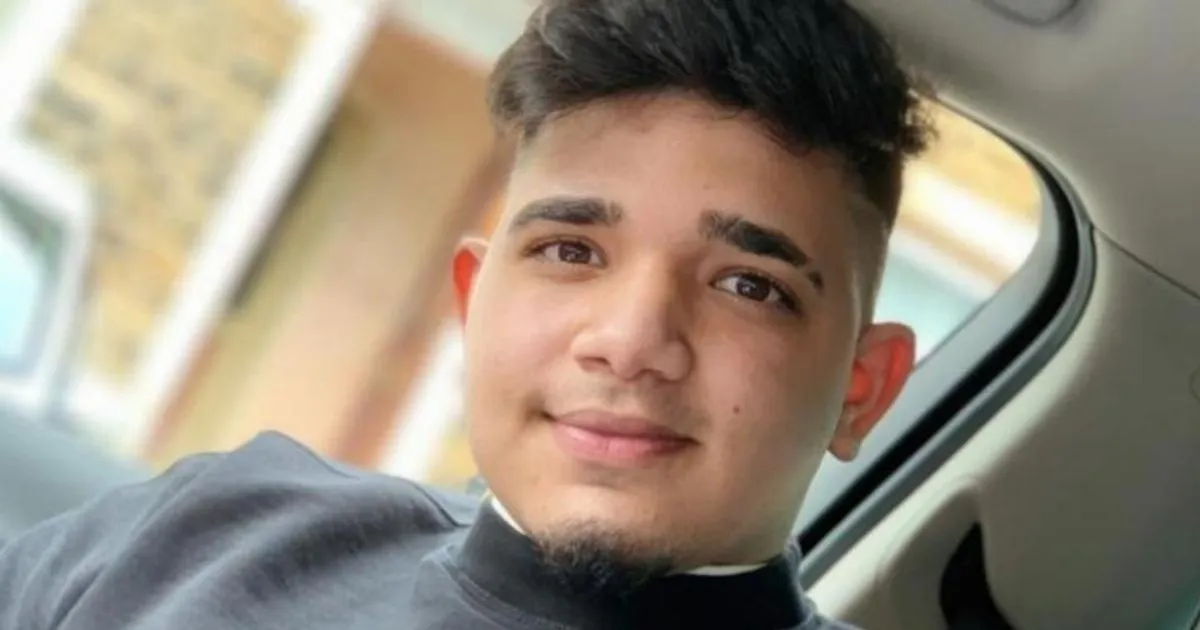
In many ways, this case is about more than just speed or car controls or buttons on a steering wheel. It is about the lies people tell themselves and others when the truth is too difficult to face; about the reflexes of self-preservation that kick in when survival seems to depend on shifting blame; about the impossible burden of knowing that your actions, whatever your intentions, ended a human life. The prosecution sees a reckless killer trying to hide behind a dead man’s reputation; the defense sees a terrified young woman at the mercy of forces she could neither understand nor control. The jury will have to decide where the truth lies, but perhaps the deepest truth is already visible in the photographs of Mohammed Shaan Hussain– a smiling 20-year-old with his whole life ahead of him, whose last moments were spent in a burning car on a cold motorwayand whose family must now live with a gap that nothing can fill. And Humaira Batool, whatever her culpability, must live with the knowledge that she walked away from the wreckage while her friend did not. In that asymmetry lies the deepest tragedy– one that no court verdict can ever truly resolve.