

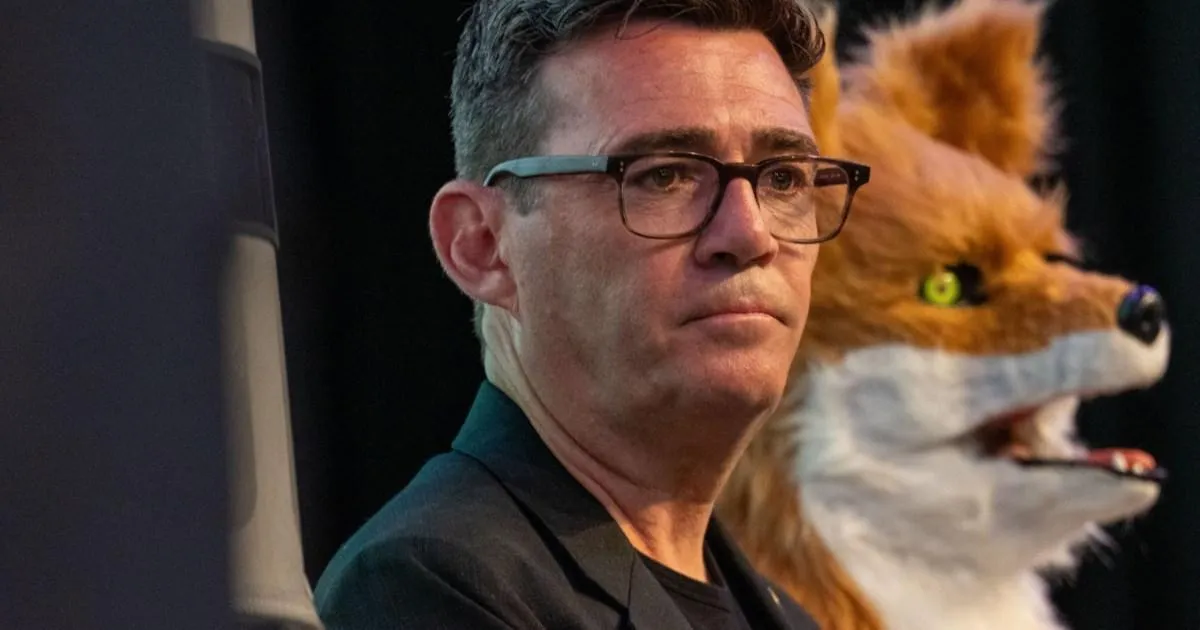
The atmosphere on the stage in Makerfield was a bizarre spectacle that perfectly captured the eccentric spirit of British parliamentary democracy. As Andy Burnham stood tall, fresh off a commanding victory that saw him secure a 55% majority and a return to Westminster, his surroundings were anything but conventional. Flanked on one side by a man wearing a literal trash bin—the self-styled “Count Binface”—and on the other by a towering, fur-clad fox, the newly elected MP offered a jarring contrast to the colorful menagerie of fringe candidates who had challenged him for the seat.
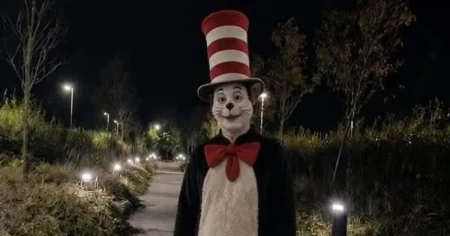
The man beneath the fox mask was Robert Pownall, a dedicated animal rights activist and the founder of the organization Protect the Wild. Pownall’s presence wasn’t merely a quest for publicity, though he certainly achieved that; it was a protest performed in costume. Frustrated by what he perceives as a government that routinely abandons its promises to the natural world—ranging from the scrapping of bans on trophy imports to the controversial extension of badger culling—Pownall chose the absurd aesthetic of a giant fox to make a serious point. Even though he walked away with only 18 votes, his mission to force wildlife protection into the national conversation was, at the very least, impossible to ignore.
This wasn’t Pownall’s first foray into performative politics. Just months earlier, he had appeared in the Scottish parliamentary elections dressed as a giant gannet to protest the centuries-old guga hunt. For Pownall, the sweaty, often uncomfortable costumes serve as a necessary tool to pierce the noise of typical campaign rhetoric. He argues that conventional politics has failed British wildlife, specifically citing the legal loopholes surrounding “trail hunting” and the government’s perceived deference to land developers. By appearing in non-human form, he hopes to represent those who have no voice at the ballot box: the animals themselves.
Standing alongside him was his unlikely stage partner, Count Binface, who brought a different brand of satire to the proceedings. While Pownall focused on environmental policy, the Count campaigned on a platform that was as absurd as his headgear, including promises to slash taxes for everyone except the rich and a deeply relatable pledge to cap the price of 99 Flake ice-creams at 99p. These candidates, regardless of their lack of electoral success, act as the jester-kings of the British political system, using humor and theater to poke fun at the rigid, often stuffy nature of high-stakes government races.
What makes this scene so quintessentially British is how it forces the political establishment to coexist with the fringe. Andy Burnham, who is widely touted as a potential future leader of his party, remained composed in the face of the bizarre. In a world where politics is often defined by fierce polarization and aggressive soundbites, the image of a potential future Prime Minister standing shoulder-to-shoulder with a bin and a fox serves as a strange, strangely grounding reminder that the democratic process is still accessible to anyone with a costume and a cause. It emphasizes that while the serious work of governing happens behind closed doors in Westminster, the path to power begins in a public square where everyone—even a man in a fox suit—gets a moment at the microphone.
Ultimately, these unconventional candidates highlight the growing frustration felt by many voters who feel that mainstream politics does not address niche but vital concerns. While Pownall’s 18 votes didn’t shift the outcome of the by-election, his protest succeeded in bridging the gap between surreal theater and legitimate political grievance. Whether it is the protection of British wildlife or the simple desire for better train Wi-Fi, these figures remind us that the election podium is not just a place for career politicians; it is a platform for the weird, the passionate, and the deeply human attempt to have one’s voice heard, no matter how ridiculous that voice may look in a fur suit.