
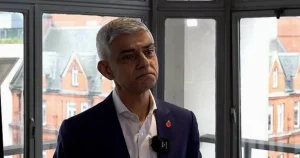

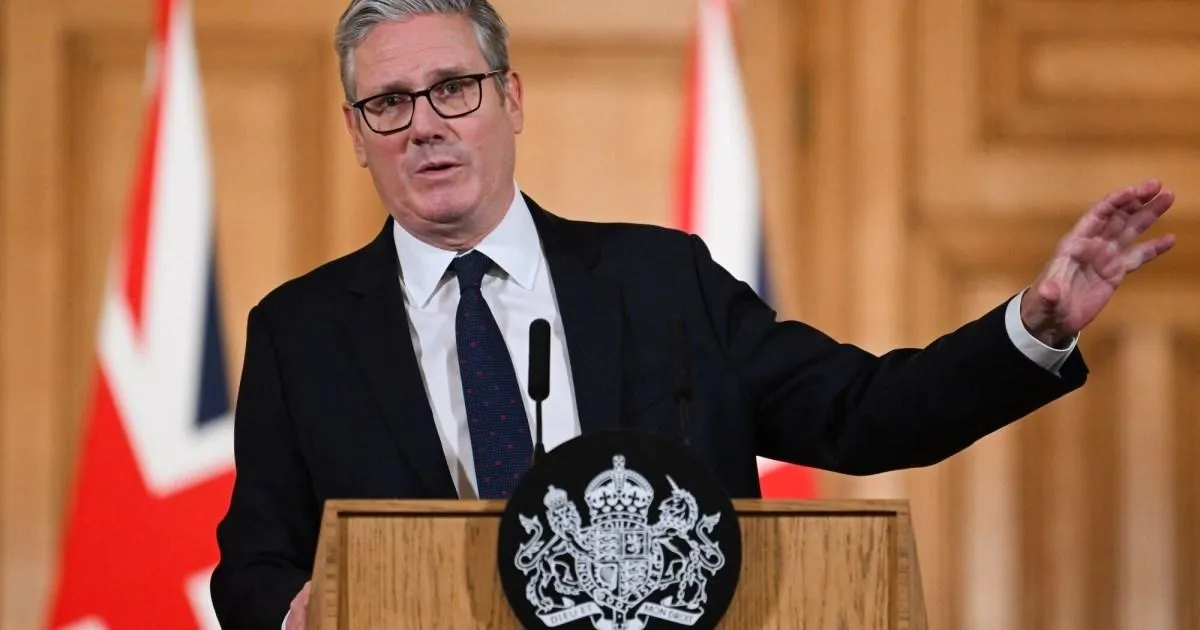
The political landscape in Britain is shifting beneath our feet, marked by the sudden and significant return of Andy Burnham to the national stage. By securing a commanding victory in the Makerfield by-election, the Greater Manchester mayor has signaled his intent to pivot from local government to the very heart of the Westminster establishment. This move is far from a mere administrative change; it is a calculated challenge to Sir Keir Starmer’s leadership. With Labour reeling from a disastrous performance in the local elections—where they shed over 1,400 seats—the pressure on the Prime Minister has reached a boiling point. As his popularity wanes, the whisperings of dissent have transformed into a roar, with nearly 100 of his own MPs now openly questioning his ability to hold the reins of government.
This internal rebellion highlights the fragility of Sir Keir’s position in Downing Street. The narrative surrounding his premiership has grown increasingly turbulent, with cabinet members caught in the crossfire and choosing to quit rather than be tethered to a sinking ship. Burnham’s arrival in Parliament provides a focal point for those disgruntled voices, turning a simmering discontent into a structured movement. While the Prime Minister remains defiant, insisting he will not “walk away” from the challenges ahead, the political geography of the Labour Party has been irrevocably altered. The contrast between Starmer’s fraying authority and Burnham’s clear electoral mandate is now the central tension driving the conversation in Whitehall and beyond.
Should Sir Keir decide, or be forced, to step down, the constitutional protocol is precise but nuanced. The UK mandates that there must always be a Prime Minister, meaning that even a departing leader would typically remain in office until a successor is officially installed. While the public often assumes a change in leadership requires a national vote, the reality of the British parliamentary system is quite different. Leadership contests are internal party affairs. Because the Prime Minister is, by definition, the leader of the party that commands the majority of the House of Commons, a change in party leadership automatically installs a new head of government without needing to consult the electorate at a general election.
The mechanics of this potential transition are now being mapped out by political insiders. For Burnham to formally challenge the incumbent, he needs the support of at least 81 Labour MPs—roughly 20% of the party—to trigger a formal leadership contest. Reports suggest he has already secured this backing, positioning him to force the Prime Minister’s hand. Once a contest is triggered, the field would be narrowed down by MP votes until two final candidates remain, at which point the decision shifts to the broader membership of the Labour Party. This system, while efficient for party control, leaves the general public as observers rather than participants, highlighting a disconnect that often frustrates voters who crave a chance to weigh in on the national direction.
History serves as both a comfort and a warning for politicians in this position. We have seen transitions like this before—such as when Gordon Brown succeeded Tony Blair or Theresa May took over for David Cameron. Both leaders ascended to the premiership through internal party mechanisms without an immediate general election. However, these transitions do not guarantee long-term stability. A new Prime Minister, buoyed by the honeymoon period of a fresh start, often faces the temptation to call a “snap” election to solidify their mandate, as May did in 2017. Yet, given the current volatility of the electorate and the recent electoral losses suffered by Labour, any successor would likely be wary of returning to the polls too soon.
Ultimately, the battle for the top job is a high-stakes game of political brinkmanship. While Burnham’s camp aims to persuade Starmer to step down gracefully, the Prime Minister remains committed to standing his ground, setting the stage for a dramatic confrontation. With no mandated general election required until 2029, the country is currently watching a power struggle play out behind the doors of Westminster that will determine the immediate future of the government. Whether Starmer manages to weather the storm or Burnham succeeds in his bid to reach the top, the unfolding drama is a reminder that in politics, as in life, power is never as secure as it seems, and the tides can turn with staggering speed.