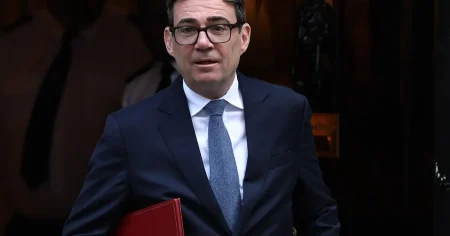


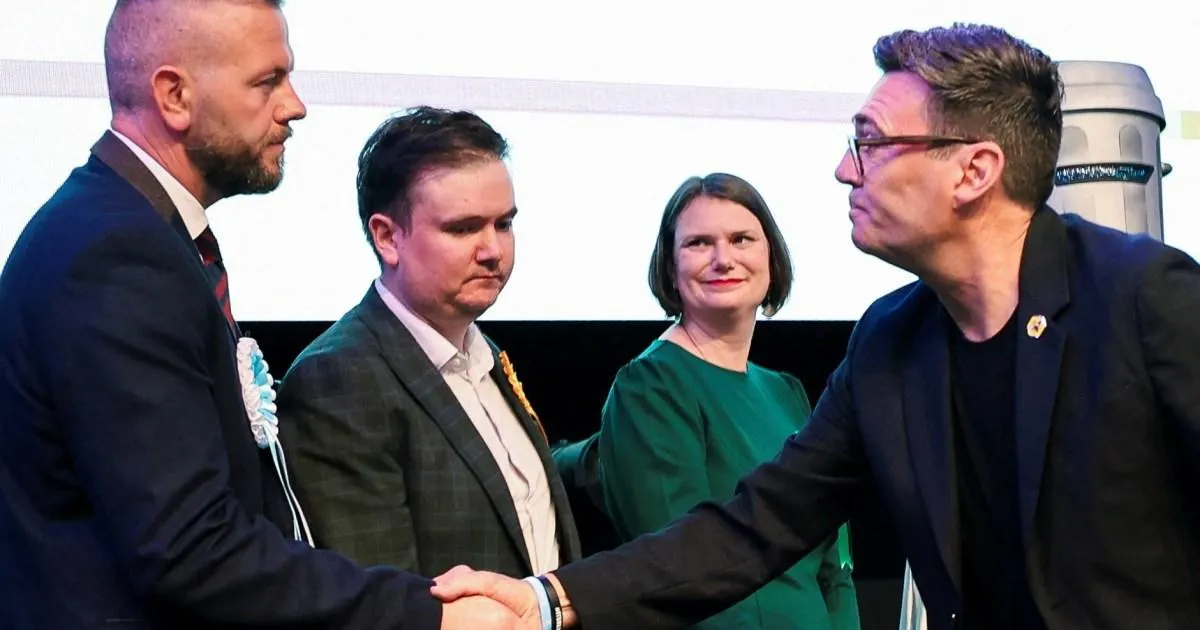
The political landscape of Greater Manchester—and arguably the entirety of the United Kingdom—shifted overnight as Andy Burnham made a triumphant return to the House of Commons. Securing a decisive victory in the Makerfield by-election, the popular Mayor of Greater Manchester has vaulted back into the heart of Westminster politics with a mandate that is as powerful as it is unexpected. By capturing over 54% of the vote, Burnham not only soundly defeated his Reform UK challenger, Rob Kenyon, but he also managed to poll more votes than all other candidates combined. This landslide isn’t just a simple win for the Labour Party; it is a profound realignment that has immediately pivoted the national conversation toward the future of Keir Starmer’s leadership.
The sheer scale of Burnham’s victory is made all the more staggering when one considers the electoral climate of just six weeks ago. In the local elections held only last month, Reform UK appeared to have the upper hand in the region, commandingly outpolling Labour by more than double. That Burnham was able to orchestrate a massive 23-point swing in such a compressed timeframe speaks to both his personal brand and a growing dissatisfaction within the electorate. The fact that voter turnout reached 58.7%, exceeding the participation recorded during the 2024 general election, suggests that voters in Makerfield were not simply ticking a box out of habit, but were genuinely energized by the prospect of a political change—or, perhaps, a return to a specific type of familiar leadership.
Behind the scenes of this celebration, however, the mood in Westminster is one of intense, nervous speculation. The result has acted as a catalyst for a burgeoning movement within the Labour Party to rethink its current direction. With a majority of over 9,000 votes in a seat that was previously highly contested, Burnham has effectively become the focal point for colleagues who believe his brand of politics is the antidote to the current electoral stagnation. Whispers of a potential leadership transition are growing louder by the hour, as MPs and cabinet members contemplate whether the party’s fortunes can truly be revived under Sir Keir Starmer, or if they require the populist appeal and proven track record that Burnham has demonstrated as a mayor.
The tension between the Prime Minister and his newest, most potent, and arguably most threatening MP was on full display following the result. Sir Keir Starmer’s public response was terse, offering a brief congratulatory message on social media that many political observers, including Sky News’ Jon Craig, characterized as “grudging.” By framing the victory in terms of “hope versus hate,” Starmer attempted to reclaim the narrative, yet the brevity of the statement did little to quell the impression that the Labour hierarchy is feeling the heat. It is a fragile moment for the party, as it navigates the friction between asitting leader who has vowed to fight for his position and a returnee who carries the weight of a massive electoral mandate.
Despite the obvious hunger for change among his supporters, Burnham appears to be treading carefully. While he possesses the political capital to trigger a serious challenge, it is widely believed that he hopes to avoid the kind of scorched-earth leadership battle that could further fracture the party. The strategy, it seems, is one of subtle persuasion: to convince Starmer that a dignified exit on his own terms would be far better for the Labour Party’s overall health than a public, bruising contest. It is a high-stakes standoff, one where Burnham’s influence as an MP is amplified by his continued status as a regional powerhouse, leaving him uniquely positioned to exert pressure without ever having to formally declare war.
Ultimately, the Makerfield results represent more than just a victory for a single politician; they mark a moment of profound uncertainty for the British establishment. Whether this serves as a revitalizing spark for Labour’s broader agenda or the beginning of a messy, public unravelling remains to be seen. What is clear is that the status quo in Westminster has been shattered by a single by-election victory. As the political chatter intensifies and the public examines the implications of this shift, one thing is certain: Andy Burnham is back, and the political gravity of the nation has shifted sharply in his direction. The coming weeks will reveal if this was the start of a new, stable era or the opening act of a significant, and perhaps volatile, transition.