



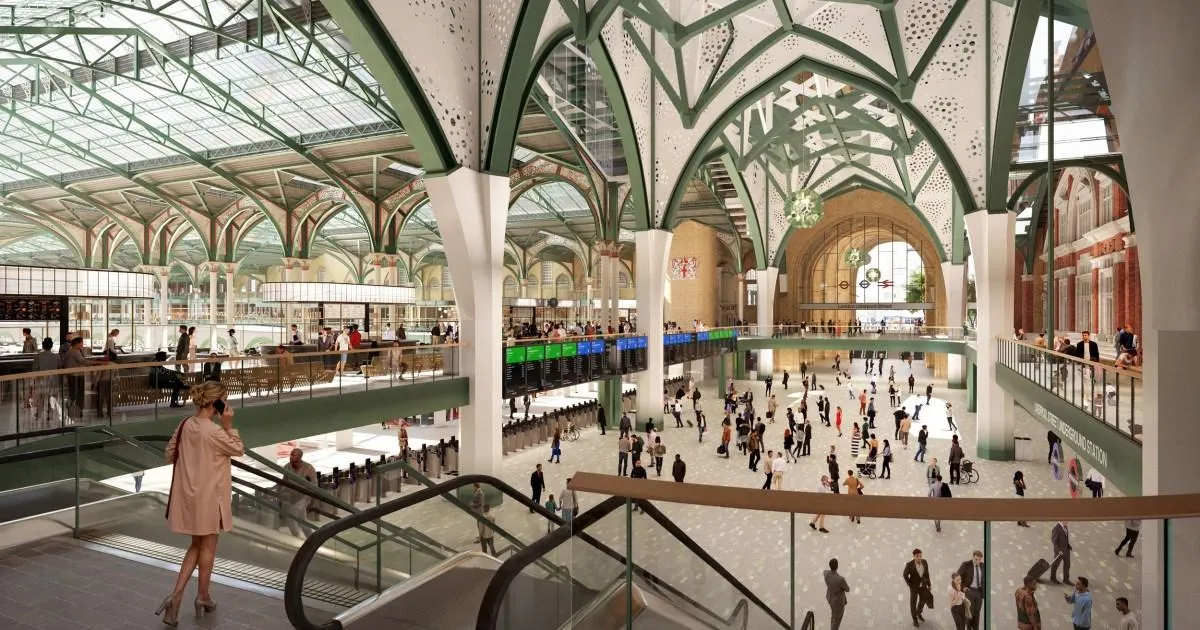
London Liverpool Street, one of the capital’s busiest transport hubs, stands on the brink of a monumental transformation. A massive £1.2 billion redevelopment project has been proposed to modernize the station, aiming to turn it into a world-class, future-proof destination. Approved by the City of London in February, the ambitious plan now awaits the final word from London Mayor Sadiq Khan and Communities Secretary Steve Reed. While the vision promises to revitalize the landmark for millions of commuters, it has also sparked a fierce debate over how we balance the needs of a modern, fast-paced city with the preservation of its deep, historic roots.
At the heart of the controversy is a planned 97-metre, mixed-use tower block to be built directly over the station’s concourse. Supporters, led by Network Rail, argue that this is a necessary leap forward. The station currently struggles with severe overcrowding, confusing layouts, and limited accessibility, which creates daily hurdles for travelers with disabilities, heavy luggage, or young children. By expanding the concourse by 76% and adding new amenities—including 10 escalators, eight new lifts, and improved family facilities—officials believe they can make the station not just more efficient, but a more inviting environment for the 200 million passengers expected to pass through in the coming decades.
The plans represent a significant lifestyle upgrade for commuters who navigate the “Square Mile” daily. Beyond the functional transit improvements—such as better signage, secure bike storage, and improved bus access—the station would gain a new variety of shops, cafes, and restaurants, as well as a five-star hotel extension. For city officials like Chris Hayward, this is a strategic move to ensure London remains competitive on the global stage. They view the project as an essential investment in infrastructure that will stimulate economic growth, create jobs, and maintain the City’s status as a premier business destination, all while modernizing an aging Victorian asset for the 21st century.
However, the scale of the development has triggered a backlash that highlights the tension between progress and heritage. Over 3,700 people have formally objected to the plans, with high-profile figures like actor and campaigner Griff Rhys Jones leading the charge. Critics argue that placing a massive office block on top of a sensitive, Grade II listed site is an act of aesthetic and historical vandalism. They contend that the developers are prioritizing profit over the city’s unique character, arguing that the retail-heavy focus does little for the average commuter and risks destroying the very “historic fabric” that makes London special.
For heritage groups like the Victorian Society and SAVE Britain’s Heritage, this is a missed opportunity to find a more sensitive solution that respects the station’s architecture. They argue that the pressure of developer ambition has set a poor precedent for how the city treats its listed buildings, leaving many to feel that the “modern” vision for Liverpool Street is being pursued at too high a cost to the soul of the area. These objectors remain steadfast, waiting to see if either the Mayor or the Government will intervene to stop a project they view as a permanent scar on London’s architectural legacy.
As it stands, the future of Liverpool Street remains up in the air, with no firm construction date in sight. While developers had previously voiced hopes of completing the project by 2030, the legal and public hurdles ensure that it will be quite some time before any physical work can begin. This standoff marks a pivotal chapter for one of Britain’s most iconic spaces; it serves as a reminder that in a city as old as London, building for the future is rarely just about logistics—it is always a delicate negotiation with the past. For now, the city waits to see which vision will prevail: a gleaming, high-tech transport hub or the preservation of its storied heritage.