


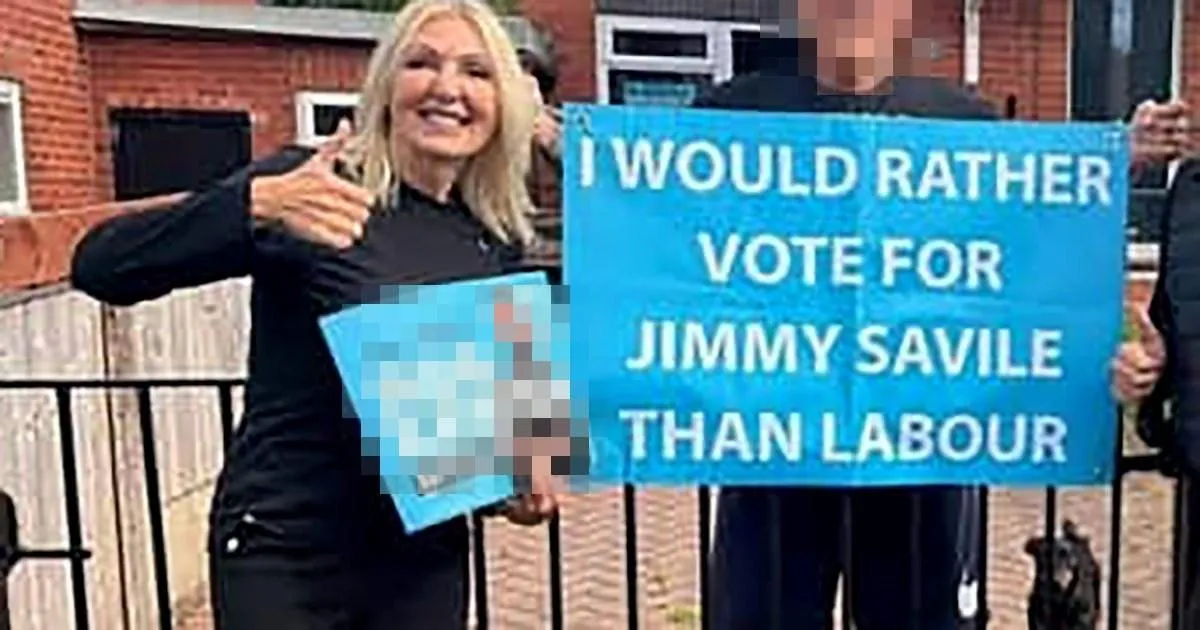
In the high-pressure world of modern politics, where campaigns often feel like a blur of intense canvassing and constant movement, the line between passion and regrettable judgment can sometimes become dangerously thin. Recently, this reality hit home for Lilian Rogers, a newly elected Reform UK councillor for Wigan Council. Rogers found herself at the center of a firestorm after a photograph surfaced of her posing alongside a handmade campaign sign that drew a comparison between the Labour Party and the late, disgraced BBC presenter Jimmy Savile. The sign, which crudely declared, “I’d rather vote for Jimmy Savile than Labour,” sparked immediate outrage due to the horrific legacy Savile left behind—a history marked by hundreds of vile sexual abuse allegations that only came to light following his death in 2011.
For many, the image was not just a lapse in judgment; it was a deeply offensive trivialization of sexual abuse survivors. The backlash was swift and severe, plunging Rogers into a public relations crisis just shortly after she secured her seat. As the photograph circulated on social media, the political community and the public alike expressed their disbelief that a local representative would align herself, however unintentionally, with such an inflammatory and heart-wrenching association. The gravity of the situation was compounded by the fact that Savile’s name remains a symbol of profound trauma for his many victims, making any lighthearted or political use of his name entirely insensitive.
In response to the growing condemnation, Rogers took to Facebook to issue an unequivocal apology, attempting to offer context for why she had posed with the sign. Describing the moment as occurring at the end of a long, exhausting day of campaigning, she admitted to a staggering lack of awareness. Rogers explained that in the rush of the by-election, she hadn’t fully processed the sign’s meaning or the “sickening implications” it carried. She emphasized that she viewed the sign as “entirely innocent” in the heat of the moment, and that had she understood the true, dark weight of the words, she would have refused to be associated with it. She expressed deep disappointment in her own naivety and offered a sincere apology for the pain her actions caused.
The fallout from the incident did not end with her apology; it extended into the professional realm of the Wigan Council. Local Labour representatives, including Paul Gray, did not mince words, stating they were “absolutely disgusted” by the post. Gray poignantly highlighted the reality of the situation, questioning how the survivors of Savile’s crimes would feel seeing his memory weaponized for a petty, local election stunt. The sentiment quickly shifted toward accountability, with the Wigan Council confirming that they are currently conducting an investigation into the matter to see if Rogers’ actions breached the local authority’s code of conduct. This procedural step underscores the seriousness with which local governments view their representatives’ professional and moral obligations to the public.
The backdrop to this controversy was the Makerfield by-election, an intense political event where Reform UK had vied for attention against the established power of figures like Andy Burnham. While Burnham ultimately secured a landslide victory, the news cycle—which should have been defined by the electoral results—quickly pivoted to this incident of poor judgment. The story serves as a stark reminder of how thin the filter is between private actions and public scrutiny in the digital age. For Rogers, this event has become a defining, albeit negative, milestone in her nascent political career, forcing a discussion about the importance of mindfulness and responsibility in every moment of public life.
Ultimately, the scandal surrounding Lilian Rogers is a cautionary tale for all those in the public eye. It highlights the dangers of “campaign fatigue” and the way that, in the rush to gain political ground, individuals can lose sight of the sensitivities and human impacts of their rhetoric. Whether or not her explanation of “naivety” is accepted by her constituents or the council remains to be seen, but the damage to her reputation and the pain caused to the wider community is clear. As the investigation into her actions continues, the incident stands as an uncomfortable reminder that words and symbols have weight; when those symbols are tied to real-world trauma, the consequences of overlooking them are far-reaching and deeply personal.