

Stepping off the train at Wigan North Western on June 18, 2026, the atmosphere was thick with a tension rarely felt in this corner of the North West. It wasn’t just the presence of high-profile political figures like Chief Secretary Darren Jones—who was busy posing for selfies with locals—that signaled the gravity of the day. It was the feeling that the political climate had shifted into something entirely uncharted. The Makerfield by-election had been branded by every major outlet as the most consequential contest in modern British history, and as I stepped out into the streets, the weight of that narrative felt palpable. This wasn’t just another local vote; it was a societal temperature check that had drawn eyes from across the country to this once-quiet constituency.
Navigating the area required catching a local bus, and the visual landscape was dominated by the bright yellow of the “Bee Network.” These buses, a cornerstone of Greater Manchester Mayor Andy Burnham’s local transport overhaul, felt almost omnipresent—serving as silent, rolling endorsements for his platform. As I traveled toward Ashton-in-Makerfield, the contrast with the opposition was stark. While Reform UK’s turquoise double-decker buses were physically blocking traffic and causing frustration among commuters, the Bee Network buses seemed to enjoy a quiet, rhythmic support. Even the drivers, through a chorus of honks and gestures, seemed to signal an underlying affinity for the Burnham movement that far outweighed the noisy, gridlocked presence of his rivals.
Campaigning on the ground revealed a curious mix of genuine ground-level engagement and imported political theater. Supporters had traveled from as far as London to bolster both Labour and Reform, creating a strange, bustling energy in the town. Among the Burnham supporters, there was an infectious, unwavering optimism, met mostly by supportive honks from passing locals. Conversely, the Reform camp was focused on a darker narrative, citing international tensions and national decline. Yet, they faced an uphill battle not just against their opponents, but against the baggage of their own candidate, Robert Kenyon. Some locals were vocal about their distaste for his past rhetoric, highlighting an internal struggle within the party to connect with voters who remained deeply skeptical of all political rhetoric.
The mystery of the “shy voter” proved to be the most compelling subplot of the day. Conversations with residents revealed a distinct group—individuals who were clearly disillusioned with the status quo but weren’t ready to openly align themselves with a party currently weathering a brand crisis. As one older resident confessed to voting for Burnham despite her earlier secrecy, it became evident that the pollsters had missed the nuance of the local sentiment. This wasn’t merely a contest between platforms; it was a complex psychological dance where voters were quietly weighing their desire for change against their personal reservations about the personalities on the ballot.
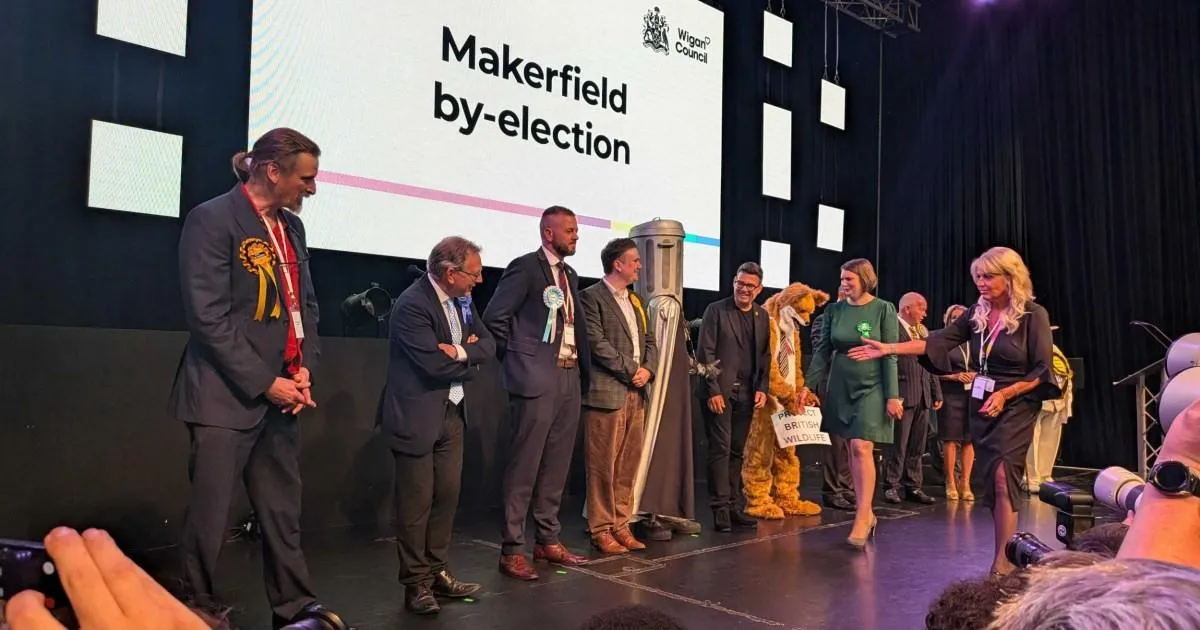
By the time the results were announced at The Edge, near the landmark Wigan Pier, the discrepancy between the polls and reality was staggering. Where analysts had predicted a razor-thin margin, Labour secured a decisive 55% of the vote, smashing Reform by a 20-point lead. The room erupted in a way that felt like a release of long-held pressure. As the crowds dispersed, the sheer scale of the victory transformed from a political statistic into a tangible moment of historical significance. The frantic energy of the day evaporated, leaving behind a silence that felt heavy with the implications of what had just occurred in this northern town.
In his victory speech, Andy Burnham framed this result as a beacon of hope for a nation struggling to find its footing. He spoke of turning the name “Makerfield” into a symbol for the systemic change he believes the country is desperate for, positioning himself as a leader ready to restore confidence in the future. As the headlines began to circulate and the national discourse shifted to follow the ripples of this outcome, the sense remained that this day would be remembered as a pivot point. Whether or not it leads to the national transformation he promised, the residents of Makerfield had successfully made their mark on the country—proving that even in our fractured political age, hope can still find a way to manifest at the ballot box.