

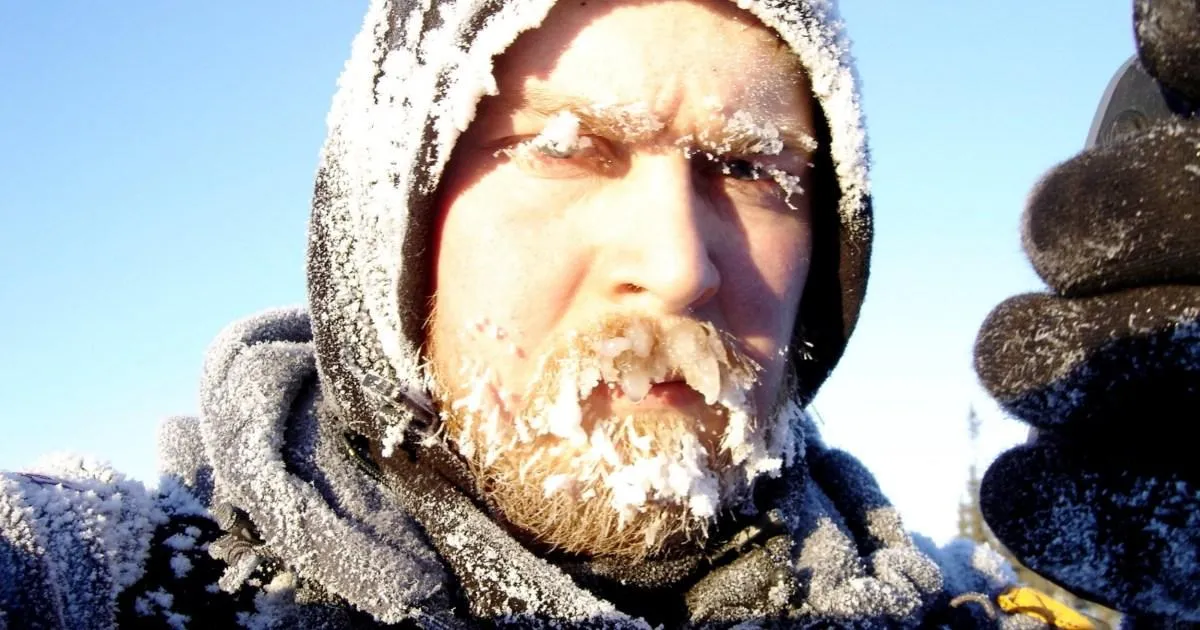
For twenty-seven years, Karl Bushby has existed in a state of perpetual motion, a modern-day odyssey that began in 1998 when the former British paratrooper set out from Chile with a singular, audacious goal: to walk home to Hull, England. He vowed to complete this 36,000-mile “Goliath Expedition” without resorting to any form of mechanized transport, essentially tracing a massive, grueling loop across the planet. Now 57, Bushby has traversed continents, survived the lawless jungles of the Darien Gap, endured imprisonment, and navigated the complex geopolitical minefields of visa bureaucracy. Having reached Belgium this past June, he is tantalizingly close to his finish line, with only 600 miles remaining between him and his front door in Yorkshire. Yet, ironically, the man who crossed the frozen Bering Strait and swam the treacherous Caspian Sea finds his progress stalled not by nature’s fury or political instability, but by the rigid administrative red tape of the Eurotunnel.
The story of the Goliath Expedition is one defined by astonishing resilience against a backdrop of relentless setbacks. What was originally projected to be a twelve-year trek has stretched into nearly three decades, ballooning under the weight of unforeseen complications. Bushby has been detained in Panamanian jails for visa irregularities, had his essential gear stolen in North America, and was forced to navigate the financial collapse of 2008, which left him stranded for two years without sponsorship. He has walked from Los Angeles to Washington D.C. simply to plead his case at the Russian Embassy and has spent weeks at sea to bypass closed borders. His life has become a masterclass in adaptation; when faced with a barrier, he does not turn back—he finds a way through, around, or over it, no matter the toll it takes on his body or his timeline.
Despite his legendary fortitude, the current roadblock—gaining permission to pass through the Channel Tunnel—has proven remarkably stubborn. For the final, vital leg of his journey, Bushby formally requested to walk the 31-mile service tunnel to reach the UK. For a man who has traveled over 36,000 miles on foot, this final distance is a symbolic threshold, a bridge back to the life he left in the late nineties. However, the operators of the tunnel, GetLink, have officially denied his request. Their reasoning is rooted in modern logistics: the service tunnel is a high-security, strictly regulated maintenance corridor. They argue that permitting a pedestrian, even one as seasoned as Bushby, would require closing the tunnel for an extended period, creating unacceptable risks for passenger safety and jeopardizing critical infrastructure upkeep.
This refusal leaves Bushby at a heartbreaking impasse. For most people, a tunnel closure is a minor nuisance, but for a man who has strictly adhered to a rule of non-mechanized travel, it presents an existential travel dilemma. He is now faced with the terrifying prospect of having to swim the English Channel—an idea he has joked about with a mix of dread and dark humor. Having already endured the icy, exhausting 31-day swim across the Caspian Sea, he knows exactly what such a feat demands of the human body. He has previously stated that he considers swimming his absolute last resort, a “non-preferred” option that stands in stark contrast to the walking journey he has dedicated his entire adult life to completing.
There is something inherently human and deeply moving about Bushby’s plea for assistance. It is not just a request for a walk; it is a request for a conclusion to a twenty-seven-year chapter of a life that has been sacrificed to the open road. His public appeal to the tunnel operators is polite but desperate, reflecting a man who has relied on the kindness and cooperation of countless governments and strangers to reach this point. He recognizes that the impossible nature of his expedition was only made possible through the collaboration of others. By appealing to the humanity of the Eurotunnel officials, he is asking them to be the final stewards of a global journey that, while extraordinary, is ultimately a story about a man trying to get home.
As he waits in temporary respite in Mexico- sorting out his complicated Schengen visa requirements before returning to the final stretch—the world watches to see how this epic tale will end. Whether or not Eurotunnel reconsiders its stance remains to be seen, but the saga of Karl Bushby reminds us that the spirit of exploration is rarely just about the scenery or the destination. It is about the grit required to keep placing one foot in front of the other when the map runs out, when the money disappears, and when the authorities say “no.” Whether he ends his journey by walking through the tunnel or by facing the grey, cold waves of the English Channel, Bushby has already achieved the rarest of human feats: he has lived a life that is truly his own, measured in miles, memories, and the ironclad refusal to quit.