


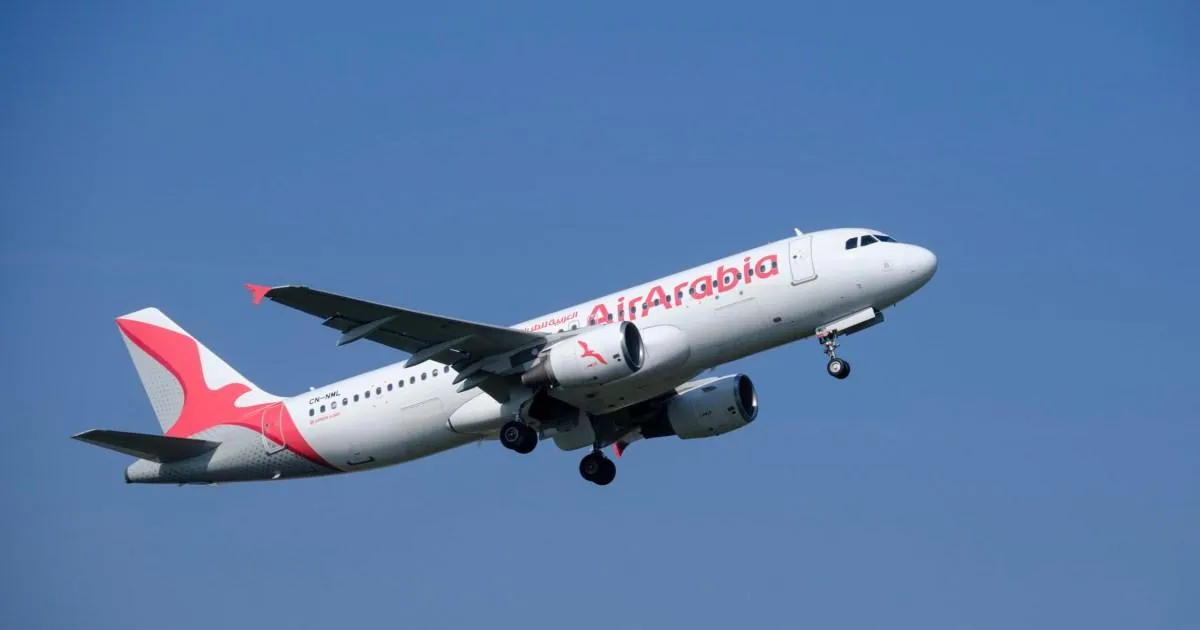
On Tuesday morning, the tranquil routine of Gatwick Airport was shattered by a grim discovery that serves as a harrowing reminder of human desperation. Following the arrival of an Air Arabia flight from Tangier, Morocco, cargo workers unloading the Airbus A320 stumbled upon the body of an unidentified man hidden within the plane’s narrow landing gear compartment. What should have been a standard arrival became a scene of profound human tragedy, leaving ground staff reeling from the shock of the encounter and casting a somber shadow over the bustling hub.
The victim had apparently climbed into the wheel well of the aircraft in Tangier, likely under the cover of darkness, in a last-ditch effort to reach the United Kingdom. For several hours, as the plane traversed the skies over Spain and France, this individual existed in a space never meant for human occupancy, enduring conditions that are biologically incompatible with life. Sussex Police have since launched an investigation, working alongside the coroner to identify the man and piece together the circumstances of his final, fatal journey.
The statistics surrounding such stowaway attempts are as grim as they are sobering. According to the Federal Aviation Administration, roughly 77% of those who attempt to travel in landing gear compartments do not survive the journey. It is a method born of utter hopelessness, yet it is a gauntlet of near-certain death. Once the aircraft departs, the stowaway is subjected to a terrifying combination of dangers: the crushing pressure of mechanical parts retracting, the lack of oxygen at cruising altitude, and temperatures that plummet to well below zero, causing rapid, fatal hypothermia.
This incident is not an isolated occurrence but a heartbreaking pattern of global inequality and migration struggles. Similar, equally tragic stories have emerged in recent years, including a discovery in Charlotte earlier this year and the infamous 2019 event in London, where a stowaway’s body fell into a residential garden in Clapham. These stories force us to confront the extreme lengths to which people are willing to go—risking life and limb—in the search for safety, prosperity, or a new beginning. Behind every report is a person who felt that the risk of death in the skies was somehow preferable to the reality of their life on the ground.
These tragedies place an immense emotional toll on the workers who find them, as well as the authorities tasked with uncovering the victims’ identities. Investigating these cases is notoriously difficult, as the nature of the travel often leaves the deceased without identification or ties to the authorities in the destination country. The humanity of the victim is often lost in the technical jargon of airline manifests and police reports, reducing a life story—no matter how desperate—to a tragic footnote in a news cycle.
As the investigation into the Air Arabia flight continues, the aviation community is left to reckon with both the security challenges of boarding such hidden stowaways the deep-seated humanitarian issues that drive individuals to such desperate measures. There are no easy answers for how to prevent these incidents, yet they stand as a stark testament to the persistence of the human spirit in the face of insurmountable borders and hardship. While the world debates policy and security, a family somewhere is waiting for a loved one who will never come home, lost to the cold, thin air of a journey that should never have been possible.