



In the quiet seaside town of Seaford, East Sussex, an ordinary September day became the setting for an unthinkable loss. Joshua Ingram, a sixteen-year-old who was training to be a bricklayer, had his whole life ahead of him. His mother, Yvette Bullen, described him as a “kind, caring, cheeky, loveable rogue, great friend, goofball but also challenging and a little sod” — a boy who could drive anyone mad but who was deeply loved. On September 10, 2025, he was attacked at Seaford railway station by a seventeen-year-old with a knife hidden in his tracksuit bottoms. The blade was nineteen centimetres long, roughly seven and a half inches, and it ended Joshua’s life in a single blow. The reason behind this horror? A debt of about twenty pounds connected to cannabis. Twenty pounds. That is the sort of money that can disappear in a takeaway order or a cinema trip. For Joshua, it became the price of his life. In the days after his death, his mother was left with an agonising thought: on the Friday before the attack, Joshua had asked her for twenty pounds, and she had said no. She will carry that decision with her forever, even though the guilt belongs not to her but to the boy who chose to carry a knife and use it. Her loss is a reminder that knife crime is not a statistic; it is a family shattered in a moment, a future erased over an amount of money that most adults would not even think twice about.
The boy who killed Joshua was seventeen years old and, because of his age, cannot be legally named. In court, he was revealed to be something far more sad than scary: a wannabe gangster who had adopted a “faux gangster persona” after being influenced online. His own defence barrister, Colin Aylott KC, called him “rather pathetic” and said the persona reflected his immaturity. This was not a sophisticated criminal; it was a teenager who had swallowed a poisonous online culture of posturing and violence, then dressed it up in tracksuits and hidden knives. The nineteen-centimetre blade he carried was not a tool of self-defence or a symbol of respect; it was a prop in a deadly fantasy. On the day of the killing, he and Joshua happened to meet at Seaford railway station. What followed was not a calculated ambush but a chance collision between a boy acting out a gangster script and an unarmed sixteen-year-old. One strike with that knife was enough. Detective Chief Inspector Paul Stanley of British Transport Police later described the attack as “vicious and cowardly,” and those words are painfully accurate. There was no fight, no fair chance, no warning that could have levelled the odds. Instead, there was a hidden weapon and a single lethal moment. Two other teenagers, aged seventeen and fifteen, were also caught up in the aftermath, and were later due to be sentenced for assisting an offender. Their involvement is another layer of tragedy: young people circling around a murder, apparently unable or unwilling to stop it or to tell anyone what was coming. By the time the knife came out on that platform, it was already too late for Joshua, and too late for all of them.
The killer’s state of mind was not hidden. Long before the stabbing, he had sent messages on Snapchat that were both chilling and absurd. “Josh will perish if I don’t get my f** money, that’s a fact and he knows this. I’m ready to sit in a prison cell for 30 years over a £20 sheet.” Those are the words of a boy trying to sound like something out of a film, but they became a self-fulfilling prophecy. In court, the defence tried to wave away such messages as bravado and fantasy, the empty talk of a vulnerable teenager. The jury was not convinced. The defendant pleaded guilty to manslaughter but was found guilty of murder, because the messages proved intent: he had talked about making Joshua “perish,” he had a knife, and he used it. As DCI Stanley put it, he “put his talk into action” when the two met by chance, “taking Joshua’s life from a singular blow with a large knife he routinely carried.” The word “routinely” is devastating. This was not a tragic accident or a loss of control; it was a boy who had made violence a habit, who wore a knife like an accessory, and who finally found a victim to prove his gangster story was real. The Snapchat message about sitting in a prison cell for thirty years is especially haunting. He was willing to burn his own life down for twenty pounds, and he did. He just did not realise until it was too late that he was also burning down Joshua’s life, and Joshua’s family’s future. The “faux gangster persona” was never a game. It was a poison, and its first victims were two teenagers — one dead, one facing decades in prison.
In a victim impact statement read to Hove Crown Court, Joshua’s mother spoke directly to the human being behind the headlines. She wanted everyone to understand that her son was not just a name in a murder case. “Kind, caring, cheeky, loveable rogue, great friend, goofball but also challenging and a little sod – all the traits that made Josh, Josh.” She described him as a young person with hopes, dreams, and a future, and she said the family’s life would never be the same again. But she also spoke about her own guilt. “As his mother I live with guilt every day. On the Friday before, Josh had asked me for £20 and I said no. That’s a parenting decision I will regret for the rest of my life.” There is no way to ease that guilt. No one could have known that a simple refusal would be followed by a murder. Yet grief does not follow logic. She also described the unbearable details of the aftermath: watching her son being carried away on a stretcher and being able to kiss his forehead only after he had died, because his body was a “crime scene.” That image — a mother kissing her dead child’s forehead while forensic protocols keep her at arm’s length — is one that should stay with anyone who reads this case. She ended her statement with a plea that other families be spared the same pain. She urged young people to think before carrying a knife and urged others to report those who carry them. “This could have been prevented if someone had spoken up,” she said. “His life was worth so much more than £20.” Her words are not just sorrow; they are a warning. Someone, somewhere may have known that the killer was carrying a knife and talking about violence. That someone did not speak. And Joshua’s family will always live with the terrible possibility that a single conversation could have saved their son.
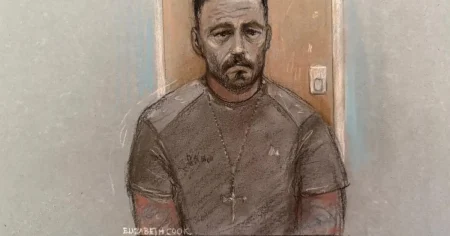
The case was concluded on Friday at Hove Crown Court, where Mr Justice Bourne sentenced the teenager to life in prison with a minimum term of fourteen years. The judge described Joshua as “a popular young man with all his life before him” and addressed the absurdity of the motive directly: “It seems that Josh Ingram owed you about £20. That, of course, cannot begin to explain what you did. It would not provide even the smallest excuse for hurting someone, let alone for attacking them with a large knife.” Those words are the clearest possible rejection of the twisted logic that says a debt can be repaid with blood. The defence continued to argue that the killer had been corrupted by online influences and that his “faux gangster persona” was pathetic rather than dangerous. But the jury’s verdict had already answered that argument. The boy who had written “Josh will perish” and who carried a nineteen-centimetre blade in his tracksuit bottoms was not just playing pretend. He was a murderer. DCI Paul Stanley said that the sentencing marked the conclusion of a “deeply tragic case” and that, although justice had been served, there would be no celebration. He called the attack “vicious and cowardly” and revealed that the investigation had uncovered extensive messages in which the defendant talked about harming Joshua over a “petty debt for about £20 of cannabis.” The killer had tried to dismiss those messages, but the evidence was overwhelming. On the same day, two other teenagers — aged seventeen and fifteen — were set to be sentenced for assisting an offender. Their presence in the courtroom was another reminder that knife crime does not happen in isolation; it pulls in friends, bystanders, and accomplices, and it leaves a trail of ruined lives.
This case is a tragedy, but it is also a test. Joshua Ingram was a boy who was learning to be a bricklayer, who had friends, who was loved, and whose life was stolen for twenty pounds. The phrase “over a £20 drug debt” will haunt anyone who reads it, because it exposes how cheap life can become when violence is normalised. His mother has turned her unbearable loss into a call to action. She wants young people to understand that carrying a knife does not make them tougher or more respected; it makes them a danger to everyone around them, including themselves. She wants friends and family to report people who carry knives, even if it feels like disloyalty. “Report it rather than assisting them,” she said, “because this could have been prevented if someone had spoken up.” The killer, too, was a teenager, and his own life is now effectively lost. He will spend at least fourteen years in prison, and when he comes out, he will have to live with what he did. The online world that fed him a diet of gangster posturing and violence did not save him when he was sentenced. It left him alone in a courtroom, exposed as pathetic and immature, with the blood of another boy on his hands. His victim’s family will never hear Josh’s laugh again, never see him finish his training, never watch him grow up. They will only have memories and photographs and the haunting image of a kiss on a forehead at a crime scene. The best way to honour Joshua’s life is to make sure his death changes something. If another teenager sees this story and puts down a knife, if another friend speaks up instead of staying silent, if another family is spared this exact grief, then Joshua did not die for nothing. His mother said he was worth more than twenty pounds. That is true. He was worth more than any amount of money, and his life mattered. The question now is whether the rest of us will listen.