



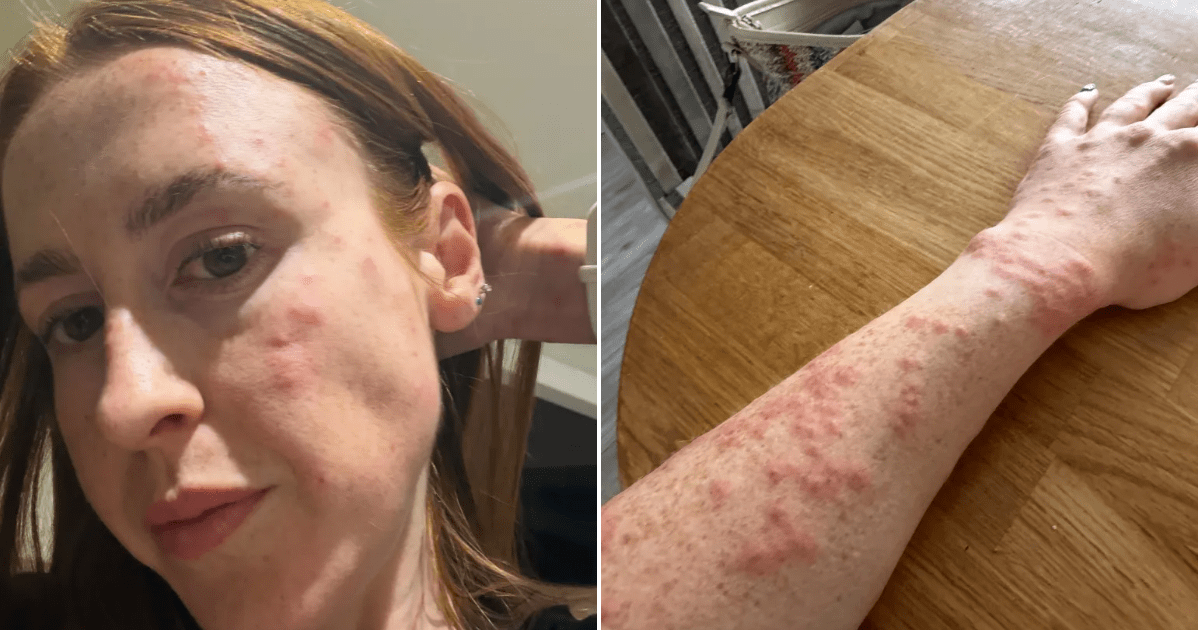
For 31-year-old world traveler Hannah Stephenson, a simple night at a Travelodge in Cambridge was meant to be a convenient way to wrap up a day of sightseeing with friends. Instead, what began as a wholesome outing turned into a harrowing ordeal that has left her physically scarred and emotionally drained. After waking up on July 26 to discover blood smears on her sheets and tiny, moving specks on her pillow, Hannah realized with horror that she had been under attack. What followed was a nightmare: she discovered nearly 100 bedbug bites covering her body, including a staggering 37 bites on her left hand alone.
The aftermath of that single night has been profoundly disruptive to Hannah’s life. Beyond the initial shock, the physical symptoms have been debilitating, leaving her skin covered in itchy, red, and swollen lumps that have persisted for weeks. The mental toll has been equally severe; she has faced significant anxiety, even suffering panic attacks, and has been forced to navigate social situations while feeling deeply self-conscious. Because the visible marks are so extensive, she has been forced to buy new clothing just to cover them up, and she has missed out on important social events, including a family wedding, out of sheer embarrassment.
Hannah’s experience highlights a common but harmful misconception: that bedbugs are strictly a problem confined to unhygienic environments. As a seasoned traveler who has documented her journeys abroad, Hannah never expected to encounter such a infestation at a standard UK hotel. Pest experts reiterate that these parasitic insects are not drawn by filth, but by the basic biological markers of their human hosts—warmth, carbon dioxide, and the dark of night. Because these resilient critters can survive for nearly a year without feeding and easily hitchhike on luggage or clothing, even the most seemingly clean locations are susceptible, with cases frequently peaking during the summer months.
The experience has left a lingering cloud over what should have been a joyful summer. Hannah has been forced to live with the constant, nagging discomfort of the bites, which have often been mistaken by others for chickenpox or other skin conditions. Her plight became a viral cautionary tale on TikTok, where she shared her frustration and vulnerability. For someone accustomed to exploring the world, being confined to this distressing situation has been a frustrating departure from her usual lifestyle, as she waits for the physical marks to fade so she can finally put the incident behind her and return to a sense of normalcy.
In response to the public outcry and Hannah’s documented experience, Travelodge has taken accountability for the failure in their facilities. The hotel chain confirmed that inspectors found the room to be infested with bedbugs, leading to an immediate, deep-cleaning protocol. In a formal statement, the company expressed deep remorse for the distress caused, emphasizing that guest safety is their top priority and that they employ stringent pest-management measures. As a gesture of goodwill and compensation for the trauma and disruption she endured, the hotel has provided Hannah with £2,000, though for her, the financial settlement does not fully undo the weeks of physical pain and social isolation.
This unsettling story serves as a stark reminder of the unpredictable risks associated with travel, regardless of how routine a stay might seem. While bedbugs are a nuisance that can typically heal within a week or two, they represent a significant breach of trust for anyone seeking a safe place to rest. For Hannah, the incident has been a painful lesson in the realities of hospitality, but by speaking out, she has shed light on a problem that many hotels are hesitant to discuss. As she continues her recovery, her story remains a vital reminder to travelers everywhere to remain vigilant, and to the industry, a warning that the well-being of guests must always be guarded with the utmost care.