


Imagine a fourteen-year-old boy, feeling invisible and uncertain about his future, scrolling through short videos after school. The algorithm notices his loneliness and offers him a new world. It starts with fitness advice and money-making tips, then slowly becomes something darker: a stream of content telling him that women are the cause of his problems, that traditional masculinity is under attack, and that only a certain kind of man deserves respect. Experts have a name for this digital world—the manosphere—and in a major new report published in The Lancet, academics are calling for it to be treated as a public health emergency, on the same scale as the fight against smoking. The report, written by Prof Sarah Hawkes and Prof Kent Buse, co-CEOs of the think tank Global 50/50, argues that so-called “masculinity influencers” are not just controversial entertainers. They are, in effect, a commercial industry that profits from the insecurity of boys and young men, causing real and measurable harm to both those boys and to women and girls. Previous research by The Children’s Society has shown that two-thirds of young men watch these influencers, who collectively command millions of followers. Their content is often tagged as fitness, dating or self-improvement, but critics say it veers into misogyny, antisemitism and homophobia. The report argues that the manosphere does not actually solve men’s problems; instead, it redirects blame for those problems to women and feminism, while distracting from the real structural and economic forces at work. This is not a fringe issue confined to a few angry corners of the internet. It is a mainstream phenomenon, one that has gained renewed attention through documentaries and news investigations, and one that the report believes demands a coordinated response from governments, schools and health services.
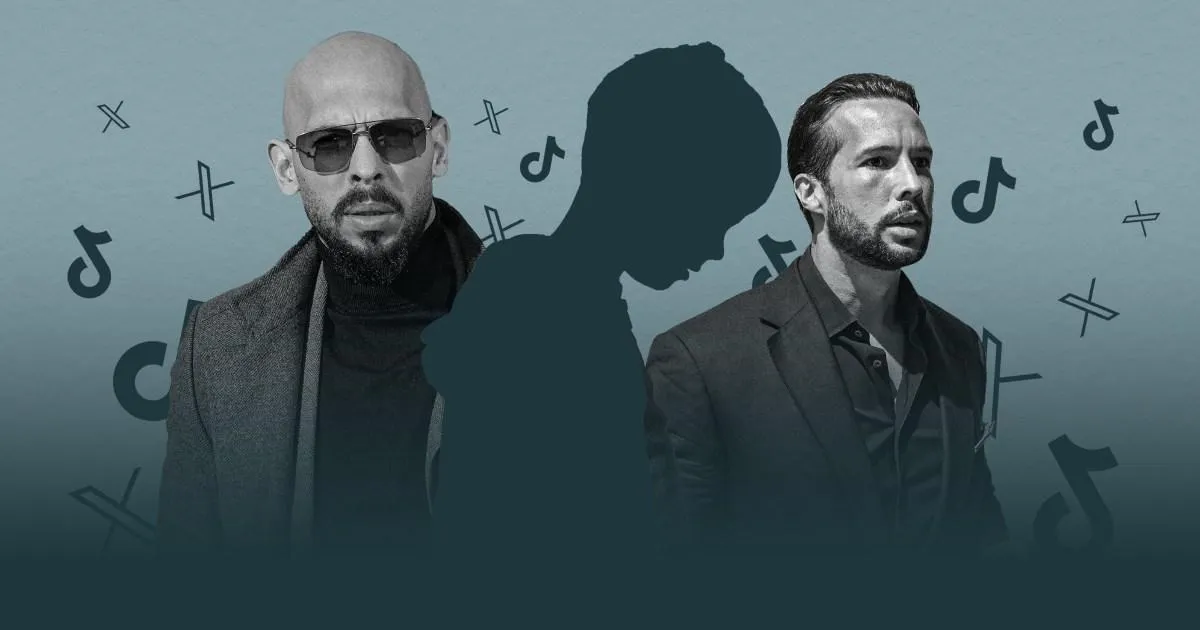
At the centre of this concern is the damage being done to women and girls, and the report does not mince words. It argues that the manosphere’s narrative of male dominance and entitlement creates a culture in which violence against women becomes more imaginable, and therefore more likely. This is not simply about offensive remarks or edgy jokes. The academics point to concrete harms: doxxing, cyberstalking and rape threats, all of which can leave victims suffering from PTSD, depression and other serious mental health conditions. These are not random side effects of a few bad actors; they are the logical outcome of a belief system that teaches boys that women are to blame for their failures, and that control and aggression are forms of strength. Perhaps the most recognisable face of this world is Andrew Tate, the British-American influencer who has publicly described himself as “absolutely a misogynist” and boasted about hitting and choking women. Along with his brother Tristan, he has been viewed as one of the biggest figures in the manosphere. The brothers are facing extradition to the UK over rape and sex trafficking charges, which they deny. Yet a 2024 study from HOPE not hate found that 80% of boys aged 16 and 17 had watched Andrew Tate. That is not a niche audience. That is the mainstream of young British manhood. It is not just about one man either; the broader content machine pushes young men towards a worldview in which women are enemies rather than equals, and where strength means domination. The human cost is impossible to ignore. Behind every statistic is a girl who has been harassed, a woman who has been threatened, or a boy who has learned to think of love as a battle he must win.
But the manosphere does not only harm women—it also harms the boys it claims to help, and this is one of the report’s most important points. The authors highlight several ways in which these influencers damage their young male audiences. One concern is body image. The idealised male body promoted relentlessly by content creators has been linked to mental health problems in boys. For years, society has talked about the pressure on girls to look a certain way, but the report makes clear that boys are suffering too. They are being told that if they do not look a certain way, if they do not make enough money, or if they do not project the right kind of aggressive confidence, they are failing as men. At the same time, so-called “manfluencers” often discourage boys from seeking professional help for their struggles. They tell them that therapy is weakness, that emotions are a trap, and that self-reliance is the only answer. This is a dangerously isolating message in a world where young men are already more likely to feel disconnected and left behind. The report’s authors argue that the manosphere is a commercial ecosystem that earns its money from young men’s insecurity. Prof Buse put it in stark, memorable terms: “Boys are not the problem. They are the market. A boy goes there because it offers what school, family and the state have not: belonging, identity and an explanation for why life feels hard. The manosphere cultivates the insecurity, then sells the cure.” That is the cruel genius of the system. A boy who feels invisible is suddenly told he is at the centre of a grand story, but only if he buys into a worldview that separates him from everyone around him. He is offered community, but the price is his peace of mind. He is told he is becoming stronger, while actually being made more fragile. The report wants to change the way society sees these boys: not as broken or dangerous, but as recruits being groomed by a commercial machine that profits from their pain.
This is why the Lancet report argues that the manosphere is best understood and addressed as a public health problem, and why it draws such strong parallels with the fight against tobacco. Like cigarette companies, the report says, manosphere influencers and the platforms that host them “deploy strategies that individualise responsibility.” They make young men believe that their failures are entirely personal, and that the cure is to be found in a paywall, a course, a brand or a new ideology. This is the classic playbook of industries that profit from harm: manufacture insecurity, blame the victim, and dodge all responsibility. The solution, according to Prof Hawkes and Prof Buse, is to regulate the system rather than punish individuals. We did not end the smoking epidemic by criminalising smokers; we banned advertising that targeted children, changed public spaces and held companies to account. The same logic should apply online. The authors call for regulation that focuses on platforms rather than users, using legal and financial measures to make companies accountable for what their algorithms amplify. They also call for investment in the underlying social and structural causes of male distress: social exclusion, isolation, poor employment prospects and disengagement from education. These are the real issues behind the manosphere, and they cannot be fixed by simply shutting it down. “For a decade we have argued about what boys watch,” Prof Buse said. “We should be asking who profits and who pays. My message to government is that it has the pieces and no plan. Regulate the incentives: make platforms accountable for what their algorithms amplify, using regulatory and fiscal measures, as the UK did with tobacco.” This is not about censorship or moral panic. It is about asking hard questions: Why are algorithms pushing extremism? Where is the money going? And why are young men being sold poison as if it were medicine? Treating the manosphere as a public health issue removes blame from vulnerable boys and places it where it belongs—on the people and companies profiting from their suffering.
The report has already prompted a response from the UK government, which says it is determined to act. Jake Richards, the Minister for Men and Boys, called the report “a wake-up call for us all.” He acknowledged that too many men and boys are experiencing poorer outcomes at every stage of life—in education, in employment, in their physical and mental health—and that this leaves many of them isolated and disconnected from real-world communities. “It’s therefore no surprise that many turn to social media and self-styled role models in search of a sense of belonging,” he said. But he was clear about the danger: “Men styling themselves as role models online are in fact inflicting serious damage on the mental and physical health of the very people they claim to support. They say they build men’s confidence, but in reality they knock them down. They exploit loneliness and insecurity to distort what it means to be a man. And they ramp up division to sow the seeds of misogyny.” The government has outlined a cross-departmental approach, including improvements to healthcare through the Men’s Health Strategy, new apprenticeships and skills reforms, and the Youth Guarantee. There is also a newly launched misogyny prevention fund and a national taskforce, led by the Minister for Women and Equalities, Bridget Phillipson, to root out sexist attitudes. Richards said the goal is to “close off these routes and provide men and boys with a viable alternative to this toxic online ecosystem.” That is an important shift in tone. It means recognising that boys are not simply being corrupted by the internet; they are being failed by the world around them. The answer is not just to switch off the wifi, but to offer something better: real role models, real opportunities, real connections. The government’s language may be tough, but the underlying message is empathetic. Boys need help, not punishment. If that help comes in the form of jobs, education, health services and community, there is a real chance to break the cycle.
Not everyone agrees on the best way forward, and the report has also sparked important debate. Mark Brooks, policy director at the Centre for Policy Research on Men and Boys, welcomed the report’s framing of the manosphere as a public health problem. He said that far too often, the discussion has positioned all men and boys as “a problem,” rather than acknowledging the broader economic, educational and cultural challenges that drive their engagement. For him, the manosphere is a symptom of a deeper social failure. But Alex DiBranco, executive director of the Institute for Research on Male Supremacism in the US, offers a sharp warning. She argues that treating misogyny as a mental health issue is problematic, because misogyny is not itself a mental health problem. “Mental health approaches,” she said, “are really problematic because misogyny is not a mental health issue.” She worries that focusing on boys and men as the main victims of the manosphere risks erasing girls and women, who are the primary targets of its ideology. “Even though it is very popular to focus on the manosphere and influencers,” she added, “male supremacism is at the core of our society and has been since its roots. It is not something that is a new phenomenon of the internet.” That is an uncomfortable truth. The manosphere may be a modern, high-tech manifestation of something far older and deeper. But perhaps both observations are true at once. It is a commercial exploitation of male vulnerability, and it is also a continuation of deep-rooted patriarchy. It can be both a mental health crisis and a culture of violence. The value of the Lancet report is that it opens the door to a more serious, less judgemental conversation. We can argue about the causes while still agreeing that young men and the women in their lives are both being harmed. We can recognise that boys are being groomed by an online industry without forgetting that their actions have real-world consequences. And we can, as the report suggests, stop treating this as a strange internet subculture and start treating it as what it is: a public health emergency that requires attention, empathy and decisive action. The stakes could not be higher. For the sake of a generation of boys, and for the safety of women and girls, the era of ignoring the manosphere is over.