

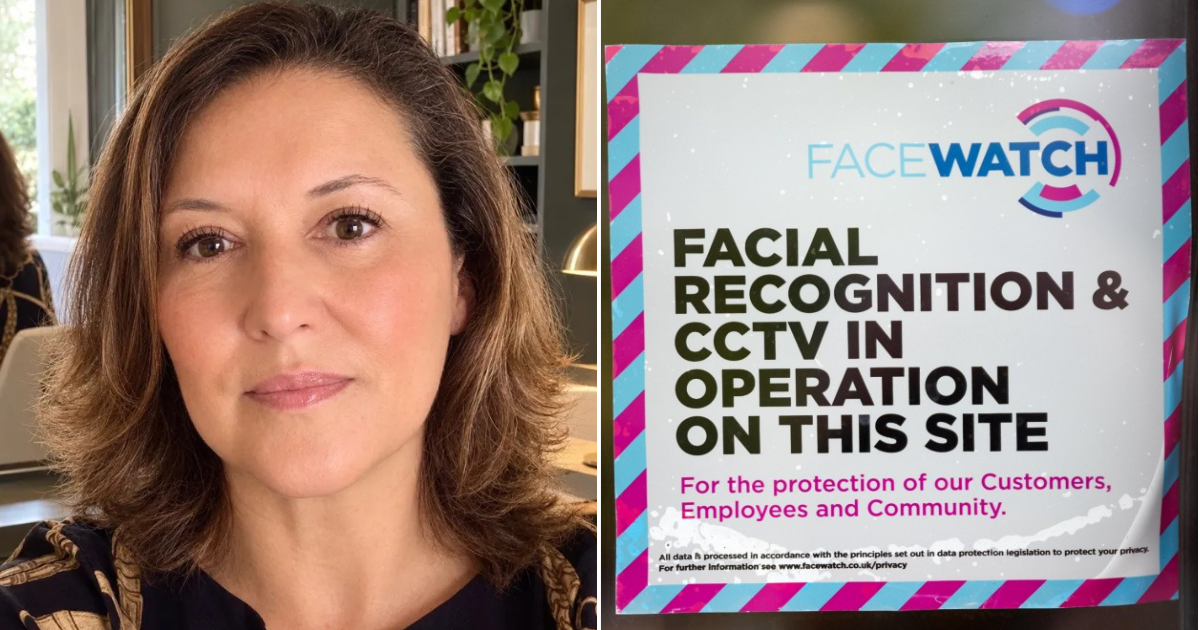
Lavinia MacIntyre had spent most of her life serving the public, first as a police officer and later as someone who understood, perhaps better than most, the weight of an accusation. So when she walked into a Budgens store in Stony Stratford, Milton Keynes, one ordinary afternoon, she never expected to be treated like a criminal. She was with her husband, browsing as couples do, when two teenage staff members approached her. The girl who spoke could not have been much older than nineteen, and there was a nervousness in her voice that Lavinia recognized from her years on the force. The young worker told her, with what must have taken a great deal of courage, that she was going to have to ask Lavinia to leave the shop because the week before, Lavinia had apparently stolen “a load of meat.” For a former police officer, the irony was sharp, almost painful. Lavinia and her husband asked for proof. They waited twenty minutes while the teenager went to the back office to check. When she returned, she admitted that a mistake had been made. But the damage was already done. The moment of suspicion, the public confrontation, the quiet humilation of being told to leave a shop for a crime you did not commit, lingered long after the apology. What struck Lavinia most, however, was not her own discomfort. It was the vulnerability of the girl who had been sent to confront her. She had a small frame, no body camera, no protective equipment, and no real authority. She was, Lavinia warned, incredibly vulnerable. In that moment, the human cost of a flawed system became painfully clear.
Lavinia’s story is not an isolated one. It is part of a growing pattern involving Facewatch, a facial recognition company used by major retailers across the UK, including Sainsbury’s, Home Bargains, and Sports Direct. The technology works by scanning customers’ faces as they enter stores and comparing them against a database of individuals labeled as “shoplifters.” That database is supposedly compiled by retailers and workers, based on evidence and observation. But as Metro has revealed, the system is prone to serious errors. There was Anamaria Mihai, a mother who was wrongly placed on the database after workers mistakenly believed she had stolen a pair of trainers. There was Warren Rajah, who was ordered to leave a Sainsbury’s after staff confused him with someone entirely different who had been flagged on the system. In each of these cases, Facewatch blamed shop workers for using the system incorrectly, saying the errors were not the fault of the technology itself. But that explanation raises a troubling question: if the system relies so heavily on the judgment of low-paid, often overworked retail staff, and if those staff members are not adequately trained, then who is truly responsible when innocent people suffer the consequences? The answer, according to MPs and civil liberties groups, is that workers are being made scapegoats, carrying the burden of failures that belong to much larger companies and the technology they choose to deploy. It is a case of blame being shifted down the chain, away from corporate decisions and onto the shoulders of minimum-wage employees who are simply trying to do their jobs.
This is where the phrase “human-in-the-loop-hole” comes in. Dr Allison Gardner MP, co-chair of the Artificial Intelligence Parliamentary Group, has been vocal in her criticism of how Facewatch operates. In theory, artificial intelligence systems like Facewatch rely on what is called a “human-in-the-loop” design, meaning that at some stage, a human reviews and makes decisions about the machine’s outputs. This is supposed to add accountability, accuracy, and ethical judgment. But Dr Gardner has argued that in this case, the human is not really in the loop at all. Instead, they are stuck in a loophole, a space where they bear responsibility without power, where they are expected to take the fall for mistakes they did not cause and cannot control. Shop workers, she says, are being told to carry the failures of larger companies, whether that means a lack of training, poor implementation, or a mistake in the technology itself. They are the ones who are forced to confront suspected shoplifters, to make split-second decisions based on possibly incomplete or incorrect information, and to deal with the consequences if something goes wrong. They are being failed, put in danger, and dragged through disciplinary processes, all while earning minimum wage and lacking the tools, support, or authority to safely handle the situations they are thrust into. The irony is that these workers are themselves victims of the system, yet they are treated as the cause of its failures. They are expected to be both enforcers and scapegoats, and the injustice of that position is hard to overstate.
The violence of the situation is not metaphorical. When a worker is told to confront a stranger about alleged theft, they are being placed in a potentially dangerous position. They do not know who they are approaching, what that person’s state of mind might be, or how they might react. A wrongful accusation is not just embarrassing; it can be triggering. It can escalate. It can put a young, vulnerable employee directly in the path of someone who is angry, confused, or even dangerous. Lavinia MacIntyre, with her background as a police officer, understood this better than most. She had the training to de-escalate the situation, to ask for evidence, to remain calm. But most shop workers do not. They are not equipped with the skills or the protective gear that law enforcement officers would have. They do not wear stab vests. They do not carry body cameras. They do not have the backup of armed response units. They are just young people, often teenagers, trying to earn a living, and they are being asked to act as judge, jury, and enforcer all at once. Silkie Carlo, director of Big Brother Watch, has gone further, arguing that there should not only be stronger intervention on the technology, but potentially a ban. She has pointed out that Facewatch is not a police force and not a justice system, yet it is effectively making decisions that affect people’s rights, reputations, and freedoms. She has also revealed that whistleblowers have told Big Brother Watch about incentives to place people on the database, and that some do so for malicious reasons. If that is true, then the entire structure becomes even more disturbing: a private, unaccountable surveillance network that can label ordinary people as criminals, staffed by low-wage workers who may be encouraged or pressured to add names for reasons that have nothing to do with justice.
Facewatch, unsurprisingly, has pushed back hard. The company told Metro that it was “shocked” by Dr Gardner’s comments and claimed that she had insulted the UK’s three million retail workers by appearing to dismiss the violence, aggression, and assaults that independent industry bodies report are happening at scale every day. Facewatch argued that critics are entitled to oppose facial recognition, but that they should expect to be challenged when their rhetoric overlooks the people the technology helps to protect. There is some merit to that point. Retail workers do face real threats from shoplifters and aggressive customers, and any system that helps keep them safe deserves consideration. But the problem is that Facewatch’s defense misses the central human issue. The question is not whether facial recognition technology can ever be useful. The question is whether it is being used responsibly, with adequate safeguards, and with meaningful accountability when things go wrong. A system that protects workers is only admirable if it does not also endanger them, and a system that catches genuine shoplifters is only justifiable if it does not sweep up innocent mothers, former police officers, and confused customers along the way. Facewatch’s response also raises an uncomfortable point: why should the burden of proving the technology’s worth fall on the workers themselves? Why should they be the ones to absorb the risks, both physical and legal, of a system designed and implemented by executives who will never have to look an innocent person in the eye and tell them they are accused of theft? The company’s defensiveness, however understandable from a public relations perspective, does little to address the real harm that has already occurred.
At the heart of this story is a simple, deeply human truth: people are being hurt by a system that is supposed to serve justice, and the people being hurt are often the least powerful people in the chain. The young shop worker who confronted Lavinia was not a villain. She was a frightened teenager doing what she had been told to do, with inadequate training, inadequate protection, and inadequate support. She made a mistake, and she was honest enough to admit it. But the fact that she was put in that position at all is the real scandal. The innocent customers who have been falsely accused are not statistics. They are real people with dignity, histories, and emotions. Anamaria Mihai is a mother. Warren Rajah is a man who was publicly humiliated. Lavinia MacIntyre is a former police officer who could have been anyone’s grandmother. None of them deserved to be treated as suspects. And the workers who carry out these accusations are not disposable cogs in a machine. They are human beings with futures, fears, and families. The debate about facial recognition is often framed in terms of technology, data, and innovation. But the real debate is about power, accountability, and compassion. When a computer sings out a name, a human being has to decide what to do. That human being should not have to carry the weight of a flawed system alone. They should not be used as a shield to protect corporate interests from criticism. They should not be the ones to apologize for mistakes they did not make. And the people they wrongly accuse should not be left to pick up the pieces of a reputation shattered by a machine and a loophole. If we are truly going to build a future with artificial intelligence, we need to remember that the “human in the loop” is not just a theoretical stage in a design process. It is a person, with a pulse and a life, deserving of dignity, safety, and fairness. We need to build systems that protect people, not systems that use them as pawns. We need to ask not only whether the technology works, but whether it is fair, whether it is humane, and whether it makes us better. And until we can answer yes to those questions, we should be very careful about letting it decide who is guilty and who is innocent.