
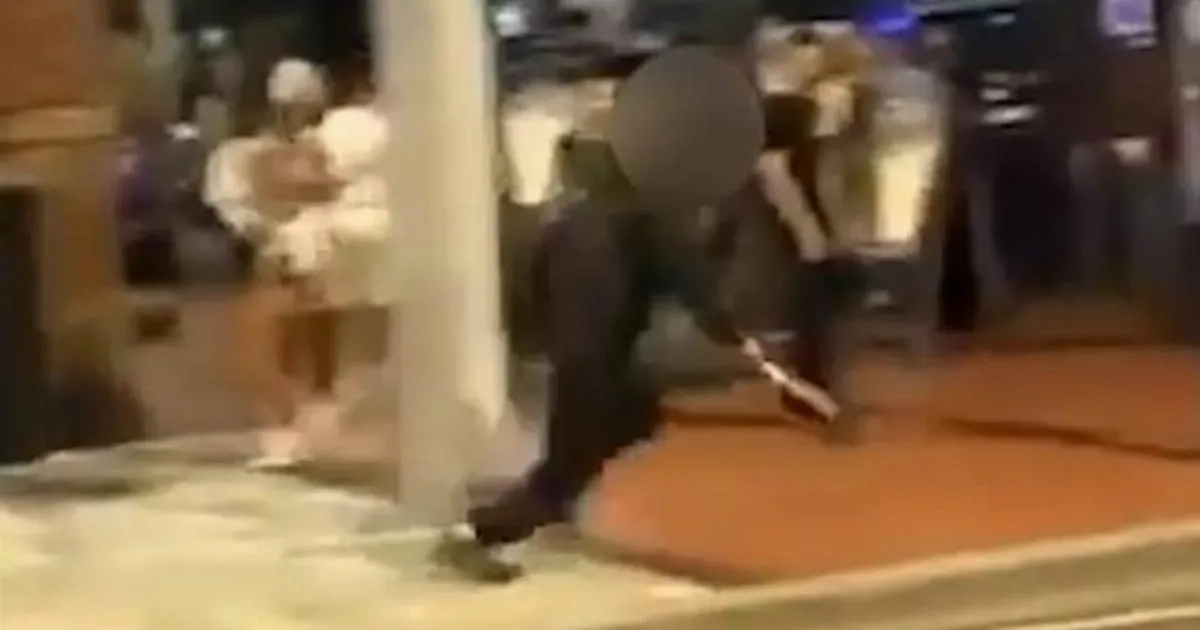
There are evenings that carry a special kind of energy in Birmingham, especially along Broad Street, where the nightlife spills out of bars and clubs and fills the air with laughter, music, and chatter. It is the kind of place where people come to mark birthdays, to meet friends, to dance until the early hours, and to feel the pulse of a city that has grown famous for its cultural life. But in the early hours of 9 August, that energy was broken by a different kind of pulse: the sudden, frantic beat of panic. Mobile phone footage captured a teenager sprinting across the road with a machete in his hand, near the Black Sabbath Bridge, in an area packed with people emerging from nightclubs and bars. The clip is short, but it has burned itself into the minds of everyone who watched it. On the soundtrack, voices shout, “He’s got a machete, what the f**k?” and then, “He’s got a knife, he’s got a knife!” The words are raw, unfiltered, and full of disbelief. It is the kind of moment that makes you hold your breath: a blade in a crowd, a young man on the run, and no time to think about what happens next. At that moment, the ordinary and the terrifying collided. The same street that hosts hen parties, football celebrations, and late-night takeaway queues became the backdrop for a weapon that belongs in a historical drama or an action film. The man’s movements look desperate rather than powerful; he runs with strides that are long but not coordinated, carrying the machete in a way that suggests he is not used to holding it. The crowd scatters, but not too far. Laughter can be heard, too: the nervous laughter of people who do not know how else to respond when danger appears. Some viewers have watched the video over and over, trying to understand what is happening before their eyes. The answer, perhaps, is that there is no simple answer. A young man brought a machete to a crowded street. Why? The footage does not say. It only shows the moment itself, and the enormous distance between a normal night out and a night that could have ended in tragedy.
The sequence of events in the video is both confusing and chilling. Alamansuly can be seen crossing the road, pausing just long enough to scoop up an object from the ground, and then running back in the direction he came. The street is lined with venues, and each doorway holds the possibility of shelter or danger. People are outside, waiting, watching, their evening interrupted by the sight of a machete glinting under streetlights. Some of them shout warnings; others laugh, perhaps because laughter is the only way to release the tension. One voice calls out, “Oi, there’s some feds there,” as police officers pass by, and within moments two officers can be seen chasing the suspect on foot. The chase is not the kind of clean pursuit seen in movies; it is messy, with members of the public scattered in all directions, trying to stay out of the way while also being unable to look away. The video has been viewed thousands of times since it was posted on social media, and each view raises the same questions: Why did no one stop him? Why did no one run? How did a machete end up outside a nightclub? Perhaps the most unsettling part is how quickly the scene returns to something like normal. The laughing continues even as the police run past. The bar lights keep flashing. A man with a machete cuts through a crowd, and the city simply absorbs the shock. This is what violence looks like in modern urban life: a sudden crack in the surface, followed by slow recovery. The people standing outside the clubs were not expecting to become part of a crime report. They went out for the evening with no idea that a teenager would be sprinting past them with a blade. For those who witnessed it, the memory will not disappear easily. They will replay the shouts, the running, the glint of metal, and they will wonder what might have happened if the police had been seconds later, or if someone had stumbled, or if the machete had caught someone’s skin. The fact that the incident ended in arrest rather than injury feels almost miraculous, though it was likely a combination of luck and quick thinking by those who moved out of the way.
Two days after the incident, Raid Alamansuly appeared before Birmingham Magistrates Court. The teenager, who is described as having no fixed address, faced two charges: possession of a bladed article and possession of class B drugs. He pleaded guilty to both and was remanded in custody until his sentencing on September 2. West Midlands Police later confirmed that they had been called to Broad Street just after midnight and that the suspect had been seen waving a metal object. The official statement is measured and careful, using language meant to be precise and unsensational. But the court process is a reminder of how quickly the chaos of a street chase turns into the quiet formality of a courtroom. A young man who was running through the city at night is now sitting in a cell, waiting to learn what will happen to him. The charges are serious: carrying a bladed article in public is an offense that can result in prison time, and the presence of drugs complicates the picture further. Behind the legal labels is a more difficult human story. At 19, Alamansuly is still close to childhood. He may have dropped out of school, or aged out of care, or found himself swept into a world where weapons and drugs seem like the only options. The phrase “no fixed address” is often used in court records, but it carries a heavy weight. It suggests instability, a life not rooted in the ordinary routines of home and family. It does not excuse what he did; carrying a machete through a crowd is an act of reckless endangerment. But it does add context. Many young people who carry knives say they do so because they feel unsafe, or because they are afraid of being targeted, or because they have been coerced into doing things they do not want to do. The court will decide what sentence is appropriate, balancing public safety with the possibility of rehabilitation. But no sentence can undo the image of that blade in the night, and no sentence alone can fix the circumstances that led to it.
Once the video reached social media, it took on a life of its own. It was shared, commented on, dissected, and turned into a talking point. The reactions were as varied as the people watching. Some viewers expressed anger, demanding that the suspect face severe punishment. Others made jokes, using the video as fodder for dark humor. One comment stood out for its simplicity: “Why are people laughing and smiling?” Another comment mourned the city itself: “My beautiful city has changed so much over the years.” Both responses speak to something important. The laughter in the video is not necessarily cruelty; it may be a way of dealing with fear. When something shocking happens, people sometimes giggle or make jokes because the alternative is screaming or freezing. Humor becomes a shield against the violence of what they have just seen. But for those watching from a distance, the video is more than a moment of nerves. It is a sign of decay, a symptom of a society in which young people carry weapons into places of leisure. Birmingham is not the only city facing this problem. Across the United Kingdom, there have been incidents of people brandishing knives, machetes, and other weapons in public spaces, often near schools, shopping centers, and nightlife districts. Each video sparks a wave of concern, but the underlying issues persist. Why do young men feel the need to carry blades? What has happened to the idea of a night out as safe and joyful? These are questions that cannot be answered with a single arrest. The comment about the “beautiful city” is particularly painful because it comes from a place of love. The person writing it has likely spent happy evenings on Broad Street, enjoyed its music, shared meals with friends, and watched the city grow. To see that familiar ground invaded by a machete is to experience a kind of loss. The city is still beautiful, but the beauty is now accompanied by a new awareness of danger. The laughter and the grief in the comments are two sides of the same reaction: a refusal to accept that this is normal, and a fear that it may be.
The official response from West Midlands Police was straightforward. A spokesperson said: “A 19-year-old man has been charged following reports of a man waving a metal object in Birmingham city centre on 9 August. We were called to Broad Street just after midnight. Raid Alamansuly, of no fixed address, has been charged with possession of a bladed article and possession of class B drugs. He was remanded to appear before Birmingham Magistrates Court on August 10.” The phrase “metal object” is notably different from the word “machete.” It is clinically accurate and intentionally unprovocative. Police are trained to describe things in ways that do not inflame panic or prejudice. But the video does the opposite. It shows a weapon that looks less like an object and more like a threat. The gap between the official account and the lived experience of witnesses is significant. In court, a judge will consider the charge; on the street, people are still processing the fear. This incident cannot be separated from the wider issue of knife crime and the pressure surrounding it. Police across the country have tried to tackle the problem through stop-and-search, targeted operations, and partnerships with schools and youth organizations. Yet young people continue to carry weapons, often because they fear being attacked themselves. The availability of cheap blades and the culture of valorizing toughness make the problem worse. Add drugs into the mix, and the situation becomes even more tangled. Possession of class B drugs is not the same as violent crime, but it is often linked to the same streets, the same groups, the same feelings of hopelessness. For those who work in nightlife, this is an occupational hazard. Door staff, bar managers, and police patrols must remain alert, even on nights when nothing happens. The arrest on Broad Street shows that the system can work: someone saw, someone filmed, someone called, and officers responded. But prevention would be better than response. A machete on the street is a failure for everyone, no matter how quickly it is removed.
At the center of this story is a young man whose name and face have been shared across the internet. It would be easy to label him a monster, a thug, or a symbol of everything wrong with the younger generation. But that would be too simple. Every person who has ever made a terrible mistake knows that their action does not tell the whole story of their life. Alamansuly was not born holding a machete; he became someone who picked one up. Perhaps he was afraid. Perhaps he was pressured. Perhaps he made a stupid, reckless decision on a night when his judgment was clouded. None of this excuses the danger he created. But it asks us to look beyond the video and the court record to see a human being in trouble. A 19-year-old of no fixed address, carrying drugs and a blade, is not living a life of stability and hope. He is on a path that will lead to more pain unless something changes. The people who laughed at the scene were not heartless. They were watching their own vulnerability and did not know how to respond. The person who mourned the “beautiful city” was not being naive; they were grieving the safety that should be every citizen’s birthright. The police officers who chased him were doing their duty, but they also likely know that locking someone up does not solve everything. The court will give Alamansuly a sentence, but it cannot give him the childhood he deserved or the support he may not have received. The rest of us can do two things at once: condemn the act and care about the causes. We can be grateful that no one was hurt and angry that a machete was ever brought into the open. We can hold in our minds the image of Broad Street as a place of joy, while acknowledging that joy is fragile and must be protected. Perhaps the most important lesson from this story is that public safety belongs to everyone. It is not just a job for police; it is a job for parents, teachers, friends, and communities. When someone sees a teenager carrying a weapon, they should be able to intervene or report it before it becomes a video. When a young person feels cornered by life, they should have someone to turn to other than a blade. And when a city experiences a moment like this, it should respond not only with punishment but with reflection. The sentencing in September will close one chapter. But the story of Birmingham, and of all cities dealing with the menace of knives, will continue. The hope is that Alamansuly can be redirected, that the next generation can choose safety over fear, and that no one will ever again need to shout “He’s got a machete” into a night filled with laughter.