

Paragraph 1
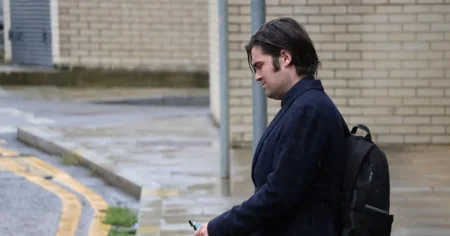
Jonathan Soares seemed to live an unremarkable life for a twenty-year-old in London. He had a job as a security guard, a steady if unglamorous routine, and no obvious signs that he was at the center of a violent underground trade. But beneath that ordinary surface lay a double life that would eventually shock even seasoned detectives. Soares was first pulled into police custody not because of the knives, but because of a fraud investigation. It was only when investigators began to examine his phones that the true scale of his secret empire began to emerge. What they found was not a minor scammer, but a young man who had built a thriving, callous business out of importing and selling illegal zombie knives, push daggers, Rambo knives, and even tasers. These were not collector’s items. They were weapons designed to maim and kill, and Soares was selling them to anyone willing to pay, including people he knew were schoolchildren. The discovery turned a routine fraud inquiry into a major national knife-crime investigation. For the police, it was a window into a dark network that had been feeding violence onto the streets of London and beyond. For Soares, it was the beginning of the end. His arrest was the first link in a chain that would lead to the seizure of hundreds of deadly blades, the dismantling of a supply line stretching across continents, and a court appearance that would leave him facing a substantial prison sentence. The fact that he was so young, and yet so deeply embedded in this trade, made the case all the more alarming. This was not an older criminal mastermind operating from the shadows. It was a teenager, a man barely out of childhood, who had chosen to profit from the very weapons that were devastating communities across the capital. His initial arrest for fraud might have seemed minor, but the phones in his possession told a far more dangerous story—one that would eventually expose a web of criminality involving stolen personal data, counterfeit money, phishing scripts, and a chilling ambition to expand into the firearms market.
Paragraph 2
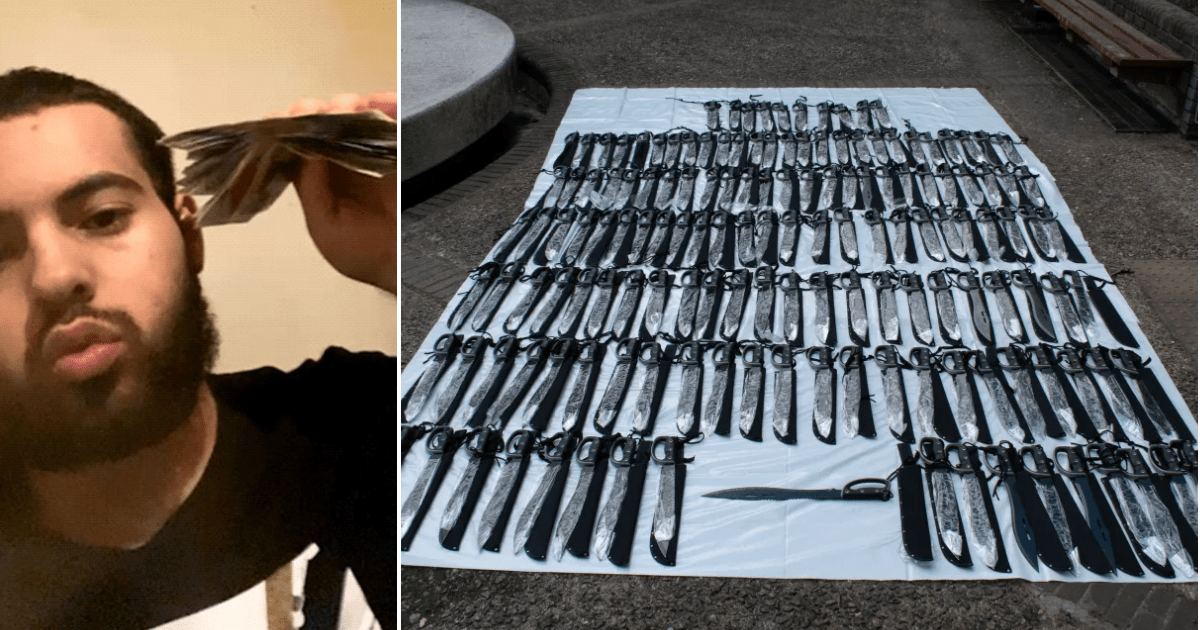
At the heart of the case against Soares was the sheer scale of his operation. Using evidence from his phones, detectives were able to map out his supply lines and intercept incoming shipments before they could reach the streets. In total, they seized 650 banned zombie knives—weapons so dangerous that their very name evokes images of horror movies and street violence. Commander Stephen Clayman, the head of the National Knife Crime Centre, spoke directly to the significance of the seizure. Each knife, he said, represented “one less opportunity for violence and one less family facing devastating loss.” Those words carry a heavy weight, especially when viewed against the backdrop of London’s ongoing struggle with knife crime. Zombie knives have been outlawed for a decade, yet they remain a grim presence in the capital’s criminal underworld. According to the Metropolitan Police, of the serious violent incidents involving under-25s in London this year, one in ten have involved a zombie knife. That statistic is not just a number. It represents young people stabbed, families shattered, and communities living in fear. The weapons Soares was importing were not abstract symbols of violence; they were tools with a practical purpose, designed to cause maximum damage. Their distinctive serrated edges and aggressive styling made them sought after by individuals who intended to use them. Soares knew this. He was not naive about the market he was serving. In fact, as Detective Chief Inspector Imran Beg later revealed, Soares actively sought feedback from the people he sold weapons to. He knew that his products were being used to stab and injure people, and he continued anyway. That level of disregard for human life is difficult to comprehend, but it is all too common in the world of organized crime. The seizure of 650 knives meant that a significant number of weapons would not reach the hands of potential offenders. It meant that some families would be spared the anguish of receiving that terrible knock on the door. But it also highlighted just how many more weapons might still be out there, hidden in homes, carried in backpacks, or waiting to be sold on encrypted messaging platforms. The work of the police in intercepting these shipments was a victory, but it was also a stark reminder of the ongoing battle against knife crime.
Paragraph 3
Soares’s operation was not a simple case of buying cheap weapons and reselling them at a profit. It was a sophisticated, international enterprise with a level of customization that showed a deep understanding of his customers’ desires. He ordered his weapons in bulk from suppliers in Pakistan, South Korea, and China, using the anonymity of the internet to build relationships with manufacturers thousands of miles away. He was able to get the knives tailor-made, right down to the color he wanted. On one occasion, he sent a screenshot from a news report about the zombie knife ban, featuring a picture of a blade, and asked his supplier to replicate it for him. This was not just a businessman; it was someone who took pride in his deadly merchandise, someone who recorded himself boasting with wads of cash, reveling in the success of his criminal enterprise. The items he imported were varied and indiscriminate in their brutality. Alongside the 650 zombie knives, police found evidence of push daggers, Rambo knives, and tasers. He also marketed a combat knife and imported a medicinal product called Toseina without a license. When Soares appeared at Inner London Crown Court, he pleaded guilty to a long list of charges: importing zombie knives, push daggers, Rambo knives, and tasers; marketing a combat knife; having counterfeit materials with intent; delivering fake bank notes; making or supplying phishing scripts and banking credentials for use in frauds; and importing a medicinal product without a license. The breadth of the charges painted a picture of a young man who was involved in virtually every corner of the criminal economy. He was not just selling weapons; he was also stealing identities, creating tools for fraudsters, circulating counterfeit currency, and dabbling in the illegal pharmaceutical trade. It was a dizzying array of criminal activity for someone so young, and it demonstrated a willingness to break any law if there was money to be made. His guilty plea was an acknowledgment of the overwhelming evidence against him, but it also marked the end of a short, reckless criminal career that had been built on the suffering of others.
Paragraph 4
The investigation into Soares’s activities revealed a disturbing link between fraud and violent crime. He used fraud and money laundering to finance his weapon-buying scheme, creating a self-sustaining criminal ecosystem in which the profits from identity theft and phishing funded the importation of deadly blades. Investigators examining his devices found hundreds of pieces of stolen personal data, detailed scripts that impersonated banks, and evidence that he had imported controlled drugs. This was not an isolated enterprise. Soares was connected to a wider network of criminals, and his willingness to share the tools of fraud with others made him a valuable node in an underground economy. But the most worrying discovery was his ambition to expand into the gun supply market. Messages recovered from his devices revealed that he had approached overseas manufacturers and researched how to make his own firearms using a 3D printer. The thought of a twenty-year-old security guard manufacturing guns in his own home is a chilling one. It suggests that Soares was not content to remain a knife dealer. He saw an opportunity to move up the criminal food chain, to supply weapons that could cause even greater devastation. The fact that he was actively researching 3D-printed firearms showed a level of technical curiosity and criminal determination that alarmed investigators. If his operation had not been disrupted, it is possible that he would have eventually added homemade guns to his catalog, further flooding the streets with lethal weapons. The connection between fraud and violence is often underestimated, but cases like this one demonstrate how deeply intertwined they are. Economic crime is not a victimless offense; it is often the fuel that powers more serious criminality. Soares used stolen data and fake bank notes to generate the capital he needed to buy knives, and then he sold those knives to people who used them to stab and injure others. Every link in that chain caused harm, and every link was built on a callous disregard for the well-being of others.
Paragraph 5
Soares was not working entirely alone. The investigation into a Telegram group linked to him led detectives to a parcel destined for an 18-year-old named Rayhan Rahman, of Chadwell Heath. Inside the package were ten zombie knives and twenty push daggers, all intended for resale. Rahman’s arrest illustrated the network nature of the trade. Soares was not just selling to end users; he was also supplying other dealers, who would then distribute the weapons to their own customers. This wholesale model allowed the violence to spread even further, reaching neighborhoods across the country. Rahman appeared at the same court and pleaded guilty to fraudulent evasion of a prohibition for zombie knives and push daggers last month. During Thursday’s hearing, he further pleaded guilty to being concerned in the fraudulent evasion of a prohibition for zombie knives and flick knives. He will be sentenced on October 13. The arrests of both men sent a clear message to those involved in the knife trade: the police are watching, and they are willing to follow the digital trail wherever it leads. Detective Chief Inspector Imran Beg was explicit about the significance of the case. “Soares sold these deadly weapons to people across the country, with a complete disregard for the damage they cause,” he said. “In fact, he crudely sought feedback from the people he sold the weapons to – he knew they were being used to stab and injure people but continued anyway.” That detail is perhaps the most damning of all. Soares did not simply ignore the consequences of his actions; he actively sought confirmation that his weapons were being used. He wanted to know how well they performed in real-world violence. This is not the behavior of someone who is oblivious to the harm they cause. It is the behavior of someone who is indifferent to it, someone who sees human beings as nothing more than potential customers. The police were able to pull his network out by the roots, in the words of DCI Beg, but the case serves as a reminder that there are many others still operating, still looking for the next shipment, still eager to profit from the fear and pain that knife crime brings.
Paragraph 6
The case against Jonathan Soares is a powerful example of the relentless work being done by specialist detectives to disrupt serious and organized crime groups in London. It also highlights a broader truth: that serious violence is not inevitable, and that targeted policing can make a real difference. DCI Beg noted that serious violence is down in London, in part because of the disruption of networks like Soares’s. Every knife seized, every arrest made, and every supply chain broken reduces the potential for tragedy. But the fight is far from over. Zombie knives, despite being banned for ten years, continue to appear in violent incidents across the city. The fact that one in ten serious violent incidents involving under-25s this year involved a zombie knife is a sobering statistic. It means that for all the progress made, these weapons are still highly accessible to those who want them. Soares will be sentenced next month, and he will almost certainly spend a significant amount of time behind bars. His young age might evoke sympathy, but it is difficult to feel sorry for someone who knowingly sold weapons to schoolchildren and took pride in the destruction they caused. The human cost of knife crime is immeasurable. Behind every statistic is a life cut short, a family left in mourning, a community scarred by violence. Soares did not care about those consequences. He was focused on profit, on the wads of cash he boasted about, on the sense of power that came from running a successful criminal enterprise. But in the end, his greed became his undoing. The same phones that showed off his wealth and his network also provided the evidence that would bring him down. His story is a cautionary tale, not just for other would-be criminals, but for a society that must continue to confront the root causes of violence. The police can seize weapons and arrest offenders, but the deeper challenge is to address the desperation, the lack of opportunity, and the toxic culture that makes carrying a knife seem like a viable choice for young people. For now, the work continues. Detectives remain committed to going after the criminals who seek to financially gain from violence, and they are increasingly successful at pulling entire networks out by the roots. Jonathan Soares is just one name in a long list of offenders who have underestimated the determination of the police. His arrest and guilty plea are a victory, but they are also a reminder of how much more there is to do. As London continues to grapple with knife crime, cases like this one offer both hope and a warning: the law is catching up, but the consequences of this deadly trade will be felt for years to come.