



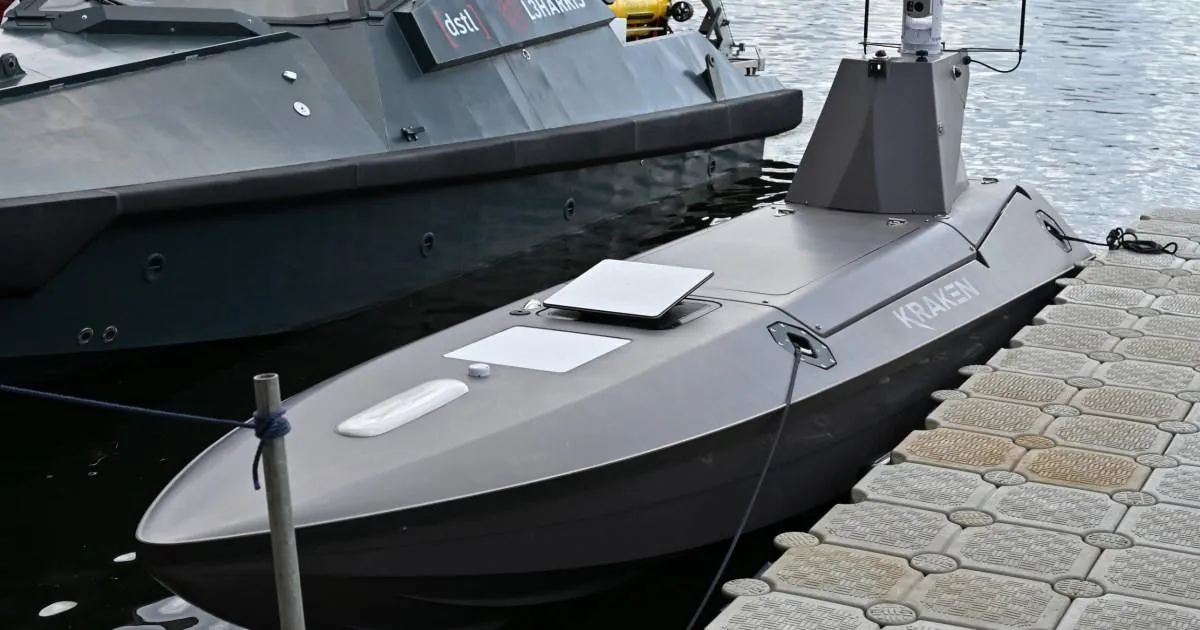
In an era where technology has become the backbone of modern defense, a recent revelation involving the Royal Navy’s high-tech surveillance drones serves as a sobering reminder of the invisible risks embedded in our global supply chains. The Kraken K3 Scout, a sleek, autonomous surface vehicle designed to push the boundaries of naval innovation, recently found itself at the center of a security controversy. While these drones were intended to usher in a new era of “Hybrid Navy” efficiency, reports emerged that components within their surveillance systems were quietly communicating with servers located in China. This discovery highlights the delicate balance between embracing rapid technological advancement and maintaining the ironclad security required for national defense.
The core of the issue lies in the complexity of modern manufacturing, where specialized components are often outsourced to third-party suppliers. In this instance, Kraken Technology Group—the contractor responsible for the fleet—sourced camera systems that, unbeknownst to them at the time, contained built-in vulnerabilities. Investigators discovered that these cameras were transmitting “heartbeat communications,” a technical signal designed to confirm that a device is active and functioning. While these pings are standard for remote hardware management, the fact that they were being routed to a Chinese IP address raised immediate red flags within the Ministry of Defence (MoD), necessitating an emergency shutdown of the cameras’ internet connectivity.
At the heart of this project was a bold vision for the future of maritime warfare. Back in March, the acquisition of twenty of these uncrewed boats, backed by a £12.3 million investment, was celebrated by leadership as a “significant milestone.” Vice Admiral Paul Beattie had championed the technology as the key to keeping British forces at the cutting edge of global innovation. The drones were meant to be silent, invisible eyes on the water, capable of intelligence gathering and reconnaissance without risking human life. The irony, of course, is that the very technology intended to keep British forces ahead of the curve became a potential vulnerability itself.
The Ministry of Defence has been quick to manage the narrative, stressing that they take data security “extremely seriously.” Their official response notes that the vulnerability was caught through routine cyber assessments, a testament to the rigorous testing protocols the military employs to mitigate such risks. While the report of data leaking to a foreign power is alarming, the MoD maintains that a thorough forensic investigation yielded no evidence that actual sensitive data or core systems were compromised or accessed. They frame this as a “near miss”—a technical glitch caught by security filters before it could evolve into a genuine intelligence breach.
This incident also takes place against a much broader, multi-billion-pound backdrop of defense modernization. With a £5 billion “drone transformation” plan recently announced to overhaul the Armed Forces, the UK is betting heavily on autonomous systems to project power and maintain security. As the military integrates more artificial intelligence and remote sensors into their day-to-day operations, the challenge of vetting every single circuit board, chip, and line of code becomes exponentially more difficult. The Kraken incident serves as a crucial case study for defense planners: in the race to modernize, the integrity of the supply chain must be as robust as the software running the drones themselves.
Ultimately, the Kraken K3 situation is a human story of vigilance and adaptation. It reminds us that even the most advanced, “high-performance” hardware is only as secure as the weakest component in its supply chain. As the Royal Navy continues to integrate these autonomous vessels into its fleet, this event will likely serve as a blueprint for future procurement processes, ensuring that innovation no longer comes at the cost of security. By identifying and addressing these vulnerabilities before they could be exploited, the MoD has demonstrated that while technology is evolving at breakneck speed, the traditional military virtues of caution, oversight, and internal investigation remain the ultimate frontline of national defense.