



**1. The call to save lives has always defined the Royal National Lifeboat Institution. For nearly two centuries, the people of the RNLI have done something extraordinary: they have dropped whatever they were doing, left warm homes and safe jobs, and rushed into the sea to rescue strangers in mortal danger. They are not paid heroes in the usual sense; they are volunteers, your neighbours, the people who run the local shop or work in the garage, people who have chosen to carry a burden that most of us would never dare to accept. They train in freezing conditions, sleep with pagers by their beds, and race to stations in the middle of storms because somewhere out there, someone is drowning. That has always been the quiet, humble truth of the RNLI. But now, something deeply troubling is happening. These same volunteers and staff have been warned not to wear the charity’s branding because of the unacceptable abuse they are facing from anti-migrant protesters. The iconic yellow wellies and blue waterproofs, once symbols of compassion and courage, have made them targets. They have been called traitors simply for doing what they have always done: trying to save human lives. The threat has become so serious that the charity has had to issue guidance telling its people to consider hiding their identity, to avoid wearing branded clothing where appropriate, and to go home or close for the day if they feel unsafe. It is a sad and surreal moment when a lifesaving organisation has to protect its heroes from the people on the shore.
**2. The recent wave of hostility has been building for some time, but it has now spilled over into open confrontation. Charity workers were targeted while bringing small boat migrants ashore during protests in Dover and Portsmouth, two towns that have become flashpoints in the bitter national argument over immigration. This week, footage posted on social media showed volunteers being labelled as traitors after helping a dinghy to safety in Portsmouth. In the video, the ugly word hangs in the air like a verdict, directed at men and women who had just pulled people out of the water. Protests have also been held at RNLI sites, including on Wednesday, when a small anti-migrant gathering took place outside the RNLI College in Poole, Dorset. The RNLI is not a political organisation, and it does not judge who should or should not be allowed to stay in the country. It is tasked by HM Coastguard to assist whenever there is an incident in the water, and it responds to distress calls without asking for a passport or a visa. But in the heat of a divided and angry moment, that simple humanitarian duty has been twisted into something sinister. The charity’s chief executive, Peter Sparkes, has spoken out about what he called deliberate misinformation and a misunderstanding about the RNLI, its purpose, its tasking, and particularly its lifesaving work in the Channel. Yet the misinformation has already taken root, and now it is endangering the very people who have dedicated their lives to protecting others.
**3. The official response from the RNLI came on Thursday, and it was both measured and grimly necessary. In a statement, a spokesman said: “Given the unacceptable abuse our people have faced, and with protest activity taking place at RNLI locations, we have taken action to help ensure the safety and wellbeing of our volunteers and staff. As well as enhancing security at RNLI locations, we issued guidance to our people earlier this week on how to keep themselves safe. This guidance included how to manage potentially challenging interactions with members of the public, and where appropriate, choosing not to wear RNLI-branded clothing.” The statement also reminded volunteers and staff that their safety comes first and encouraged them to report relevant incidents internally and, where appropriate, to the police. The BBC reported that volunteers have been told they are empowered to make decisions to keep themselves, their team or crew safe, and that they can go home or close for the day if they need to. Read those words again and let them sink in. A volunteer lifeboat crew, the people who routinely launch into hurricane-force winds and mountainous seas, are now being told it is acceptable to walk away because of a crowd on the beach. The guidance is sensible, compassionate, and necessary, but it is also a mark of how far the situation has deteriorated. The RNLI has always taught its crews to run towards danger, not away from it. Now, for the first time, it is having to teach them to run away from their own neighbours.
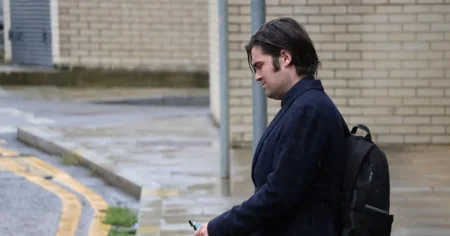
**4. The human cost of this campaign is already visible, and it is heartbreaking. One volunteer, named only as Neil, was pictured on social media and labelled a traitor. In an interview with the BBC, he explained exactly what happened on the day the photograph was taken. He said: “We were tasked to Langstone Harbour to carry out illumination of the beach for the safety of the protesters. We were there, as I said, purely for the safety of the protesters that were in the water.” His voice, we can imagine, carried the quiet bewilderment of someone who had simply done his duty and then found himself publicly shamed for it. He went on to say: “It’d be nice for those people who called me a traitor to know that I’m not a traitor.” No, Neil is not a traitor. Neil is the opposite of a traitor. A traitor betrays his country, his friends, his values. Neil got into a lifeboat and went out into potentially dangerous conditions to make sure that people, including perhaps the very people who later called him a traitor, were safe. He did not ask whether those people agreed with him. He did not ask whether they would vote for the same party, worship in the same church, or speak the same language. He simply saw human beings in trouble and went to help them. That is not treason. That is the most loyal thing a person can do: to protect life, even at risk to your own. And yet, because of a toxic political climate, Neil has had his photograph circulated, his character attacked, and his name dragged through the mud. It is a chilling example of how easily compassion can be turned into a crime.
**5. Neil is not alone. Another serving volunteer, who spoke to the Press Association on condition of anonymity, described a life that has been turned upside down by fear. “It’s both scary and frustrating,” they said. “The crew are parking away from the station and running to the boat, so their cars aren’t in the crew car park. Volunteers in the shop do not want to come in because they get abused and are elderly. I’ve personally removed my lifeboat RNLI crew sticker from my car as I don’t want it locally targeted. It’s never been this bad and never felt this aggressive, where they actually want to publish your photo, and then list your address. They’re not just shaming you but actually encouraging a target on you.” Stop for a moment and picture that. A volunteer who has saved lives, who has given countless hours to their community, now parks their car away from the station so no one will know who they are. They run to the boat, looking over their shoulder, afraid of being recognised. An elderly volunteer in the gift shop stays home because they cannot face the abuse. Someone scrubs the RNLI sticker off their car because they are afraid of being targeted in the street. This is not a debate about immigration. This is not a political disagreement. This is a campaign of intimidation against the people who rescue drowning people. It has crossed the line from protest into persecution. And it is working. The fear is real, the anxiety is real, and the threat is real. As Peter Sparkes said, some volunteers and staff have been subjected to online and, in the worst cases, physical abuse. They and their families are being threatened by those who would hide behind a balaclava or a keyboard. In a civilised society, he said, that is wholly unacceptable. He is right. The question is what we are going to do about it.
**6. The response from officialdom has been appropriately serious. Dorset Police said they continue to work with partners, including the RNLI, to ensure sufficient security measures are in place where appropriate, and that they will respond to any reports of protest activity or criminal activity. But the deeper response has to come from all of us. The RNLI saves hundreds of lives every year. Its crews are made up of ordinary people doing extraordinary things. They do not deserve to be harassed, threatened, or forced to hide their identity. They deserve our gratitude, our respect, and our protection. The tragedy of this moment is that the anger directed at them is fundamentally misdirected. If people are angry about the government’s immigration policy, they should direct that anger at the government. If people are angry about small boat crossings, they should demand safer legal routes and a more humane asylum system. But taking that anger out on a volunteer lifeboat crew is not only cowardly, it is dangerously stupid. If the RNLI stops launching, or if volunteers are too scared to wear their uniforms, or if they park their cars far away and hesitate before answering the pager, then people will die. That is not speculation. That is a mathematical certainty. And when the first body washes ashore because a lifeboat was delayed or a volunteer was too frightened to come forward, those who called them traitors will have to live with that blood on their hands. We must not allow that to happen. We must stand with the RNLI, with its volunteers, and with the simple, ancient idea that saving a life is always right. We should thank them, support them, and defend them. We should remind them that the traitors are not the ones who launch the lifeboats. The traitors are the ones who try to stop them. In the end, the sea does not care about politics. It takes whoever it can. And when it does, the only people who can help are the volunteers in the orange boats, the same people who are now being told to hide. Let us hope they never stop. Let us make sure they never have to.