
Sir Ranulph Fiennes has spent a lifetime going to the places that other people fear even to imagine. He has walked to the South Pole, crossed the frozen Arctic, uncovered the lost city of Ubar in the deserts of Arabia, and attempted to climb Mount Everest from its most dangerous sides. He has survived experiences that would have killed a lesser man: frostbite that cost him fingers, cancer, heart attacks, and the grief of losing close companions in the most hostile environments on earth. Yet the most unsettling journey of his life did not require a map or a compass. For more than two years, the celebrated explorer has not been seen in public. His absence has become a source of growing alarm among friends and family, and the concern roared back into the open after his longtime friend, German entrepreneur Michael Kobold, made a startling claim. Kobold said that before one of Fiennes’s attempts to climb Mount Everest, the explorer wrote a secret, sealed will at base camp, a document meant to be opened only after his death. The image is haunting. At sixty-five years old, a man who had already survived so much sat in a tent at the foot of the world’s highest peak and quietly drew up plans for the end of his life. The mountain outside was cold and enormous, and the summit above was dangerous beyond words. But according to Kobold, the darker landscape was inside Fiennes himself. The will was not only a practical precaution. It was written during what Kobold called the darkest period of the explorer’s life, a time when Fiennes felt trapped not by ice or altitude, but by his own personal circumstances. The revelation has changed the way people understand the silence surrounding Fiennes. It raises a painful question: is the man who once conquered the world now being hidden from it?
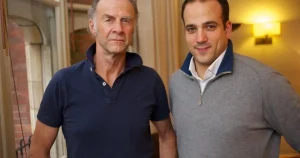
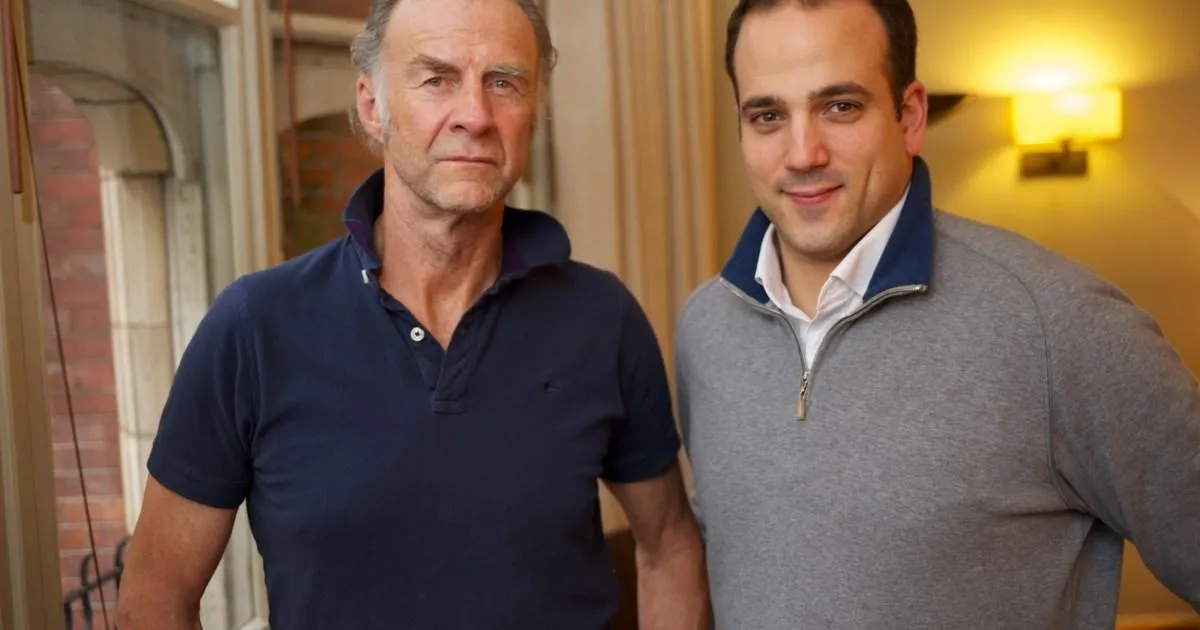
Kobold is not someone who watched Fiennes from a distance. He has known the explorer for thirty years, and the two have shared adventures and confidences. In an interview with the Mail on Sunday, Kobold described how Fiennes once told him he was planning to divorce his second wife, Louise Millington-Cotes. The conversation occurred roughly two months before Fiennes headed to Nepal for his attempt on Everest. Fiennes, then 65, asked his friend to help him find both a law firm and a public relations company. He did not want the divorce to become a public spectacle; as Kobold remembers it, Fiennes said he did not want to be “the next Sir Paul McCartney.” That phrase says a great deal about the explorer. He was not afraid of physical danger, but he was afraid of losing the ability to tell his own story. He wanted to manage the narrative before the press could create one for him. Kobold says the explorer described the period before Everest as the bleakest time of his life. “In Ran’s mind, this was a very bleak time in his life. Probably the darkest time, up until then, because he felt trapped,” Kobold said. This is a devastating confession from a man who had endured some of the most extreme conditions on earth. He had walked where no one had walked before, pushed his body past every reasonable limit, and buried friends in the ice. Yet here he was, feeling trapped not by a glacier or a storm but by the choices of his own private life. The memory has particular resonance now because it shows a man thinking hard about the end of things while standing at the beginning of a great adventure. He was trying to arrange his affairs, to protect whatever remained of his personal peace, and to keep his dignity intact. He also seems to have been trying, in his own way, to be fair. A law firm and a public relations company would have ensured that the separation was handled with as little hurt as possible, at least in public. But the plan, if it was a plan, would not survive contact with the mountain.
According to Kobold, the divorce plan was intertwined with a new will. At Everest base camp, in the strange, shifting village of tents that gathers at the foot of the mountain, Fiennes reportedly wrote a fresh will in secret. Kobold says he saw the explorer pen the document, which was then sealed. Under English law, a will must be signed by two witnesses to be valid, and Kobold does not remember adding his signature to this particular document. He does, however, believe he had signed an earlier will for Fiennes. The details matter legally, but emotionally they are even more significant. A will is not just a list of inheritances; it is a final statement of what a life has meant, an attempt to speak from beyond the grave. Fiennes, who had faced death so often, understood this better than most. He knew that Everest does not care about fame or courage. It takes what it takes. And so, in the thin air of base camp, surrounded by other climbers all carrying their own private fears, he tried to put his affairs in order. He and Kobold were due to discuss the will further at Greenlands, Fiennes’s farm in Exmoor. But that conversation never went exactly as planned. Kobold believes Millington-Cotes caught wind of the discussions and asked for a private conversation with her husband. After that, Fiennes reportedly told his friend that he was not going ahead with the divorce. The couple stayed together, at least ostensibly, and Fiennes returned to the mountain the following year, where he would finally reach the summit. But Kobold’s account leaves a sense that something had shifted. The man who had been prepared to rewrite his future had suddenly stopped. What was said in that private conversation, no one knows. But the result was that Fiennes remained tied to a marriage from which, according to his friend, he had once felt desperately eager to escape. The will, sealed in a tent at the foot of Everest, came to seem like a relic from a road not taken. It was a map of a future that never arrived.
In the years that followed, Fiennes continued to live in the public eye, but slowly the light began to dim. He was diagnosed with Parkinson’s disease, a condition that attacks the body and can make even the simplest movements a struggle. For a man whose entire identity was built on movement, on pushing forward, on ignoring pain, Parkinson’s must have felt like a betrayal. And then, somehow, he disappeared. Friends and family have said he was not seen in public for more than two years. According to reports, his wife, Millington-Cotes, had arranged for him to be moved between care homes under a false name. The arrangements, allegedly devised by her, seemed designed to keep his presence hidden. The former horse trainer also reportedly insisted that her husband wear a hat, sunglasses and gloves whenever he went outside. The gloves were not just for warmth; they were to cover his frostbitten fingers, the fingers he lost parts of to the cold during one of his expeditions. The hat and sunglasses were to keep his face from being recognised. Try to picture it: the man who once stood at the top of Everest, who walked across the Antarctic, who waved to crowds at events and press conferences, now slipping through the world like a ghost, every visible trace of himself covered. It is a deeply sad image. There is, of course, a case for privacy. A man with his health challenges may not want to be photographed or approached. But the secrecy went much further than avoiding paparazzi. He was reportedly being moved under a false name, and friends say they had to fight to learn where he was. At some point, he is now thought to have been brought back to his home in Cheshire, where he remains. The fact that his own family and friends had to question his whereabouts says more than any official announcement could. This was not a quiet retirement; it was an erasure, one careful step at a time.
The growing alarm around Fiennes has not been confined to his immediate circle. Public figures who know and admire him have started to speak out, and their words have the tone of people who are genuinely frightened. John Simpson, the veteran BBC journalist, said that it must be known “what’s happening to him.” Simpson called Fiennes “the world’s bravest man,” but added that he is also vulnerable. That combination is what makes the situation so urgent. Brave people are not invincible; sometimes their bravery is the very thing that keeps them from asking for help. Ben Fogle, the broadcaster and adventurer, has said he is “deeply disturbed” by stories concerning his friend. Fogle knows what it means to push human endurance to its limits, and his concern carries weight. Perhaps most striking were reports that King Charles himself had been blocked from contacting Fiennes by the explorer’s wife. The royal dimension adds another layer of gravity. This is not a private soap opera; it has reached the highest levels of the country’s public life. Whether or not the report about the King is true, the fact that it has been published and discussed shows how far the story has travelled. Millington-Cotes has asked not to be contacted by the press, and privacy is a reasonable demand. But privacy is not the same as concealment. When a beloved national figure is hidden away under a false name, when close friends are worried, and when the public is left to wonder whether he is safe, the line between protecting someone and isolating them becomes dangerously thin. The silence around Fiennes no longer feels respectful. It feels like a wall, built perhaps with love, but now too high to see over. The people outside that wall are not curious strangers; they are people who have walked alongside him, who owe him a debt of friendship and gratitude, and who are terrified that they may never see him again.
At its heart, this is a story about the last great expedition, one that every human being must eventually face. Sir Ranulph Fiennes taught the world that the human spirit can endure almost anything: extreme cold, intense pain, grief, failure, and fear. He taught us that there is always another mountain, always another step forward. But aging and illness do not care about heroic effort. They come quietly, and they take away the things a person loves, one at a time. The image of Fiennes writing a secret will at Everest base camp is powerful because it shows him doing what he always did: preparing for the worst while still hoping for the best. He did not want to leave chaos behind. He wanted to protect the people he loved from the pain of having to guess what he would have wanted. Now, his friends and family are left in a similar position. They are guessing what he would have wanted. Would he have wanted to disappear from the world? Would he have wanted to be hidden under a false name, covered in hats and glasses, separated from the people who cared for him? The answer seems obvious to anyone who has read his books or watched him speak. Ranulph Fiennes wanted to be seen, to bear witness, to live fully and openly. He may have been physically confined and dependent on others for his care, but the man who wrote that secret will was still fighting for control of his own fate. The people who care about him are fighting for that too. They are asking the world not to look away. They are asking for the truth, however difficult it may be. And perhaps, in the end, the greatest monument to a man like Fiennes is not a plaque or a statue, but the willingness of others to carry his story forward, to make sure he is not lost in the silence. He has climbed the highest mountain on earth. Now, he needs someone to help him through the valley.