


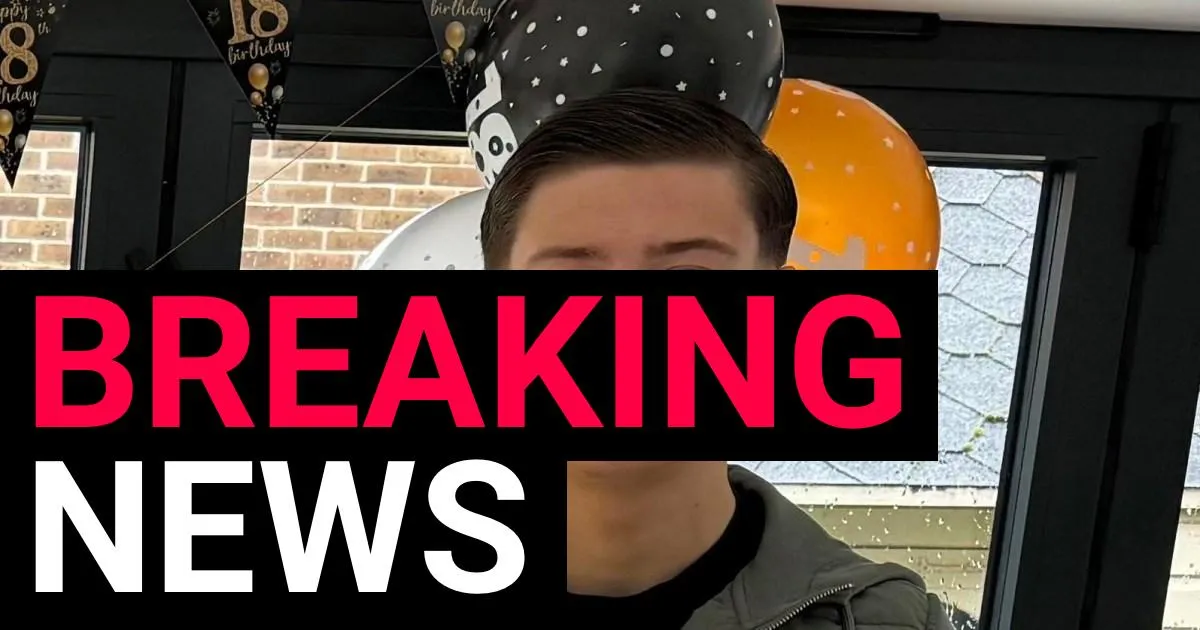
The tragic death of 18-year-old Henry Nowak, a University of Southampton student who lost his life in December 2025, has left a gaping wound in the community, further deepened by the unsettling circumstances surrounding his final moments. After being brutally stabbed by Vickrum Digwa, a young man who subsequently fabricated a narrative claiming he was the victim of a hate crime, Henry was encountered by Hampshire police officers. Heartbreaking bodycam footage captured the teenager desperately pleading for help, stating clearly that he had been stabbed and was struggling to breathe. Instead of an immediate life-saving response, the officers proceeded to handcuff him, with one officer disturbingly dismissive of his cries, questioning the reality of his injuries even as the life ebbed away from him.
The failure of those officers to recognize a medical emergency of that severity has triggered a formal investigation by the Independent Office for Police Conduct (IOPC). The probe is currently examining potential gross misconduct regarding the officers’ failure to assist, as well as accusations of unprofessional behavior. One officer specifically faces scrutiny for an apparent breach of standards regarding authority, respect, and courtesy, for essentially silencing a dying boy’s plea for help. While Vickrum Digwa was eventually sentenced to life imprisonment with a minimum term of 21 years for the murder, the sheer negligence displayed by the responding officers has added an agonizing layer of trauma for the Nowak family, who now have to grapple with the realization that their son’s final minutes were marked by state indifference.
The ripple effects of this tragedy have reached the highest levels of the British police force and government. Chief Constable Alexis Boon of the Hampshire and Isle of Wight Constabulary has issued a formal apology to Henry’s family, acknowledging their understandable outrage and the harrowing nature of the ordeal. He expressed that while the conviction of the assailant was a necessary step toward justice, the conduct of his officers remains a point of deep institutional shame. He admitted that the force “gets it” when it comes to the family’s anger, acknowledging that the parents are forced to process a nightmare that will impact them for the remainder of their lives, while the force continues to wrestle with the implications of the officers’ poor judgment.
Beyond the failures of the police, Henry’s murder became a catalyst for broader, volatile political discourse. Following the sentencing, riots broke out in Southampton as tensions reached a boiling point. The situation was heavily inflamed by comments from Reform UK leader Nigel Farage, who utilized the platform of the tragedy to call for “pure, cold rage,” framing the murder as a byproduct of what he termed a culture of “anti-white prejudice.” These inflammatory remarks encouraged protesters to gather outside the local police station and target the home of the perpetrator, transforming a private family tragedy into a public flashpoint for racialized anger and social division.
The politicization of Henry’s death was met with strong condemnation from Prime Minister Keir Starmer, who criticized the move as deeply cynical and damaging. The Prime Minister channeled his response through the perspective of the grieving Nowak family, noting that they had explicitly requested that people refrain from using their son’s name to incite unrest or manipulate public sentiment for political gain. Starmer argued that regardless of political positioning, there is a fundamental human decency required when handling such a tragedy, asserting that the attempts to whip up division over the corpse of a murdered child were entirely wrong and displayed a callous disregard for the family’s desire for peace.
Ultimately, the story of Henry Nowak serves as a dark reflection of how the loss of an individual can be overshadowed by institutional incompetence and political opportunism. Between the cold, bureaucratic failure of the officers who ignored a dying young man and the firebrand rhetoric of politicians leveraging his death for ideological traction, the humanity of the victim has struggled to remain central. As the legal system re-examines the leniency of the killer’s sentence and the IOPC continues its investigation into the police, the enduring heartbreak remains with a family who simply lost their son. In the silence left behind, the case serves as a somber reminder of the need for both compassion in public service and integrity in political dialogue.