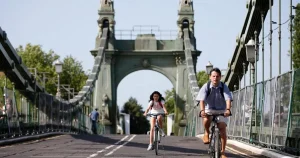

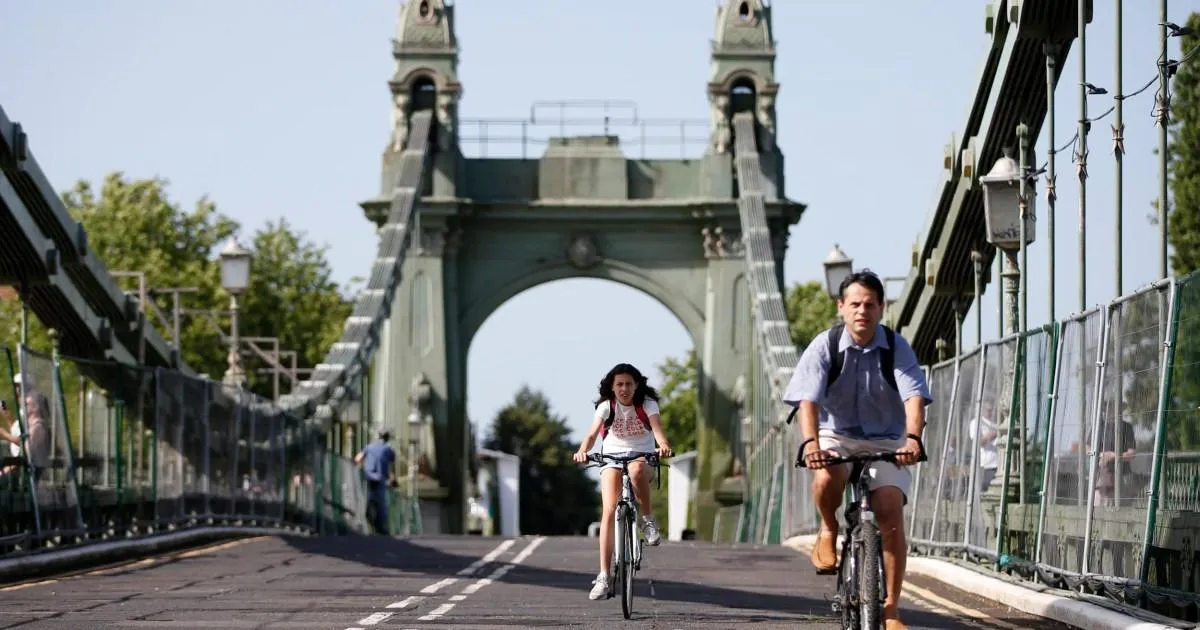
London’s historic bridges, once the majestic symbols of Victorian engineering, are currently teetering on the edge of a structural crisis that is fundamentally altering the way the city functions. The iconic Hammersmith Bridge, a Grade II listed marvel, has become the epicenter of this struggle, locked in a state of limbo that has forced it to close indefinitely to motor traffic. For the surrounding communities in Putney and Roehampton, this closure is far more than an inconvenience; it represents the severance of a vital artery. Commuters who once relied on the crossing find themselves snared in a web of gridlock and circuitous bus diversions, while the human cost of this infrastructure failure manifests as lost time, strained nerves, and a palpable sense of abandonment by the authorities tasked with keeping the capital moving.
At the heart of the frustration lies a daunting, colossal “funding black hole.” For years, local residents and stakeholders clung to the hope of a full £300 million restoration, a project ambitious enough to return the bridge to its former glory and reinstate the bus routes that act as lifeblood for daily workers and students. However, that dream has been effectively dismantled. Reports from the Hammersmith and Fulham council have confirmed that the government has signaled an unwillingness to bankroll a total repair. Instead, local officials are being pushed toward a modest, phased repair strategy that is vastly cheaper but fundamentally incapable of supporting the heavy traffic for which the bridge was originally designed. This shift represents a sobering capitulation to budgetary limitations over long-term community needs.
The administrative tug-of-war between the council and the government highlights a troubling trend of passing the buck while infrastructure slowly decays. While Hammersmith and Fulham council has already dipped deep into its own coffers—investing some £54 million just to keep the bridge safe for cyclists and pedestrians—they are now being guided to bid for a limited £128 million fund with a strict completion deadline of March 2030. According to the recent departmental reports, a full restoration is simply “not achievable” within this financial and temporal framework. This realization has sparked genuine outrage among local representatives, including Putney MP Fleur Anderson, who correctly points out that residents are being forced to shoulder the consequences of a systemic failure to prioritize critical urban maintenance.
The human element of this story is perhaps the most compelling, as it moves beyond engineers’ reports and budget spreadsheets into the realm of daily survival. For the residents of Roehampton and Putney, the loss of these six bus routes represents a tangible degradation of their quality of life. The daily routine of thousands has been permanently adjusted, forcing families and workers to account for hours of extra travel time. It is a bleak reminder that when large-scale infrastructure projects stall, it is the most vulnerable segments of the population—those who cannot afford private cars or who rely entirely on public transport—who pay the highest price. The suggestion that “cheaper alternatives” should be considered feels, to many, like a cold betrayal of a historic landmark that deserves to be properly saved.
Contrast this with the situation at Albert Bridge, which, while not entirely free of “drama,” offers a rare glimmer of optimism. After recent structural jitters caused a temporary scare, the crossing is on a clearer, albeit limited, path toward recovery. Kensington and Chelsea council has confirmed that full repairs are in the pipeline, with the hope that cars will return by 2027. It serves as a stark reminder that these structures are not just romantic Victorian relics, but active, living parts of a metropolis. When maintained with clarity and purpose, these bridges can be restored, but when left to language in a bureaucratic stalemate, they become monuments to neglect rather than engineering triumphs.
As London peers into the future, the plight of its bridges serves as a ticking time bomb for the city’s broader transport strategy. The government maintains that primary responsibility rests with the local borough, yet the scope of the problem—as seen across other major crossings like Vauxhall Bridge—suggests a need for a unified, comprehensive approach that transcends local politics. Until that happens, the people navigating the river banks will continue to look at their fragmented bridges with a mix of nostalgia and resentment. The dream of a fully functioning Hammersmith Bridge may be fading, but the voices of those who suffer the daily traffic chaos are only growing louder, demanding accountability for a city that is struggling to balance its glorious history with the hard realities of modern urban upkeep.