

It begins with a bus, a rumour, and a group of teenage boys who simply wanted to play cricket. The young Pakistani U-19 team had travelled thousands of miles to England, carrying with them years of training, national pride, and the kind of nerves that turn professional athletes into boys again before a big match. They arrived in Portsmouth, checked into the Marriott hotel, and prepared to face England. But outside, something far darker was unfolding. A crowd of 40 to 50 people had gathered, stirred by whispers that circulated through the community with alarming speed: the men on the coach were not cricketers, but migrants. The coach company, it would later emerge, was the exact same one used by the Home Office to transport migrants in the area. It was a coincidence, but a cruel one. For the residents watching the coach pull up, it seemed to confirm their worst fears. So they marched to the hotel, anxious and suspicious, ready to confront a group of people they believed did not belong. Imagine being one of those players: jet-lagged, focused, perhaps a little homesick, and then catching sight of a hostile crowd outside your window, chanting and pointing, all because of a mistake nobody had bothered to verify.
What makes this moment different from other ugly scenes across the country is not the crowd itself, but the way it was defused. George Madgwick, the leader of Hampshire’s Reform UK party, arrived at the scene and made a choice that was both simple and remarkable: he decided to find out the truth instead of feeding the frenzy. He spoke to the crowd, and what he found surprised him. The people were not drunk, not aggressive, and not looking for violence. They were concerned, he said, in the way that people are when they feel their neighbourhood is changing and no one is listening. The man leading the crowd insisted everyone remain on public land, stay calm, avoid drinking, and avoid abuse. It was, by all accounts, a restrained protest, at least in its manners. Madgwick went inside the hotel, spoke to the manager, and met the cricket team’s coach, who showed him proof of who the players were. With that information, he walked back outside and told the crowd the truth: these were not migrants, but a Pakistani cricket team here to play England. The crowd accepted this immediately, called for calm, and dispersed within five minutes. The hotel manager was grateful, and even sympathetic to the concerns of local people. It is a small moment of human connection, a reminder that misinformation can be defeated when someone is willing to investigate rather than inflame. But it also raises a deeply uncomfortable question: why did a group of young athletes, here to compete in an international sporting event, have to prove who they were in the first place?
The answer, as Stand Up To Racism pointed out, is racism. “Allowing racists to mobilise like this every time they become suspicious of any group of non-white people in Portsmouth is extremely dangerous,” the organisation said. “It is racism in action and it has to stop.” Those are strong words, but they ring true when you consider the effect this episode had on the cricketers themselves. These were not faceless intruders, but teenagers who had done nothing wrong, whose biggest concern should have been their batting technique on a rain-soaked English morning. Instead, they were forced into the centre of a political storm, their identities questioned, their presence treated as a threat. They were made to feel unwelcome in a country they had come to as guests. And yet, remarkably, they did not let it break them. The Pakistani team went on to defeat England U-19s by 177 runs, a victory so emphatic that it felt almost like a statement. It is a story of resilience, but also of waste: how much energy had to be spent on fear and suspicion, when all these young men wanted was to play a game they loved? The protest ended peacefully, thanks to Madgwick’s intervention, but the emotional damage is not so easily undone. For the players, the memory of a crowd baying outside their hotel will likely outlast the memory of their triumph.
The same weekend, another scene unfolded in the south of England that revealed the darker side of this movement. A dozen or so people gathered outside the RNLI headquarters in Portsmouth, shouting at coastguard volunteers for doing the very thing they are trained to do: saving lives at sea. The backdrop was horrifying. On Sunday night, a volunteer RNLI crew rescued approximately 140 migrants from a “mega dinghy” attempting to cross the English Channel. That rescue triggered a wave of far-right protests, including sea blockades in Eastney, as activists sought to prevent the volunteers from carrying out their humanitarian work. In Poole, a group of so-called “patriots” barked through megaphones at what was supposed to be a “silent vigil”. They targeted emergency responders with a ferocity that is difficult to reconcile with any version of Britishness. There were clashes with local police, reports of assaults on officers, and criminal damage after official vehicles were targeted. And then came the most sinister escalation of all: the doxxing of RNLI volunteers. Their names and addresses were published online, alongside accusations of being “traitors”. Consider what that means. A volunteer who risked their life to pull a drowning person from the sea was branded an enemy of the nation. Their family, their home, their safety were put at risk, not because of a crime, but because they had chosen compassion over cruelty.
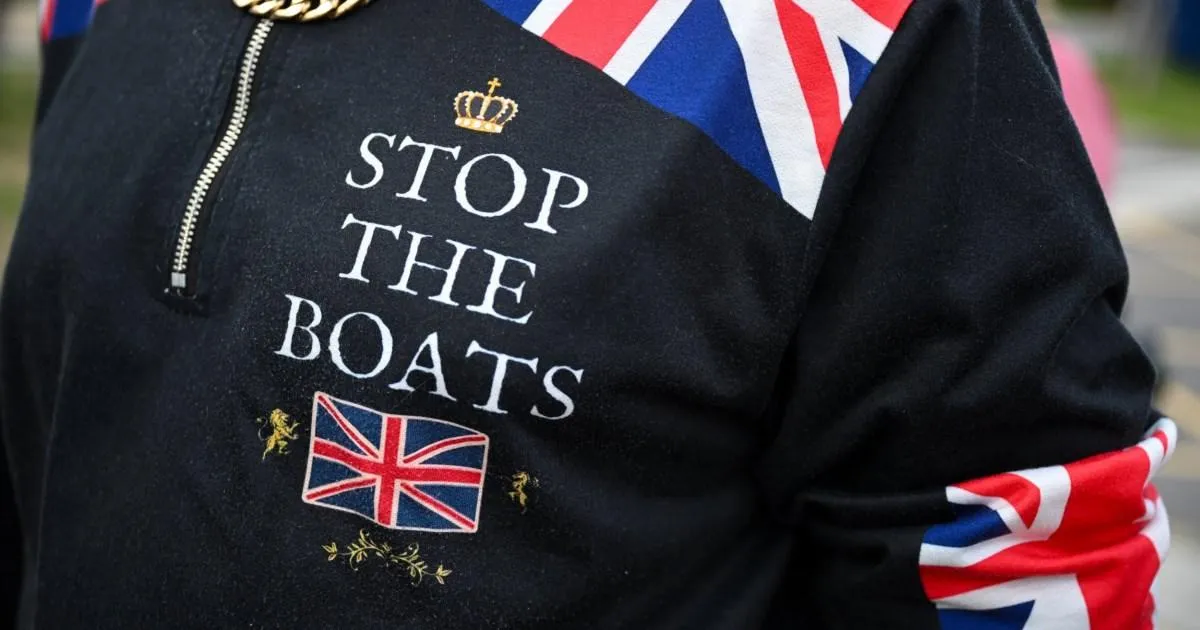
This is the context in which the Marriott hotel incident must be understood. The crowd outside the hotel, perhaps, was not the same as the one outside the RNLI headquarters. There is a difference between people acting on false information and people acting on genuine hatred. But the two events are connected by a thread of fear and dehumanisation. Since the summer riots, the far right has been emboldened, and figures like Nigel Farage have been quick to capitalise, calling for bans on face coverings after protests, while others like Danny Tommo, described as Tommy Robinson’s “right-hand man”, have helped organise anti-migrant demonstrations. The language is often dressed up in patriotism: flags, vigils, concerns about borders. But at its core, this is a movement that looks at a group of non-white people and assumes they must be a threat. It looks at a rescue team and sees collaborators. It looks at human beings in desperate need and sees only a political inconvenience. When the crowd outside the Marriott realised their mistake, they dispersed peacefully, and that is a credit to the individuals involved. But the fact that they gathered at all, that their first instinct was suspicion, that they were prepared to confront a group of strangers based on a rumour, speaks to a sickness in our public life.
What can we take from this? Perhaps the most hopeful lesson is the one taught by George Madgwick, though it came from an unlikely source. He did not tell the crowd they were wrong to care. He listened. He verified. He treated them as people, and they responded in kind. It is a tiny blueprint for how to deal with misinformation in a divided age: slow down, check the facts, and speak to one another face to face. But that alone is not enough. The cricketers who won by 177 runs deserve to be remembered not as a cautionary tale, but as human beings. The RNLI volunteers who risk their lives deserve protection, not persecution. And the migrants crossing the Channel are not statistics or slogans, but people with stories as real as our own. Until we can look at a bus full of brown faces and see possibility rather than peril, we will keep having these moments of shame. The crowd at the Marriott left within five minutes. But the echoes of their suspicion will last much longer, in the minds of the young men they wrongfully confronted, and in the memory of a nation still struggling to decide who it wants to be. If we truly want to humanise the debate, we must begin by seeing every person, whether a cricketer, a coastguard, or a refugee, as someone worthy of dignity. That is the real match we have yet to win.