


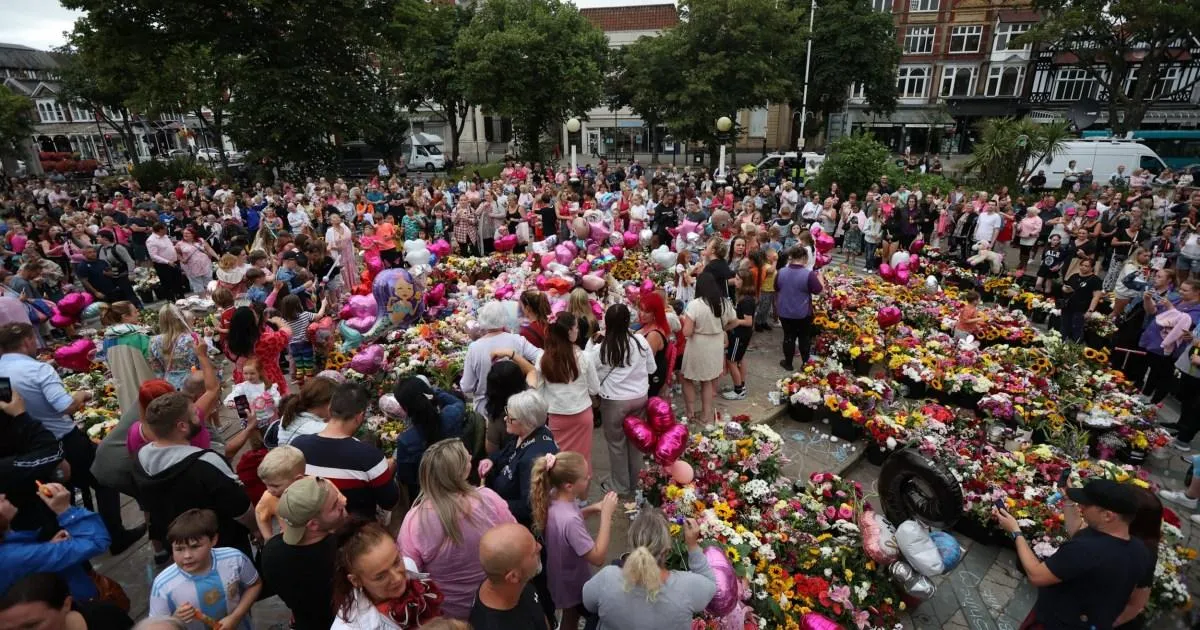
On a warm July day last year, what should have been a joyful, sugar-fueled afternoon for a group of young dance fans turned into a nightmare that would scar a community forever. Alice da Silva Aguiar, nine, Bebe King, six, and Elsie Dot Stancombe, seven, were killed at a Taylor Swift-themed dance class in Southport on July 29, 2024. Other children survived, but they carried wounds no child should ever have to carry, and their families carried a grief that words cannot reach. In the months since, those families have tried to do the impossible: to find a way forward through the rubble of their lives while holding their children a little tighter, sleeping with the lights on, and learning to live with echoes of that day. But just as healing began to feel less impossible, the system designed to protect them added a new kind of wound. The parents of one of the injured children, who cannot be named for legal reasons, have now spoken out about their devastation after court files containing information about victims, their families, and survivors were accessed without authorisation. It is a betrayal that has reopened raw wounds, made them feel exposed all over again, and forced them to ask a question no grieving or frightened parent should ever have to ask: who else is looking at our darkest moments?
The Ministry of Justice has confirmed that it launched an investigation after the court files were accessed without permission. That might sound like a bureaucratic sentence, but for the families involved, the meaning is deeply personal. These were not random documents about a legal dispute over a car accident or a contract. These were files about children, about the most intimate details of their lives, about what they suffered, what they survived, and what might happen to them next. And at some point, someone in a position of trust decided to look at those files anyway. Worse still, this was not the first time. Earlier this year, the North West Ambulance Service said it was looking into whether its own staff inappropriately accessed victims’ records. So while the families were trying to piece their lives back together, they were discovering that strangers inside the very institutions that should be protecting them had been sneaking looks at their children’s private information. As one set of parents put it, “This culture of snooping across agencies and services must end, and that will only happen if those individuals are held to account and not protected by the very confidentiality laws they flouted to access our daughter’s information.” There is a particular cruelty in that: confidentiality laws are supposed to exist to protect victims, not to shield the people who violate their privacy. Yet too often, those with the power to discipline, investigate, or fire seem to circle the wagons, offer a few hollow apologies, and wait for the next scandal to blow over. For these families, the trust is already broken. What they want now is not another promise. What they want is some proof that the people who did this will face consequences.
The parents’ statement was raw, tired, and absolutely clear. They called the individuals behind the illegal access “despicable” and said they should lose their jobs. They spoke about their worst fear: that information about their child could one day be used for profit, sold to the highest bidder, or passed around in some dark corner of the internet where nothing ever goes away. And they admitted something that should stop every official in their tracks: they are exhausted. “We are exhausted by apologies. We are exhausted by offers to meet with Government ministers and CEOs, all of which amount to nothing,” they said. Think about what that means. Somewhere, inside government offices and NHS buildings, people in suits have been holding meetings, drafting statements, and expressing deep concern, while the people who actually lived through the Southport attack are living through a second invasion of their privacy every single time a headline appears. Apologies, however well-meaning, cannot erase the fact that their daughter’s personal details were looked at by people who had no business seeing them. Meetings with ministers cannot undo the sick feeling of knowing that your child’s name, their history, their injuries, or their location was visible to strangers. The parents added that it is “not acceptable any more to continue to heap more risk and stress onto our family and the other families affected.” They did not ask for sympathy. They did not ask for sympathy. They asked for justice. They asked to be treated like human beings whose children matter. And they asked for something too few institutions seem willing to give: accountability.
That call was echoed by Nicola Ryan-Donnelly, a partner at Fletchers Solicitors, which represents 22 of the 23 surviving children. She did not hold back. She described a “grim, voyeuristic culture” and demanded an independent investigation into what has gone wrong. “Week after week we are learning of a new data breach against victims who have endured the worst atrocities this country has ever seen,” she said. That is not an exaggeration. Every week seems to bring another revelation of a website not properly secured, a file left open, a staff member caught looking at records they should never have touched. And in almost every case, it takes months, sometimes longer, for the truth to come out. Ryan-Donnelly said it was “disgraceful” that public bodies have known about these breaches for months and only chose to disclose them “as the media pressure mounts and their internal investigations are all but over.” That pattern is deeply familiar to anyone who has followed such cases: an initial silence, a quiet inquiry, and then, when reporters start asking questions, the same people who were meant to be protecting the vulnerable suddenly claim they are taking it “extremely seriously.” But for the families of the Southport victims, the alleged breaches are not a public relations problem. They are a living reminder that their lives are still being treated as entertainment. Ryan-Donnelly put it simply: “These families have suffered enough trauma; they need transparency and accountability now.”
The exact details of what happened are still emerging. It is understood that court staff accessed the files without approval, and the breach was discovered during a review of digital systems. That means someone inside the court service, someone who should have known better, made a choice to look at information they had no right to see. The information accessed for a limited number of people included sensitive and personal data, which is considered likely to result in a high risk to their rights and freedoms. That last phrase is deliberate. Under data protection law, a finding of “likely high risk” is not something that is said lightly. It signals that this is not a minor administrative error, a lost bit of paperwork, or a spreadsheet sent to the wrong email address. It means that the information was so delicate that its exposure could cause real, ongoing harm. It could make already vulnerable people feel unsafe. It could affect their mental health. It could place them at greater risk of harassment, or exploitation, or any number of other dangers. The one small mercy is that there is no evidence that any personal data has been shared with third parties. But that will be cold comfort to parents who now know that some unnamed individuals, acting inside the courts, have already seen things they should not have seen. The incident has been referred to the Information Commissioner’s Office, the independent authority that protects people’s information rights. Whether that referral leads to anything more than a strongly worded report will be watched closely by every family involved.
In response, a Ministry of Justice spokesperson said: “We are appalled that this happened and recognise the distress it will have caused victims, survivors, and their families. We apologise to those affected – unauthorised access to court files is completely unacceptable. This is now being investigated urgently, and the Prime Minister has asked the Lord Chancellor to oversee this. All wrongdoing will be met with extremely firm action.” Those words will bring some reassurance, but only up to a point. The families have heard apologies before. They have heard promises before. What they need now is to see that the system is willing to do more than react when reporters come knocking. They need a genuinely independent investigation, one that does not rely on the same bodies that allowed the breaches to happen in the first place. They need to know that the people who looked at their children’s private information will face real punishments, not just a quiet chat and a pension. And above all, they need to be allowed to go on with their lives, as much as that is possible, without constantly worrying about who else has been peeking into their private pain. The names of the three little girls who died should be remembered forever: Alice, Bebe, and Elsie. They were not supposed to be the subject of a legal case. They were not supposed to be a data point in a scandal. They were children, and they lost everything for no reason at all. The survivors deserve better. Their parents deserve better. And until every single person involved in these breaches is held to account, no apology will ever truly be enough.