
Paragraph 1: The Ordinary Tuesday That Turned to Dread
In the quiet, unassuming village of Brantham, nestled along the Suffolk coast, Tuesday afternoon began like any other. The September sun, still carrying a lingering summer warmth, cast long shadows across the small playground nestled within the Merriam Close estate. The air was filled with the laughter of children, the creak of swing sets, and the low murmur of parents catching up on the day’s news. It was the kind of place where doors were left unlocked, where neighbors knew each other’s names, and where a sense of safety was as natural as breathing. It was in this idyllic setting that a three-year-old boy named Noah was spending time with a relative, an ordinary outing that would spiral into a community’s worst nightmare. At precisely 3pm, the gentle hum of the afternoon was shattered. In a matter of seconds, the young child, with a burst of toddler energy that is both innocent and unpredictable, slipped away from his guardian’s sight. The transition from peace to panic was instantaneous. The relative, likely consumed by a fleeting moment of distraction—perhaps reaching for a jacket, checking a phone, or simply glancing away for a heartbeat—turned to find the space where Noah had been standing suddenly empty. The first wave of confusion quickly morphed into a frantic search of the immediate playground, but there was no sign of the boy. Words that no parent or guardian ever wants to hear began to form: “He’s gone.” This was not a game of hide-and-seek; it was a disappearance, and the clock had already started ticking. As word began to spread through the tight-knit community, the initial confusion gave way to a collective, breathless anxiety. Police were immediately notified, and within moments, the Suffolk Constabulary issued a public appeal, transforming this quiet corner of Suffolk into the epicenter of a high-alert search operation.
Paragraph 2: A Fleeting Moment, A Distinctive Description
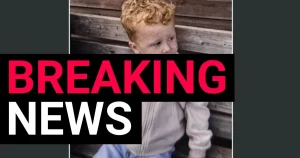
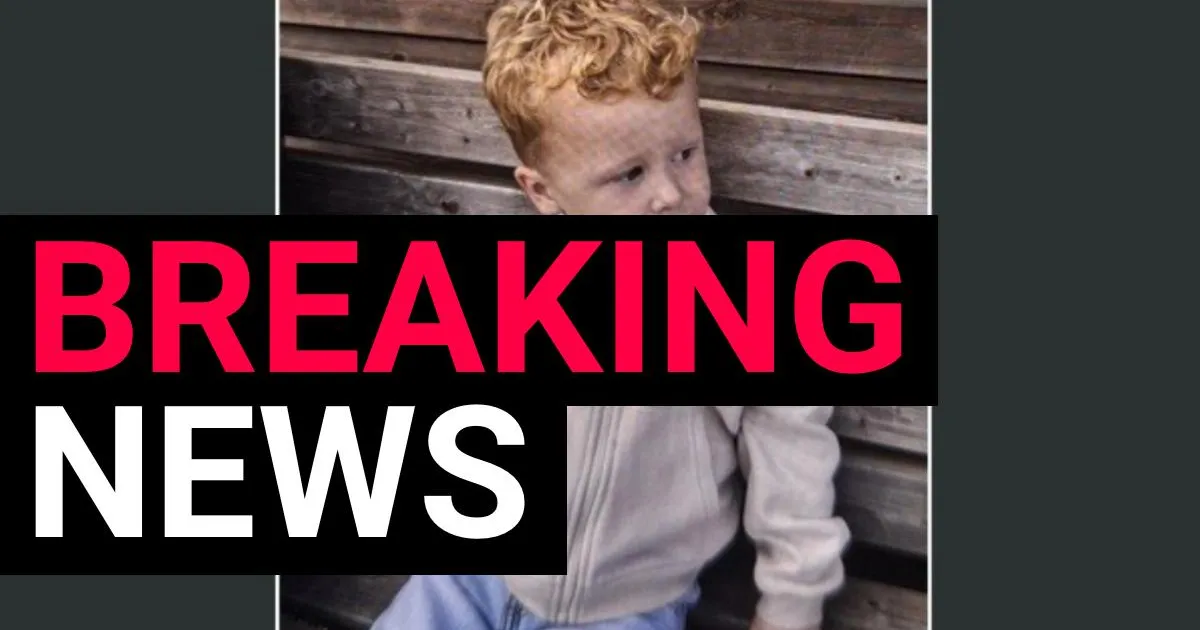
The circumstances of Noah’s disappearance were relayed to the police with meticulous detail. The young boy, described by authorities as white with a shock of curly ginger hair, had reportedly run off down the alleyway that runs adjacent to the playground, leading directly towards a recently constructed housing estate. That alleyway, typically a shortcut for locals or a pathway for dog walkers, became the focal point of the investigation—a gateway to the unknown. For a three-year-old, running is a default mode of movement; their legs carry them with reckless abandon toward anything that catches their eye—a stray cat, a colorful flower, or a curious construction vehicle. But the new build estate, with its unfinished plots, open infrastructure, and potential hazards like exposed wiring, deep trenches, and piles of building materials, presents a particularly dangerous environment for a child of his age. Beyond the specific location, the description of Noah himself paints a picture of heartbreaking innocence. He is wearing a white Bluey t-shirt, a garment that holds immense cultural significance for toddlers and parents alike. Bluey, the beloved Australian animated heeler puppy, represents the pure, imaginative joy of early childhood—the world of pretend games, sibling squabbles, and unconditional love. Seeing that shirt in a missing person report juxtaposes the sheer vulnerability of a child lost in a world too big for them. He has on a pair of shorts and white trainers, the standard uniform of a boy ready to explore, jump, and play. This simple clothing description is now the key to identification. Every resident within a hundred-mile radius is looking for that flash of ginger curls and that recognizable cartoon character. The police have emphasized these details repeatedly, knowing that while a child might not respond to their name if scared or hiding, a vigilant member of the public might spot that unique visual signature from a distance. The innocence of the Bluey shirt stands in stark contrast to the gravity of the situation, serving as a stark reminder that this is not just a case number or a police alert—it is a tiny human being, lost, terrified, and alone.
Paragraph 3: The Community Rises as One
As the sun began its slow descent towards the horizon, the usually serene streets of Brantham transformed into a hive of frantic, coordinated activity. The police appeal acted as a siren call, drawing residents out of their homes to assist in the search. But this was not a chaotic mob; rather, it was a disciplined, compassionate outpouring of collective effort. Neighbors were seen systematically checking their gardens, opening shed doors, peering into wheelie bins, and scanning behind hedges and beneath parked cars. The instructions issued by the emergency services were clear: search your own property, leave no stone unturned. Outbuildings and garden structures, often cluttered and overlooked, became prime areas of concern. A toddler seeking comfort might easily crawl into a cramped space, unbeknownst to the homeowner. The community responded with a fervor that demonstrated the best of human nature. On social media platforms, local groups lit up with anxious updates, shared photographs of the boy, and offered practical support. However, a crucial instruction emerged from the coordination efforts: residents were being advised to stay away from the immediate search footprint, specifically the alleyway and the new build estate. This was a counter-intuitive but essential directive. The presence of dozens of civilians would saturate the area with human scent, making it nearly impossible for the specialized canine officers to isolate Noah’s unique olfactory trail. It took immense self-control for well-meaning neighbors to stand back, biting their lips, watching the police tape, and resisting the urge to rush forward. They understood that their love and concern, translated into physical presence, could inadvertently harm the search. This delicate balance between helping and hindering showcases the complexity of such operations. Yet, the very fact that residents were willing to pause their own searches, retreat to their homes, and open their doors for officers to conduct sweeps demonstrates a profound level of civic responsibility. The tea was being brewed, the floodlights were being positioned, and the community braced for what promised to be a long, tense night.
Paragraph 4: Technology and Determination Against the Falling Night
With the fading daylight, the desperation intensified. Suffolk Constabulary deployed every available resource to the scene. A police helicopter roared overhead, its distinctive thumping blades echoing across the rooftops. This aerial asset was equipped with a thermal imaging camera, a piece of technology that reads the heat signatures of living beings. As the evening air cooled rapidly, the thermal camera would be able to detect the body heat of a small child against the cooler ambient background of concrete, earth, and vegetation. It was a race against the thermometer; the chill of the evening could cause hypothermia in a child so young, and the thermal signature would become more critical as the night progressed. On the ground, officers methodically traversed the new build estate. This area is of particular concern due to its unfinished state. There are partially constructed homes, with gaping holes where windows will be, piles of lumber, sand, and loose bricks. A child of three could easily stumble into a drainage ditch, fall into a foundation pit, or become trapped inside an uncovered pipe. The search teams moved with meticulous precision, calling out Noah’s name, only to be met with silence. The canine units, comprising highly trained search dogs, were brought in to work the peripheral areas, using their incredible olfactory senses to distinguish Noah’s scent from the hundreds of others present. The officers worked in tandem with the local community, who had been instructed to clear the area to give the dogs the best chance. Every minute that ticked by added to the mounting tension. The initial optimism of the afternoon gave way to a grim determination as the stars began to appear. The temperature dropped, and the reality of a three-year-old out in the elements hit home. The helicopter’s thermal camera scanned the ground in sweeping patterns, but the initial sweeps came up empty, forcing the search grid to expand. The absence of any leads, any cries, or any sightings was both a blessing and a curse—no news was not good news, but there was still no sign of a tragedy either. The operation remained a search, not a recovery, and that fact alone kept hope alive.
Paragraph 5: The Emotional Toll and the Weight of a Parent’s Heart
Behind the police tape, beyond the coordinates and the official appeals, there lies an unquantifiable weight of human fear. For the family of little Noah, the hours since 3pm have likely stretched into an eternity. The relative who was with him at the playground is undoubtedly consumed by guilt and abject terror, replaying the moment over and over, wondering if there was anything they could have done differently. The community feels this fear vicariously. Parents across Suffolk and the wider UK are holding their own children a little tighter tonight, the abstract concept of danger suddenly made concrete in their own backyards. The psychological impact of a missing child is devastating. It is the “what ifs” that claw at the mind. What if he wandered into a stranger’s home? What if he fell and is lying injured in a ditch? What if he simply got tired and curled up in the cool, dark corner of an unfinished basement? The police are urging anyone with even the most remote information to come forward, no matter how insignificant it might seem. They have asked that anyone who believes they have seen Noah, or has any knowledge of his whereabouts, to contact them immediately, quoting CAD 203 of 15 September. This simple string of letters and numbers becomes a lifeline, a central thread connecting the panicked public to the command center. The emotional landscape of the search is a complex tapestry. There is hope—the fierce, irrational hope that he is simply hiding, playing a game, or following a dog home. There is also the cold, gnawing dread that accompanies the setting sun. The community has rallied, but the emotional strain is visible in the strained faces of the neighbors, the quiet tears of the mothers, and the grim expressions of the officers who are trained to maintain professionalism but are human enough to feel the weight of a child’s face on their minds. As the night deepens, the silence is punctuated only by the crackle of police radios. The search has become a vigil, a silent prayer murmured across the village, hoping against hope that the next radio call brings news that Noah has been found, shivering but safe, clutching his Bluey t-shirt and wondering why everyone is making such a fuss.
Paragraph 6: A Plea to the Public and the Unwavering Glimmer of Hope
As the clock pushes further into the evening, the appeal to the public becomes more urgent. Noah remains missing, and every second that passes is a precious commodity. The police have repeated his description with laser-focus accuracy: a white male, aged three, with distinctive curly ginger hair, wearing a white Bluey t-shirt, shorts, and white trainers. They need the public’s eyes on the ground. They ask that residents across Brantham and the surrounding areas check not just their own property, but also any vacant properties, construction sites, public restrooms, and local parks. A child might be frightened, hiding, or too scared to call out. The simple act of opening a garage door or walking behind a retail unit could be the moment that brings Noah home. The search continues, undeterred by the darkness. The helicopter’s light still probes the ground, the officers continue their systematic sweeps, and the dogs persist with their meticulous scent work. The community remains on high alert, a united front against the encroaching night. The message is clear: do not assume someone else has already checked a spot. Double-check it. Triple-check it. Call out his name. The hope is that Noah, hearing familiar voices or the commotion, might emerge from his hiding spot, confused but alive. This is a story that has touched the hearts of the nation, not just because it involves a child, but because it involves a child dressed as a character beloved by millions of toddlers—a symbol of pure, unadulterated joy. The search for Noah is not just a police operation; it is a collective emotional investment. The outcome is uncertain, but the will to find him is absolute. Anyone with information is urged to contact Suffolk Police immediately, quoting CAD 203 of 15 September. Until Noah is found, the residents of Brantham will not sleep. They will keep vigil, keep searching, and keep hoping. They will open their doors, check their sheds, and peer into the darkness, holding onto the profound belief that a little boy with ginger curls, wearing a Bluey t-shirt, will be found and brought back to the safety of his family. The night is long, but so is the endurance of a community that refuses to give up on one of its own.