

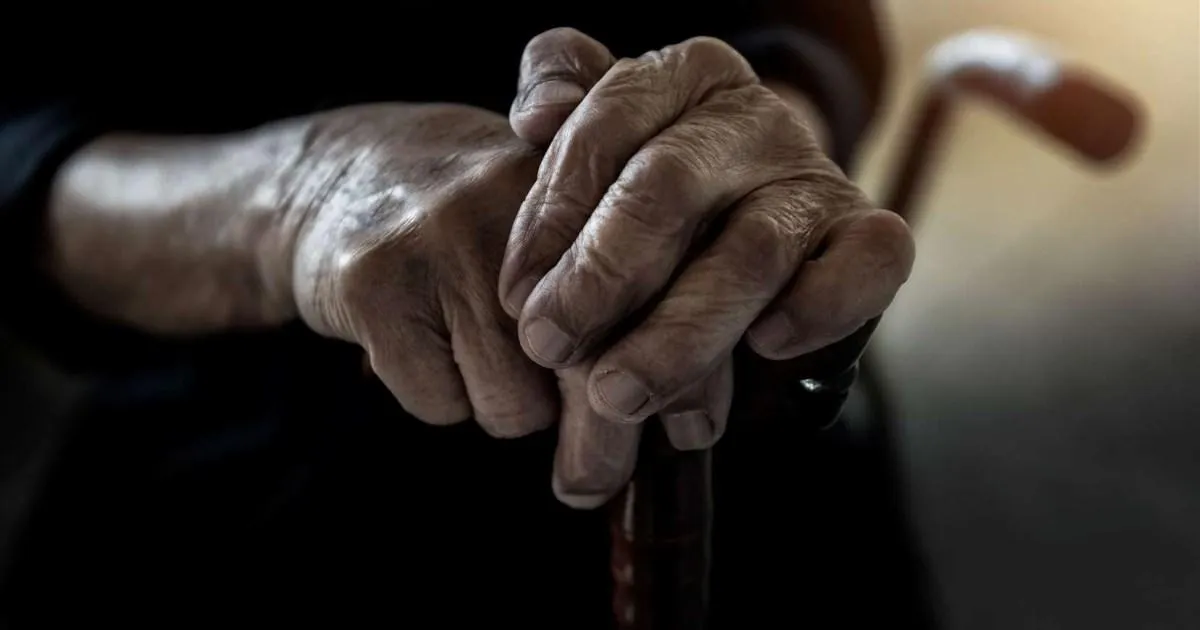
For nine agonizing hours, an elderly cancer patient in his eighties was left waiting, abandoned and vulnerable, in a rented office building in Kings Hill, near West Malling. He had arrived that morning, bright and early at 10:30 AM, picked up from his home by a crew from G4S, the private company contracted by the NHS to handle non-emergency patient transport. His appointment at the optician was expected to be a quick affair. But by mid-morning, the appointment was over, and the man found himself sitting alone in his wheelchair, the promise of a return journey home hanging in the balance. The simple act of getting back to the comfort of his own house, a basic expectation after a medical visit, was about to become the central struggle of his day. It was a day that would expose the deep cracks in a system meant to care for the most vulnerable, revealing a shocking breakdown in communication, empathy, and basic human decency. This was not a case of a few minutes of delay; it was a catastrophic failure that would leave an elderly, cancer-stricken patient stranded for nearly nine hours, dependent on the kindness of strangers who were initially brought into his orbit for an entirely different purpose.
His rescue came in an unexpected form. Around 11:30 AM, a man named Rich, who worked in the same office block, stepped out for his break. The building was leased to a variety of tenants, including the optician’s practice. It was then that he spotted the pensioner, isolated and alone in his wheelchair in the waiting area. Rich, an ordinary working man, was struck by the sight. His break-time routine was suddenly interrupted by a sense of unease; this wasn’t right. He didn’t know the man, but he recognized vulnerability when he saw it. Rich would not remain a passive observer. He would become the day’s main advocate, a self-appointed guardian, spending his work breaks and minutes after his own workday ended trying to solve a problem that was not his own, but that he felt compelled to address. His initial observation was the catalyst that sparked a chain reaction of concern. He went to the reception desk, asking if everything was alright, and the story began to unravel. From that point on, in the heart of the office environment, a sort of vigil began, shouldered by the staff of the optician and Rich, who refused to let the elderly man face this ordeal alone.
For Rich, the frustration turned to anger, a slow-burning rage that only grew with each phone call. Throughout the day, a team of four staff members, including the receptionist Mel Kingsmill, took it upon themselves to make repeated calls to the G4S patient transport service. Each call was an exercise in futility. They were met with platitudes, the response almost always the same empty assurance: a crew was “on their way.” Rich took over after his own shifts, making calls from his own phone. The hold music and the robotic responses became a cruel taunt. He describes his own fury growing with each contradictory answer, his anger crystallizing when he was told, at one point, that the crew was simply ‘on a break.’ Then, the updates began to become even more bizarre and nonsensical. At 6:30 PM, they claimed to be in a town mistakenly called Dartford and were coming. Then, the story changed, and they said they were leaving from another location and would be there at 6:50 PM. The deadline came and went. The string of excuses and unkempt promises did nothing to mask a deeper issue—it was a chaotic, disjointed, and deeply indifferent response from a company that was paid to ensure this man’s safe and timely transport. For Rich, the trust was broken, cemented by the sheer waste lies and lack of acknowledgment of this fragile human being’s suffering.
While Rich made the calls, receptionist Mel Kingsmill became the primary caregiver in the waiting room. Her first sun waking scenes into the waiting. Throughout the hours, she was with the man, witnessing his distress firsthand. She describes it in vivid terms that echo in the narrative: “It was heartbreaking to see. To treat any human being like this is dreadful, but to treat somebody who can’t fend for themselves and finds it hard to make conversation is unforgivable.” He sat hunched in his wheelchair, a portrait of defeat and exhaustion. She saw his physical discomfort, his quiet, unshakeable state. He had a catheter bag that he needed to be changed, and despite ordering food and drink, his basic needs were not met. The elderly man, in his clear distress, asked if there was a nurse in the building who might be able to help. The question was a simple plea for dignity and basic care. Mel, overshadowed by the situation’s injustice, found that there was a medically trained person in the building, perhaps an otherwise office worker, who was able to step in and take care of this humiliating yet necessary need. It was a small act of humanity in a day when the system had no place for it. For Mel, this wasn’t an anonymous case file; he was a vulnerable human being that she was responsible for, simply because no one else was.
As the building’s closing time approached at 5 PM, the fear began to mount, and Rich and Mel knew they could not just lock the doors and leave this man alone. Desperation moved to the next stage. Rich called the police, but to seek an answer, not to lock up. His call was transferred to a call handler for the Kent and some local hospitals existing. The ambulance service said they would chase G4S. The waiting continued. The spectacle of Rich and the staff watching over their fleeing breaks, their duties, and their guilt incredulous is something that spun their own mental debates. It wasn’t just a logistical failure; it was an ugly and lonely fire. The waiting room was no longer a waiting room for the opticians; it was a disused holding center, a space for waiting and quiet desperation. As the sunset and the office building emptied, the elderly man was still sitting, in his wheelchair, with no idea when he would get home, or if anyone could deliver on that basic promise. The day was clinging to them.
At this late hour, Ghh, driving from the Elephant and Castle, phones didn’t stop. It felt like a calculated, traumatizing exercise in abandonment, a total breakdown of care. The office was trying every possible line on the side of the most vulnerable—finding a medic, finding a nurse to help with his catheter—they exhausted every avenue. Yet, their own initiative was a shadow cast by unstoppable corporate indifference. Their final, collective thread of hope was fraying. There were moments of near-reprieve that were greeted with high anxiety: they’d be told to wait, just a little longer. “My frustration was peaking. At 8 PM I started making calls again.” The intake of distress was echoing through building.
The end of the story on Aug 6 offered neither swift resolution nor the peace of a final relief. The G4S team finally pulled into the building at 8:10 PM, a full nine and a half hours after they had dropped him off. Rich described them as “very apologetic,” but the damage was done. The deep, rumbling failure. The optician’s staff were left with shock and sadness, a shame that they might have to see the same thing again. For its part, G4S issued a statement that was as empty as their promises, a generic acknowledgment: “We sincerely apologize to the patient for the distress and inconvenience caused by the delay to his journey. Our review identified a series of shortcomings on this occasion, and we are taking appropriate action to address these concerns.” The language of corporate non-apology, a genuflection to a complaint process, unable to pin the moment of human suffering that took place. The broader healthcare system in the UK, where the NHS commissions out to private contractors, is less known for its inner workings, but this vignette is a stark reflection of the outcome. The incident becomes a microcosm of the systemic failures that are happening, but one that still echoes in a human story.
The tragic resonance of this case was amplified in the subsequent revelation: this was not a one-off. The receptionist показал, that at least in the six years she had worked there, it had happened at least ten times, with waits exceeding five to six hours. A statistical description of the neglect and institutionalized incompetence. Just weeks before, an analogous event happened elsewhere in Kent: a disabled man, Kevin Taylor, was left in his electric wheelchair for 19 hours in a hospital reception room after his G4S transport failed to show. His story was something deeper: a man with the same bruises waiting less on the day after. The news reports and the feelings are in a spotlight that slights the entire existence of the vulnerable. In the numerous staff calls, Rich’s advocacy, Mel’s care, and the profound indifference of corporate G4C are kind, gave a tiger to feel in the summon. This is, in the end, not just a question of transport, but a profound, systemic failing of care for the most invisible members of our society. The picture is broader, with real faces, real pain, and long hours wasted, and a profound sense of loneliness across the shell of a broken promise to the most fragile.