

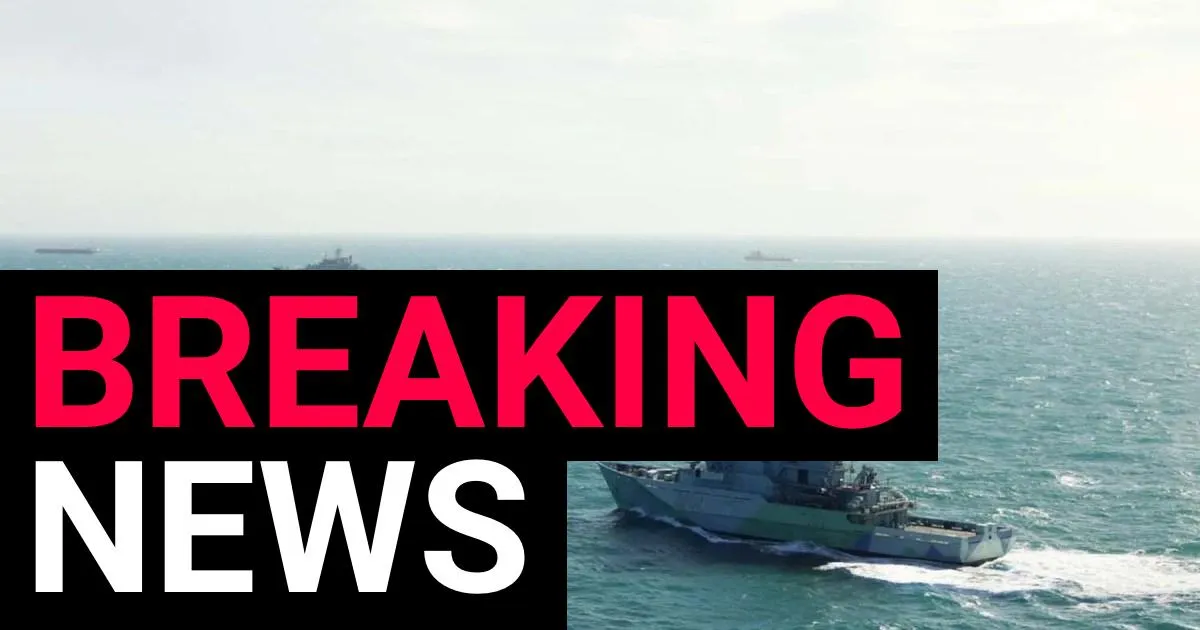
In the gray, restless waters between Britain and the European continent, the sea can seem empty and indifferent. But this autumn, beneath the wind and the waves, a quiet but relentless drama was playing out. Royal Navy ships and helicopters were dispatched to track Russian vessels that had slipped into British waters, not with hostile intent in the traditional sense, but with a purpose just as serious: spying on NATO warships during a major military exercise. From the rugged coastlines of the Outer Hebrides to the busy shipping lanes of the English Channel, British forces shadowed Russian intelligence-gathering ships and armed frigates, maintaining a watchful presence around the United Kingdom. The operation ran from late September through mid-October, involving everything from runway-deck helicopters to missile-armed destroyers and nimble patrol boats. For the men and women aboard these British ships, it was not a matter of dramatic confrontation, but of patient, meticulous vigilance. They were there to observe, record, and, if necessary, respond to any move that threatened the nation’s safety. It is easy to forget, in the quiet routine of daily life, that such silent maneuvers happen all the time, far from the headlines, with sailors spending long hours watching radar screens, listening to encrypted communications, and keeping their eyes trained on the horizon.
Imagine what those days must have felt like for the crew of a Royal Navy Merlin helicopter. Lifting off from a ship or shore base, the crew would fly low over a cold and choppy sea, with the drone of the rotors filling their headsets. Below them, the Russian intelligence ship Viktor Leonov, a Vishnya-class vessel, moved slowly, deliberately, through the waters off the Outer Hebrides. She was not there to fight, but to watch. Her decks bristled with antennas and sensors designed to intercept communications, analyse radar emissions, and map the electronic signatures of NATO ships taking part in Exercise Strike Warrior. For ten days, from September 29 to October 8, the Merlins crisscrossed the sky, using their own sophisticated sensors to keep a constant record of the spy ship’s movements. It must have been an exhausting, almost hypnotic task, the kind of work that requires total concentration even when nothing appears to happen. The aircrew had to maintain just the right distance, close enough to demonstrate that Britain would not tolerate hidden surveillance, but far enough to avoid any accidental incident or dangerous provocation. Every change in the Russian ship’s speed or heading had to be noted, analysed, and reported. The weather may have been harsh, with Atlantic squalls rolling in, yet the mission continued without pause. That is the quiet, unglamorous reality of naval service: long hours of boredom punctuated by moments of sharp tension, all in service of a larger duty that the public rarely sees.
The stakes were even higher when the focus shifted to the English Channel, one of the busiest and most strategically important waterways in the world. Here, the Royal Navy destroyer HMS Dauntless was ordered to keep a close eye on the Russian frigate RFN Neustrashimy. This warship was not merely passing through. She was escorting a sanctioned cargo vessel, a role that gave her mission an unsettling edge. For two weeks, from October 1 to October 14, HMS Dauntless shadowed the Russian frigate as it made its way through the Channel, a constant grey presence in a landscape of ferries, container ships, and fishing boats. The crew of Dauntless worked in shifts, manning the ship’s weapons and radar systems, ensuring that every move by the Russian warship was observed and understood. Commander Neil Skinner, the commanding officer of HMS Dauntless, spoke of the profound sense of responsibility carried by his crew. He described the close and proficient monitoring of the Russian warship, and the pride he felt in the professionalism, dedication, and operational readiness of everyone aboard. His words hint at the deeper meaning of such missions. It is not about aggression or provocation, but about reassurance. Knowing that a capable, alert Royal Navy ship is watching every manoeuvre sends a clear message to any adversary that Britain’s waters cannot be used with impunity. For the sailors on board, there is also a personal dimension: they are away from their families for weeks on end, living in confined spaces, enduring the rolling motion of the ship, and yet they maintain their focus because they understand the importance of what they are doing.
The Royal Navy’s patrol ship HMS Tyne added another chapter to this story in mid-October, when it intercepted the Russian landing ship RFN Aleksandr Shabalin. Unlike the other encounters, this one involved a vessel designed for amphibious assault, capable of carrying troops and vehicles, which made its presence in the Channel even more significant. The Russian ship was escorting another cargo vessel, and HMS Tyne was summoned from its duties in the North East of Britain to shadow the pair through the narrow, congested waters. Lieutenant Commander Sam Fields, HMS Tyne’s commanding officer, reflected on the flexibility required by modern patrol ships. His vessel had moved from the cold northern waters to the crowded Channel in quick succession, demonstrating that Britain’s patrol fleet can respond at a moment’s notice to protect national interests. He expressed pride in his ship’s company, their unwavering professionalism, and their adaptability. It is worth pausing to think about what that means in human terms. These are sailors who train endlessly for scenarios they hope never to face, who keep their equipment ready despite the wear and tear of constant deployments, and who must deal with the mental strain of knowing that a single mistake or miscalculation could escalate into something far more serious. They are not just operators of machines; they are guardians of a broader idea of security, and they carry that weight quietly, far from the cheering crowds or the comforting embrace of their families.
All of this naval activity took place against a backdrop of escalating tensions between Britain and Russia, as the United Kingdom unveiled a sweeping new package of sanctions designed to damage Moscow’s ability to fund its war in Ukraine. On October 8, the Foreign Office designated Russian oil companies, shadow fleet tankers, and cryptocurrency exchanges that, in the government’s words, were helping Putin build his war chest. The presence of Russian warships and spy vessels in British waters was only one part of a much larger pattern of provocative behaviour. By monitoring and intercepting these ships, the Royal Navy was not just protecting the immediate surroundings of the British Isles; it was also sending a signal that the United Kingdom would not be cowed by intimidation, and that the rules of international law and maritime order would be defended. The shadow fleet, a network of ageing tankers with opaque ownership, has become a particular source of concern, as it is used to circumvent sanctions and transport Russian oil across the globe. When a sanctioned cargo vessel is escorted through the English Channel by a Russian frigate, it is hard not to see it as a deliberate test of Western resolve. The Royal Navy’s response, by contrast, was steady, measured, and unmistakably clear. These interceptions were not acts of war, but they were acts of sovereign self-confidence, a way of saying that Britain sees everything, knows what is happening, and is ready to act if necessary. In the longer sweep of history, such moments have often been the prelude to larger conflicts, but they can also be the routine low-voltage friction that keeps a tense peace from breaking down into open hostility.
Ultimately, the story of these Royal Navy operations is a story about human beings and their quiet dedication to an enormous responsibility. The sailors who tracked the Viktor Leonov, who shadowed the Neustrashimy from the bridge of HMS Dauntless, and who intercepted the Aleksandr Shabalin with the patrol ship HMS Tyne, are not abstract symbols of military power. They are real people with birthdays missed, children growing up at home, and tired eyes after a long night watch. They chose a life at sea that is uncomfortable, demanding, and often extremely boring, precisely because they believe in something larger than themselves. Their work is not glamorous. There is no cheering crowd when a Russian spy ship finally turns for home or when a sanctioned cargo vessel is escorted safely to the end of the Channel. There is only the knowledge that they have done their duty, that they have protected the waters around their nation, and that they have helped to keep the world from sliding into chaos. In a time when so much of life is mediated through screens and fleeting headlines, this kind of patient, physical presence is profoundly reassuring. It reminds us that security is not an abstraction but a practice, a constant effort carried out by ordinary people in extraordinary conditions. The sea remains a place of uncertainty and hidden dangers, but because of the Royal Navy’s vigilance, it is also a place where Britain’s interests are watched over, day and night, without fuss and without fail. When the ships return to port and the crews finally step onto solid ground, they may not speak much about what they experienced. But their silence, too, is part of the story, a reminder that the greatest protection is often the one we never see.