
On a quiet afternoon at New Elgin Cemetery, Tina King stands beside a small grave that holds the body of her seven-year-old son, trying to find a moment of peace. The cemetery is close to her home, a place she visits nearly every day, a place that has become the centre of her family’s grief. Kristopher was buried there after his sudden and devastating death on July 24, 2024, and for Tina, the grave is not just a patch of grass or a stone marker. It is where her little boy now sleeps, where she talks to him, where she remembers the sound of his laugh and the way he used to run into her arms. But instead of quiet reflection, she has found herself surrounded by a distressing and recurring scene: dog walkers strolling through the cemetery, letting their pets sniff around the headstones, and, on far too many occasions, using the area as a toilet. It has happened while she stood there mourning, which makes it feel all the more insulting. She is astounded, she says, at the number of dog owners who treat the cemetery as if it were a public park. The sight is strange, ugly, and deeply hurtful. Tina has buried her child, and still she cannot visit his grave without witnessing what she describes as a blatant lack of respect. She does not understand why anyone would choose a cemetery for a dog walk, why anyone would allow their pet to relieve itself so close to the resting places of the dead, and why common decency seems to vanish the moment someone walks through the cemetery gates. For her, the issue is not simply about dog waste. It is about dignity, about the sacredness of a place where families have said final goodbyes, and about the simple, human need to honour the people we have lost without interruption or offence.
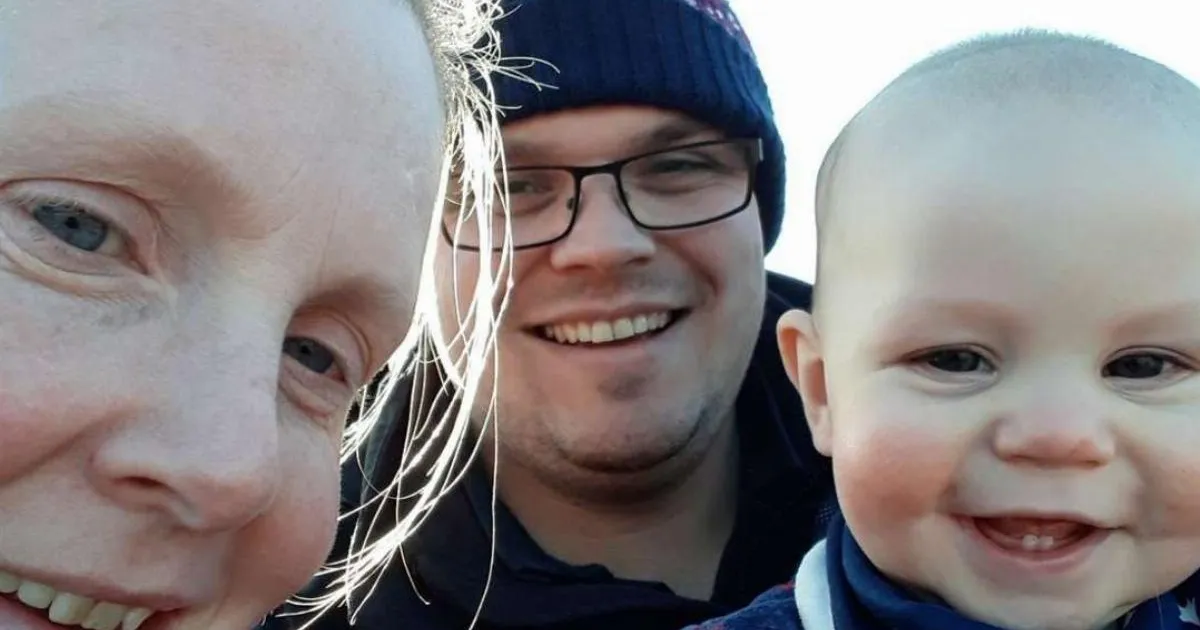
Kristopher King was described by his mother as a “happy wee loon,” a bright and energetic little boy who brought joy to everyone around him. He was the couple’s eldest son, and his sudden death shattered the family. Kristopher had been suffering from a rare condition affecting the lymph tissue in his leg, and he was recovering from pneumonia when he unexpectedly passed away. The exact circumstances remain painful and difficult for his family to fully process, because one moment he was there, fighting through his illness, and the next he was gone. Tina and her husband Steven have had to learn how to live with a hole in their hearts, while also caring for their other children, Hannah, who is fifteen, James, who is seven, and Isabelle, who is five. The grief is overwhelming, and it is made worse by the fact that Kristopher’s death was so sudden. A photograph of him was taken just five days before he died, and in it he is smiling, full of life, a little boy with no idea that his time on earth was so short. That image is now a painful treasure for his family, a reminder of the joy he brought and the future that was stolen from him. Tina speaks about him with love and sorrow, calling him a happy little soul who loved his family and was adored in return. But the precious memories she holds are now entangled with the daily struggle of visiting his grave and finding it treated with disrespect. Instead of being able to kneel beside the earth where her son is buried and feel close to him, she is often distracted by the presence of strange dogs and careless owners, people who seem completely unaware that they are standing in a place of profound loss.
The problem, Tina says, is something she sees “probably every time” she visits the cemetery. Kristopher’s grave is in a spot near the entrance, close to where cars park, which makes it especially vulnerable. Dogs come in and immediately start sniffing around, looking for somewhere to do their business, and their owners follow along without any apparent thought for where they are. Some people, she has observed, do a couple of laps of the cemetery, walking their dogs in circles as they wait for the animal to relieve itself, as if the neat rows of headstones and memorials were just scenery for an afternoon stroll. It is true, Tina acknowledges, that many of the owners do pick up after their pets. But that, she insists, is not the point. The issue is not just about mess and hygiene. It is about respect. A cemetery is not a dog park. It is not a place for casual strolls with a pet. It is a place where people come to grieve, to remember loved ones, to sit with their pain and try to make sense of a world that has taken someone from them. Seeing a dog toilet beside her son’s grave, even if the owner cleans it up afterwards, feels like a violation. It makes Tina feel as if her son’s resting place has been reduced to just another piece of grass. Sometimes she wants to scream at the dog walkers, to tell them, “I have a seven-year-old buried here.” She wants to make them understand that the ground they are walking on is filled with real people, real lives, real families who have been pulled apart by loss. She wants them to imagine what it would be like to stand at the grave of their own child and watch a stranger’s dog urinate on the flowers or the earth above his body. She says she would be mortified, absolutely mortified, if it were her dog doing that to someone else’s resting place. The thought alone makes her cringe, and she struggles to understand why others do not feel the same.
This heartbreaking situation is not limited to Kristopher’s grave. Recently, it was reported that a memorial stone for babies lost in pregnancy, also located at New Elgin Cemetery, has been used as a “dog toilet” by walkers. The Moray Pregnancy Loss Memorial Stone is a place of deep meaning for many bereaved parents, a small but sacred spot created to honour the little lives that were lost before they could be held. Its devastated custodian, a woman who is known only as Caireall, lost two babies during pregnancy, one in 1991 and another in 1993. For decades, she has carried the weight of those losses, and the memorial stone was meant to be a place of solace, a place where parents could go to feel that their unborn children were remembered. Instead, she has discovered that some dog walkers have allowed their pets to toilet near or even on the memorial, and the sight has left her heartbroken. She describes the stone as precious, and the way it has been treated as insulting. The pain of losing a baby is something no parent ever truly gets over, and to have that grief compounded by such blatant disrespect is almost too much to bear. She contacted Moray Council about the issue, and it seems that Tina had done the same thing eighteen months earlier. Both women were trying to protect the dignity of their loved ones’ resting places, and both were met with the same frustration: the feeling that not everyone shares their sense of respect for the dead. It is a lonely and angering position to be in, watching people treat sacred ground as if it were nothing more than a public convenience for their pets.
Moray Council has responded to the concerns with a statement acknowledging that dog fouling anywhere is “completely unacceptable,” but that cases relating to cemeteries are “particularly upsetting.” The council says it has been working with local residents to address concerns at New Elgin Cemetery and will be increasing Community Warden patrols in the area. Additional signage is also being installed, along with ongoing reminders to dog owners about their responsibilities. The council’s words reflect the seriousness of the issue, and the hope is that stronger measures will help change behaviour. But for Tina and Caireall, words on a sign may not be enough. They want people to think, to feel, to understand that a cemetery is full of stories, full of love, full of people who were deeply loved and are deeply missed. They want dog walkers to look at the headstones and remember that behind each name is a face, a life, a family that still mourns. They want people to make different choices, to take their dogs somewhere else, to recognise that some places are simply not appropriate for animal waste. The council’s efforts are welcome, but they cannot repair the hurt already done. They cannot erase the image of a dog toileting on a memorial for lost babies, or beside the grave of a seven-year-old boy. They cannot give Tina back the peaceful visits she deserves, or restore Caireall’s faith in the basic decency of others. What they can do is send a message that this behaviour will no longer be tolerated, and that cemeteries will be treated with the solemnity they deserve. Whether that message will be heard, and whether it will prompt a real change in behaviour, remains to be seen.
At the heart of this story is a mother’s grief, and a plea for simple human decency. Tina King lost her little boy, her “happy wee loon,” and she will spend the rest of her life carrying that loss. She does not ask for much. She does not ask for sympathy or pity. She asks only that her son’s grave be treated with the respect it deserves, that people not use the place where he is buried as a toilet for their dogs, and that they understand that these are real people, real families, real lives. She wants dog owners to pause before they walk into a cemetery, to ask themselves whether their pet’s walk is more important than the peace of those who are grieving. She wants them to realise that the grass under their feet covers coffins and ashes, and that the stones around them bear the names of children, parents, grandparents, siblings, and friends. She wants them to imagine their own family’s grief, their own visit to a grave, and how they would feel if someone else’s dog desecrated that space. It should not take losing a child, she says, to understand how disgusting this behaviour is. It should not take burying a loved one to learn respect. Cemeteries are not parks. They are places of memory, of love, of sorrow, and of hope. They are where we go to be close to the people we have lost, to feel their presence in the wind and the silence, to lay flowers and whisper words that only they can hear. Tina should be able to do that without distraction, without anger, without witnessing something that adds more pain to an already unbearable loss. Her story is a heartbreaking reminder that grief is already difficult enough, and that the thoughtlessness of others can make it so much worse. All she wants is a little respect, a little kindness, and a little consideration for the sacredness of the place where her son now rests. She, and all the families who visit New Elgin Cemetery, deserve that much.