


The Man Who Spent 50 Years Hunting Nessie Has Finally Put the Legend to Rest
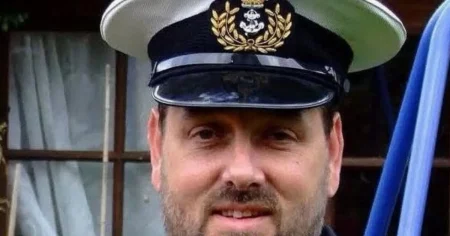
For half a century, Adrian Shine has been the quiet, steady presence at the edge of Scotland’s most mysterious body of water, the man who knows Loch Ness better than almost anyone alive. Now, at seventy-six years old, he has made a declaration that will ripple through the annals of folklore and tourism alike: Nessie, the beloved monster of the deep, does not exist. This is not the pronouncement of a skeptic who never bothered to look, but of a man who dedicated his entire adult life to looking—who moved from the comfortable suburbs of Surrey to the windswept shores of the Highlands in 1973, leaving behind a conventional life for the singular purpose of understanding what, if anything, lurked beneath those dark, peat-stained waters. His conclusion, delivered in a new book titled A Naturalist’s View of the Loch Ness Enigma, is not the triumphant cry of a debunker but the measured, almost melancholy reflection of a man who has spent decades chasing a shadow and finally decided to let it go. With the gentle authority of someone who has earned the right to speak, he tells us that the monster we have all grown up with, the creature that has launched a thousand documentaries and fueled endless pub debates, is nothing more than a myth—but, as he is quick to add, a myth that carries its own profound truth.
The story of Adrian Shine begins not in the Highlands but on the east coast of England in 1957, when he was a small boy with an active imagination and a first taste of the mysterious. He saw what he believed to be a sea serpent that year, a moment that would plant a seed in his young mind and set him on a path that would define his life. That same year, he learned about the Loch Ness Monster, and the two threads—the personal glimpse of something unexplained and the distant legend of a Scottish lake creature—wove together in his consciousness like the kelp that tangles around the loch’s depths. For a young boy, Nessie was irresistible: a prehistoric survivor, a gentle giant, a riddle that science had not yet solved. The loch itself was a fitting stage for such a creature, a vast and foreboding expanse of water stretching for twenty-three miles along the Great Glen, its surface often whipped into white caps by winds that funnel down the glen, its depths plunging to over seven hundred feet, making it one of the largest and most enigmatic bodies of freshwater in the British Isles. The darkness of its waters, stained almost black by the peat that washes in from the surrounding hills, meant that visibility was almost nil below a few feet, and the imagination could easily fill that darkness with something ancient and terrible. It was the perfect setting for a legend, and young Adrian, like so many others, was utterly captivated.
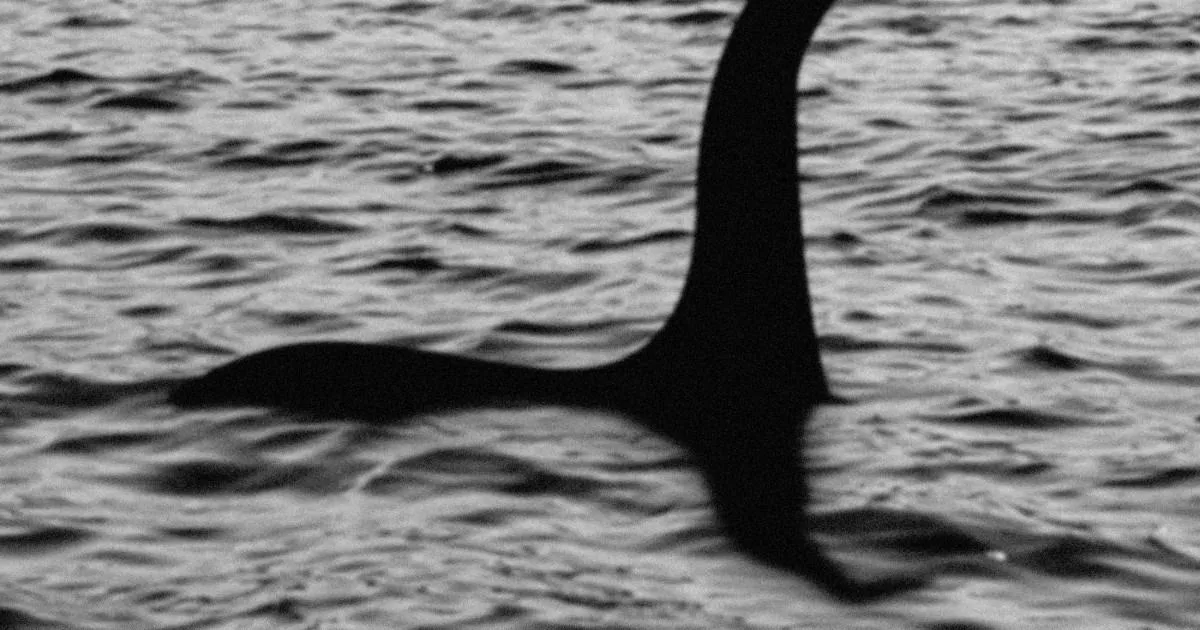
But Adrian Shine was not content to remain a captivated boy forever. By 1975, after years of reading reports, interviewing witnesses, and watching the crock of stories grow ever more fantastical, something shifted within him. He became sceptical, not of the honesty of those who reported sightings, but of the interpretations they placed upon what they saw. People were reporting large animals in the loch, he realized, but that did not mean they were actually seeing large animals. This became the central insight of his life’s work: that the human mind, confronted with something strange and inexplicable, tends to reach for the most dramatic explanation available. A boat’s wake can look like a serpent’s coils; a floating log can resemble a humped back; a seal or otter swimming in unusual conditions can become, in the retelling, a monster. The Loch Ness Monster, in public terms, was a myth—not a lie, but a story that had taken on a life of its own, a story that people wanted to be true. And so Shine’s quest transformed. He was no longer searching for a monster; he was searching for the truth behind the monster, seeking the substance beyond and behind the myth. He founded the Loch Ness Project, a research and natural history enterprise dedicated to exploring the depths of the lake and the tales that surrounded it, and he threw himself into the work with the patient devotion of a man who understands that the most important discoveries are often the ones that dismantle our assumptions rather than confirm them.
The scientific endeavors that Shine led over the decades read like a catalog of serious, methodical investigation into one of the world’s great mysteries. He helped lead Operation Deepscan in 1987, a monumental undertaking that saw twenty-four boats sweep the full length of the loch with sophisticated sonar equipment, an operation that cost a fortune and captured the world’s attention. If a creature of any significant size were lurking in the depths, this sweep would have found it. The results were, for believers, deeply disappointing: no giant monsters, no prehistoric beasts, nothing that could not be explained by fish, debris, or the complex underwater topography of the loch itself. Then came the Rosetta Project in 1994, a venture that delved even deeper, literally drilling six nineteen-foot-deep sediment cores from the bed of Loch Ness, time capsules that would reveal the history of the loch and its contents stretching back thousands of years. These cores would have preserved the bones or remains of any large animal that had lived and died in the loch over millennia, and they too revealed nothing—no evidence of a monstrous resident, no trace of an ancient creature that had somehow survived the ages in this cold, dark water. Yet even with all this, Shine is careful to maintain intellectual honesty. He cannot absolutely prove that the monster never existed, cannot offer a mathematical certainty that the loch has never housed something strange. Science, he acknowledges, cannot prove a negative with absolute finality. But after fifty years of watching, waiting, and listening to the witnesses who flocked to the loch with their stories, he is confident that the weight of evidence points in one direction: the monster is not there.
What is there, however, is something perhaps even more fascinating—the human mind itself, and the remarkable ways in which it constructs reality from the raw material of sensation. Shine’s years at the loch taught him that the witnesses who came forward with their sightings were not liars or attention-seekers; they were ordinary people who had seen something that, under the unusual conditions of Loch Ness, looked genuinely strange. The loch, he points out, possesses unique properties that can create these illusions: its great depth concentrates gases, creating upwellings and surface disturbances; its water temperature varies dramatically at different depths, causing refraction and mirages; its system of underwater currents and seiches can produce wave patterns that mimic the movements of a large animal. The same phenomena would occur on other bodies of water, but there, they would be interpreted differently. On a lake without a legendary monster, a strange wake is just a strange wake. On Loch Ness, that same wake becomes a limb of the beast, a fleeting glimpse of Nessie herself, and the story is born. The witnesses are not being impugned, Shine insists; they are being vindicated. They genuinely saw something odd, and their accounts are valuable—not as evidence of a monster, but as evidence of the profound ways in which expectation shapes perception. The monsters we see are sometimes the ones we carry within us, projected onto the world like images from a lantern casting its light through murky water.
Perhaps the most beautiful and human element of Shine’s conclusion is his insistence that the Loch Ness Monster is no less real for not existing in the physical world. The myth, he says, is very much a real thing—a cultural force, a shared dream, a story that has captured the imaginations of millions and drawn countless visitors to this remote corner of Scotland. The monster is no less real than all the other illusions within nature that we attach names to: the rainbow, the mirage, the afterimage. These things do not exist as physical objects, yet they are real experiences, real patterns in the fabric of consciousness. “I have not killed the Loch Ness Monster,” Shine says with quiet dignity. “I have written a manual.” And in that manual, he offers a deeper truth about how we navigate a world that is far stranger and more complex than our senses can ever fully reveal. He is not just talking about a monster in a Scottish lake; he is talking about the human tendency to see what we want to see, to believe what we need to believe, and to cling to stories that give our lives meaning and mystery. He hopes that his work will make people pause and consider how definite they should be in their opinions, particularly when those opinions are based on what they see with their own eyes. The great irony of his life’s work is that the quest to debunk a myth has produced a richer understanding of wonder itself—a reminder that the world does not need monsters to be magical.
Now, as Adrian Shine edges into semi-retirement, he can still be found at the Loch Ness Centre in Drumnadrochit, the small village where he has made his home, still watching the loch, still greeting visitors, still willing to share the fruits of his fifty-year obsession. The monster industry thrives around him, the gift shops and museums and boat tours that feed on the legend, and he does not begrudge them their success. He knows that the story of Nessie will outlast him, that new sightings will be reported, that new believers will arrive with cameras and hope. But he has done what he set out to do: he has sought the truth behind the myth and found something more valuable than a monster. He has found a deeper understanding of human nature. The loch remains as deep and dark as ever, its waters holding secrets that may never be fully revealed, but the greatest secret it holds is not a creature of flesh and bone—it is the secret of why we need such creatures, why we create them from waves and shadows and the deepest longings of the human heart. As he signs off, his final message is one of humility and grace, a gentle reminder that we are all, in some way, witnesses to wonders we cannot fully explain, and that the stories we tell about what we see are as much a part of nature as the loch itself.