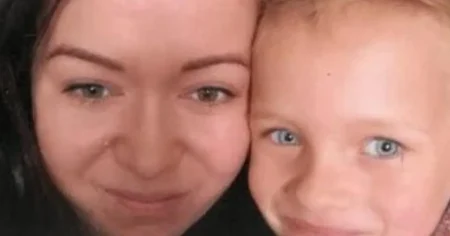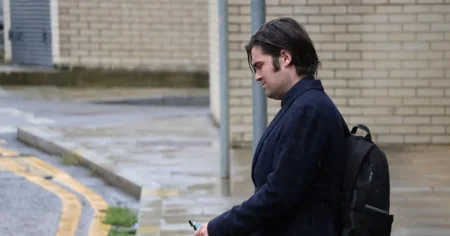
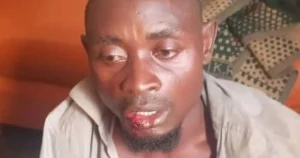


On the final day of August 2023, the ordinary streets of Longfield Avenue, near Huddersfield in West Yorkshire, became the backdrop for a family’s worst possible nightmare. A seven-year-old boy named Jack Rooke, described later by police as a loving and happy child, was struck by a BMW X4 driven by 35-year-old Nathan Shaw. The collision happened at around six o’clock in the evening, a time when families are usually settling in for the night, making dinner, talking about school, and looking forward to the simple promise of tomorrow. Instead, emergency services were called to a scene that no parent should ever have to imagine. Jack was given urgent medical treatment at the roadside, and then rushed to hospital, but despite the best efforts of everyone who fought for him, he died a short time later. Somewhere in those desperate minutes, a mother lost a son, sisters lost a brother, and a community lost a little boy who should have had a lifetime of moments still ahead of him. The grief was unimaginable, and it was made even harder to bear by the circumstances surrounding the crash. Nathan Shaw, the man responsible, was driving without insurance. He had no lawful right to be behind the wheel of that car, and yet his choices that day ended in the death of a child. The legal process would eventually hold him to account, but no courtroom ruling could ever undo the devastation that had been set in motion. Jack was somebody’s whole world, and from the moment of that collision, nothing would ever be the same for the people who loved him.
When police and paramedics arrived at Longfield Avenue, they were confronted with the kind of emergency that haunts even the most experienced responders. A small child lay in the road, fighting for his life, while the people around him did everything they could to help. Jack was treated at the scene by paramedics who refused to give up, their hands moving with urgency and precision as they tried to stabilise him. Then came the frantic ambulance ride to hospital, blue lights flashing, sirens wailing, everyone focused on one fragile young life hanging in the balance. But his injuries were too severe. Despite the desperate efforts of doctors and nurses, Jack died, leaving behind a family that would never be complete again. West Yorkshire Police immediately launched an investigation, and the case was taken over by the Major Collision Enquiry Team, specialist officers who investigate the most serious incidents on the roads. They examined the scene, gathered evidence, and spoke to witnesses, slowly building a picture of what had happened. What they discovered was that Nathan Shaw should not have been driving at all. He was uninsured, which meant he was already breaking the law before his car ever came near Jack. But the investigation went further. Shaw was also charged with two offences of perverting the course of justice, meaning that, after the collision, he had tried to interfere with the inquiry in some way. It was a second betrayal of the truth, and of Jack’s family. Shaw was arrested at the scene in the immediate aftermath of the crash, then later charged and brought before the courts. For the family, the wait for justice must have felt endless, but eventually Shaw stood before a judge and admitted his guilt.
Nathan Shaw’s case finally reached Leeds Crown Court, where his life and Jack’s death were reduced to legal terms. He pleaded guilty to causing death while driving uninsured, as well as to two offences of perverting the course of justice. The judge sentenced him to 42 months in prison, a term that might sound significant in the abstract but can never compare to the weight of losing a child. Shaw was also disqualified from driving for 57 months, a punishment that feels almost meaningless when measured against the lifetime of consequences his actions created. For Jack’s family, the sentencing hearing was not a moment of closure. There is no such thing as closure when a child has died. Instead, it was another painful step through a grief that would stay with them forever. The courtroom would have been filled with an impossible tension: a mother trying to find the strength to face the man who killed her seven-year-old son, and a defendant waiting to hear how many years of his life he would lose for a crime that resulted in the loss of a far younger life. Shaw took responsibility by entering his guilty pleas, but that responsibility came far too late to change anything. It did not answer the question that Jack’s family will ask themselves for the rest of their lives: why did this have to happen? Why was a child allowed to lose his life because another person decided to ignore the most basic laws of the road? The sentence may satisfy the demands of justice in the eyes of the law, but for those who loved Jack, no sentence will ever be enough. Three years and six months in prison is a fraction of the time Jack should have had. Fifty-seven months without a driving licence is a temporary inconvenience compared to a lifetime of missing a son, a brother, a best friend.
The most devastating moment of the entire case came not through legal argument, but through the words of Jack’s mother in her victim personal statement. She said her life had been wrecked, and that she would never recover from the death of her son. Her statement was a raw and heartbreaking insight into what it means to lose a child, a pain so overwhelming that it changes a person at the very core. “It’s hard to parent when you have been killed inside,” she said. “I will never be who I used to be. I can’t accept that Jack has gone, and I never will. I replay his funeral, me having to carry my little boy in a coffin. Looking at him in the chapel of rest, wanting and wishing him to open his eyes. Travelling in the ambulance with Jack, seeing the paramedics trying to save his life, then being told that he had gone, is a parent’s worst nightmare that no one should have to go through. Leaving the hospital without them having to tell your other children. How will I navigate that and deal with it for the rest of my life?” Her words paint an unbearable picture: a mother carrying the coffin of her small son, a mother sitting beside him in a chapel of rest, wishing for a miracle that never came, a mother riding in an ambulance while other people tried to save her child’s life, and then being told that the battle was lost. Her statement also showed how the ripples of Jack’s death spread out through his entire family. She spoke of his sisters, who had lost so much. She mentioned Mya, his sister, who had lost her best friend. Siblings share a bond that is unlike any other, and Mya and her sisters will now grow up with an empty space where their brother should have been. They will mark every milestone with the reminder that Jack is not there to share it. Their mother’s pain is enormous, but so too is theirs. She asked how she would deal with that loss for the rest of her life, and the painful truth is that she will never fully heal. She will keep going, for her other children, but she will carry Jack with her every single day.
Jack Rooke was far more than a name in a news report or a case number in a court file. He was a seven-year-old boy, a child who should have been growing up in the warmth of his family, going to school, making friends, and discovering the world around him. He was the kind of boy described as loving and happy, a child who brought joy to those who knew him. His family are now left with photographs, memories, empty chairs at the table, and a silence where his laughter used to be. The loss is not something they will simply get over. It will follow them into every future birthday, every Christmas, every family holiday, every ordinary morning when they wake up and remember that Jack is gone. The wider community around Longfield Avenue has also been touched by his death. When a child dies, the shock ripples outward, through schools, through friends, through neighbours who may have seen Jack playing outside. People in the area would have struggled to make sense of the tragedy, wondering how such a thing could happen on a familiar street. The fact that Shaw was driving without insurance makes it even more difficult to accept. Insurance is not a bureaucratic detail; it is a legal promise to take responsibility for the risks of driving. When someone chooses to drive uninsured, they are already saying that they do not care about the rules that protect other people. They are creating a situation in which, if something goes wrong, there is no safety net for the victims. Shaw’s actions after the crash, the perverting of the course of justice, only add to the sense of anger and betrayal. He did not simply cause a tragedy through carelessness. He then tried to interfere with the search for truth. His driving disqualification and prison sentence are the consequences he must now face, but for Jack’s family, the punishment feels inevitably too small. Their sentence is lifelong.
After the sentencing, Detective Sergeant Nina Roper, who led the investigation for the Major Collision Enquiry Team, spoke on behalf of the police. She said: “The death of Jack has been an absolute tragedy for his family, as his mother’s victim personal statement so movingly illustrates. The loss of such a loving and happy boy at such a young age has clearly been absolutely devastating, and the scale of their loss is hard for many of us to comprehend. Our thoughts continue to remain with them following the sentencing of Nathan Shaw today.” Her words are a formal recognition of what everyone who hears this story already knows: the loss of a child is one of the greatest tragedies imaginable. The officers, paramedics, and investigators who worked on this case are not immune to that pain. They saw the aftermath of Shaw’s actions, pieced together the details, and helped ensure that the law was upheld. But legal closure is not the same as human closure. Nathan Shaw will serve his time in prison, and eventually he will be released. Jack Rooke will never come home. His mother will never hold him again. His sisters will never play with him again. The road where he died will always be a place of sorrow for those who loved him. This case is a reminder, written in the hardest possible way, that driving is a privilege and not a right. Every time someone gets behind the wheel, they are holding the lives of others in their hands. One moment of irresponsibility, one decision to drive without insurance, one choice to obstruct justice, can change everything. Jack’s story should not be forgotten. It should stand as a reason for every driver to be more careful, more responsible, and more aware of the fragile lives around them. In the end, all that can be offered to Jack’s family is compassion and a promise that their little boy will be remembered. He was loved. He was taken far too soon. And he will never be forgotten.