


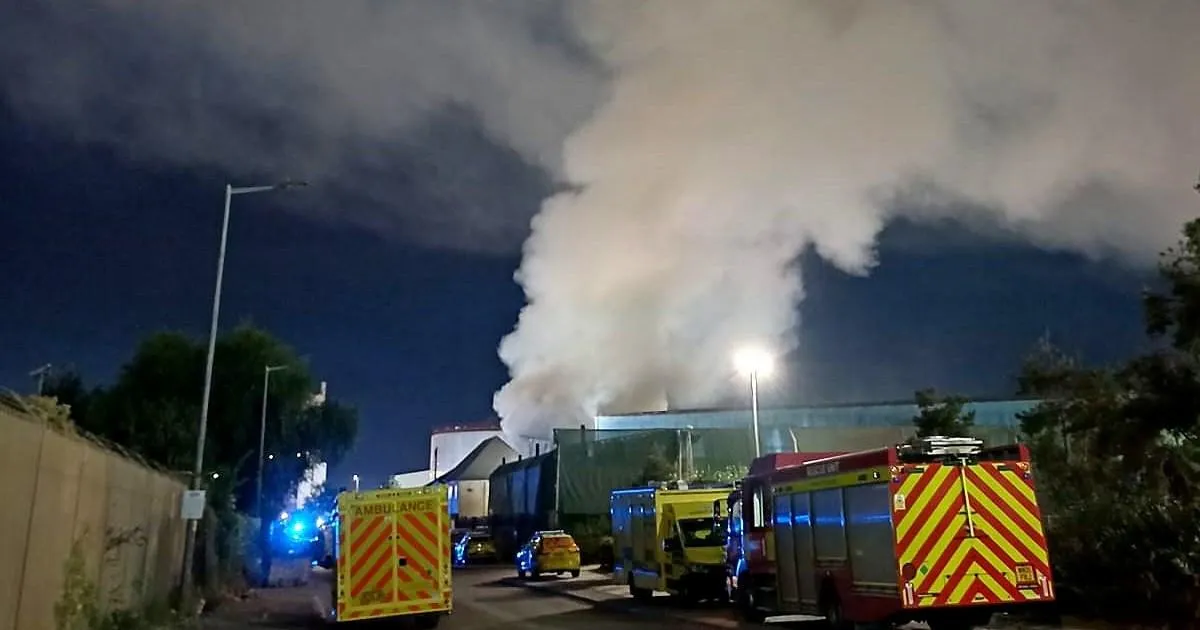
The quiet stillness of the early morning in Dagenham was shattered in the small hours of today when a massive fire broke out at an industrial site on Chequers Lane. It was around 3:26 am when the first reports reached emergency services, describing an inferno that would soon dominate the skyline of East London. For those living nearby, the sight was nothing short of alarming; thick, plumes of black smoke began to billow into the darkness, rising high enough to be seen for miles around. The industrial estate, located conveniently near the A13, suddenly became the focal point of a massive multi-agency response, turning the quiet night into a scene of intense, high-stakes activity.
By the time the sun began to peek over the horizon, the scale of the emergency had become clear. A total of fifteen fire engines and approximately 100 firefighters from across the region—including crews from Dagenham, Barking, East Ham, and beyond—were battling to gain the upper hand. The sheer magnitude of the blaze required specialized equipment, with firefighters deploying two turntable ladders, a hose-laying unit, and a high-volume pump just to secure enough water pressure to combat the intensity of the flames. It was a grueling, physical test of endurance for the crews, who worked tirelessly through the night to prevent the fire from spreading to neighboring facilities.
As the morning progressed, the London Fire Brigade confirmed that the fire was successfully brought under control by 7:43 am. However, the end of the primary blaze did not mark the end of the operation. Station Commander Graham Beers emphasized that while the worst had passed, the work was far from over. Throughout the morning, emergency crews remained on-site, meticulously damping down hotspots and extinguishing smoldering remnants to ensure the fire wouldn’t reignite. For the residents living in the immediate vicinity, the advice remained consistent: keep windows and doors firmly shut. Even with the flames suppressed, the residual smoke continued to pose a health risk, lingering heavily in the stagnant morning air.
Amidst the chaos, there was one significant piece of good news: despite the size and violence of the blaze, no injuries have been reported. While the facility itself has suffered immense damage, the human cost was mercifully avoided. Currently, the cause of the fire remains a complete mystery. Fire investigators are expected to begin their work once the site is deemed safe enough to enter, but for now, the primary focus remains on safety and containment. It is a sobering reminder of how quickly an industrial incident can spiral out of control, placing immense strain on local resources and causing widespread concern for the local community.
The timing of this disaster feels particularly ominous, as the fire struck during a period of extreme environmental stress for the city. London and the South of England are currently in the grips of an intense drought, with this week marking the fifth heatwave of the season. The ground is parched, and the foliage is brittle, creating a landscape primed for combustion. England and Wales have officially recorded their driest July since records began 190 years ago, and large swathes of the country have not seen meaningful rainfall in over a month. This atmospheric pressure has turned the region into a tinderbox, making the work of the fire brigade even more difficult and dangerous as they navigate the added hazards of the heat.
As the investigation into the Dagenham blaze begins, the incident serves as a stark reflection of the challenges facing the city this summer. With record-breaking heat and a relentless lack of rain, Londoners are living in a climate that is pushing both the infrastructure and the emergency services to their limits. While the firefighters in Dagenham were able to successfully contain the threat, the lingering smoke and the scorched facility remain as a dark backdrop to a summer defined by drought and climate volatility. For now, the focus shifts back to the local community as they wait for the air to clear, grateful that no lives were lost but acutely aware of the fragility of the world around them.