


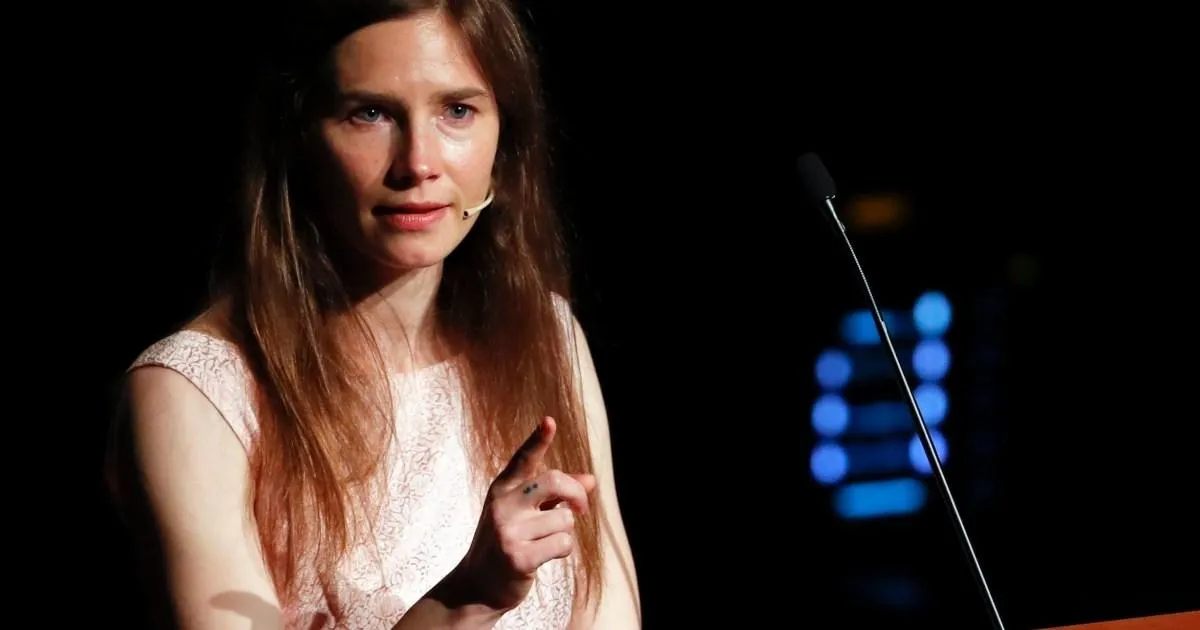
The enduring shadow of the 2007 tragedy that claimed the life of Meredith Kercher has resurfaced with intensity, this time centered on the Edinburgh Fringe Festival. Stephanie Kercher, Meredith’s sister, has launched a passionate campaign to cancel a stand-up performance titled Cartwheel, headlined by Amanda Knox. Knox, who was convicted and later acquitted of the murder, has positioned her show as a reflection on her own experiences within the legal system and her life as a mother. For the Kercher family, however, the prospect of such a sensitive and traumatic history being distilled into the format of a comedy show is not merely an affront to their grief; it is a profound violation of the memory of a woman whose life was stolen in a brutal act of violence.
At the heart of Stephanie’s protest is a fundamental question of morality and empathy. She struggles to comprehend how the horrific details surrounding her sister’s death—a case that defined international headlines—could ever be transformed into entertainment. She argues that the pain of losing a sister is not a relic of the past that can be repackaged for a stage audience; it is a persistent, daily reality. By taking the legal drama of the Italian courts and the tragic circumstances of Meredith’s death and placing them under the spotlight of a comedy venue, the Kercher family feels that Knox is leveraging their ongoing trauma to sustain her own public narrative, effectively commodifying the very tragedy that tore their lives apart.
The petition, which gained momentum rapidly, echoes the sentiments of many who find the concept of a “comedy” show exploring these themes deeply unsettling. Supporters argue that characterizing a show about such heavy subject matter as “stand-up” is inherently trivializing, regardless of the performer’s intent. The organizers behind the petition emphasize that this is a matter of basic human decency rather than a debate over freedom of speech. They contend that the show risks normalizing violence against women by blurring the lines between personal trauma and public performance. For them, there is a clear moral boundary that should prevent someone linked to such a high-profile, violent death from using the discourse of that case as a theatrical device.
In response, Amanda Knox and her representatives have pushed back firmly against these accusations, asserting that the criticism is based on a fundamental misunderstanding of the show’s content. Her team maintains that Cartwheel is a nuanced exploration of motherhood and the challenges of raising a daughter in a world that is often hostile toward women. They insist that the show does not mock or trivialize Meredith’s death; instead, they claim it actually honors her memory by highlighting the dangers women face. Knox herself has suggested that her former flatmate, a person she describes as intelligent and witty, would have understood the need to address these issues, framing the performance as a necessary act of reclaiming her own truth.
The venue hosting the show, the Gilded Balloon, has stood by its decision to provide the platform, citing the Edinburgh Fringe’s long-standing tradition as an open-access festival. They argue that their role is to facilitate freedom of expression, allowing artists the creative autonomy to present their work, while leaving it to the audience to decide what they choose to support. By positioning the event as an independent, one-woman piece rather than a tabloid-style spectacle, the venue has sought to distance itself from the controversy, asserting that they are simply upholding the democratic principles of the arts festival circuit.
Ultimately, this standoff illustrates the volatile intersection of celebrity, justice, and the ownership of grief. While Knox views her performance as a legitimate reclamation of her narrative and a critique of the systems that judged her, the Kercher family sees a continuing struggle for the dignity of their loved one. The disagreement remains deadlocked, highlighting the vast divide between those who believe that public figures have a right to reshape their experiences through art, and those who believe that when that art intersects with the violent end of a human life, there are certain stories that simply should not be told in the service of entertainment.