
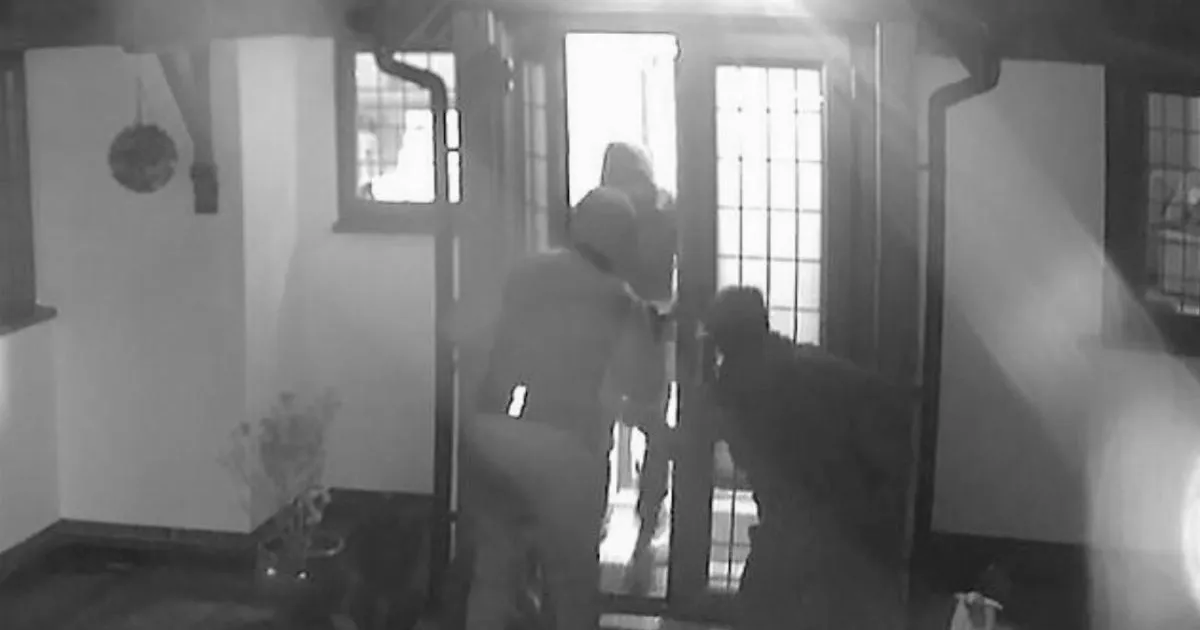
On the evening of 12 January 2026, an elderly woman in Rochester did something entirely ordinary. She stepped out of her front door to put the bins out. It was cold, dark and quiet—the kind of routine moment that rarely registers in memory. But within seconds, her life was turned inside out. Harrowing CCTV footage, released after the case, shows a masked man appear from the shadows, seize her and pull her to the ground. He dragged her across the path and back into her own home, while her husband, also in his seventies, remained inside. What followed was a violent aggravated burglary that left the couple physically hurt and emotionally shattered. Three intruders, all wearing dark clothing, had targeted the property, and they were not going to leave without taking what they wanted. The footage is difficult to watch because it captures the exact moment safety ends: a frail woman being overpowered on her own doorstep, a home invaded, a lifetime of trust broken. The couple had no way of knowing that the men had been planning this for months, that they had been watched, discussed and betrayed long before the door opened. For the victims, the attack lasted only a few minutes, but the consequences will echo for years. The case has now ended in court, with three men jailed at Maidstone Crown Court, but justice and healing are not the same thing. The CCTV remains a brutal reminder of how quickly ordinary life can be shattered by cruelty. The couple’s ordeal began with a simple act, but it became a stark illustration of how vulnerable older people can be. They had done nothing wrong. They were targeted because they had things worth stealing and because the burglars believed they would be easy prey. The attackers used surprise, force and fear, and they counted on the couple’s physical vulnerability to make their escape easier. It is a scene that no family should ever have to experience, and the fact that it was all caught on camera only makes it more unsettling. The woman had stepped outside for a moment of fresh air and routine; she was dragged back inside as a victim.
Once inside, the nightmare accelerated. The woman was confronted by an intruder who tried to pull rings from her fingers—an act that is both physically painful and deeply invasive. Rings are not just objects; they carry meaning, memories, promises. The attempt failed, but the violence and humiliation of the moment cannot be undone. Meanwhile, another attacker found her husband in a separate room and sprayed tear gas directly into his eyes. The man was beaten, and he was forced to hand over the watch he was wearing. It was not enough. The gang searched the property, gathering a selection of watches and jewellery before fleeing. The entire raid lasted just four minutes. Four minutes of chaos, shouting and pain. Then, as if to add an extra layer of cruelty, the men locked the couple inside their own home and took their mobile phones, leaving them trapped and unable to call for help. They escaped in a stolen car with false number plates, which police later found abandoned. Those four minutes must have felt like an eternity to the victims. Imagine the confusion, the terror, the inability to protect oneself or one’s spouse. The physical injuries—a black eye, irritated eyes, bruises—would heal. But the psychological damage, the sense of being violated in the place where one should feel safe, is not so easily repaired. The couple had to relive every moment through the investigation, the forensic tests and the court proceedings. They were not just victims of theft; they were victims of a planned, calculated attack on their home and their bodies. The fact that the gang locked them in with no phones is particularly chilling—it shows they understood exactly what they were doing. They wanted to delay discovery, to give themselves time to disappear. It also suggests a cold indifference to the couple’s wellbeing. They were not concerned about whether an elderly man and woman might be hurt, frightened or in need of help. They simply wanted to get away with their loot. In that short span of time, they stripped away the couple’s security, their comfort and their peace of mind, and they left without a trace of remorse.
The investigation revealed that this was no random break-in. Kent Police uncovered a chilling web of planning and betrayal. The ringleader, Jesse Eastwood, 34, from Orpington, spent nearly a year preparing the raid. He recruited others and gathered information about the victims and their home. Evidence showed that during regular phone calls to a prisoner he knew, Eastwood discussed his plans in detail, describing the couple, the layout of their house, the specific watches he wanted to steal and how he intended to carry out the burglary. These were not vague boasts; they were the working notes of a criminal who saw two elderly people as opportunities rather than human beings. After the raid, he called the same prisoner again and reported back on what had happened. He described the experience as a “horror story” and spoke about the assaults on the victims. The word “horror” is revealing: even among criminals, what they did was recognised as shocking. But Eastwood did not stop there. He had help from someone the couple trusted. Thomas O’Sullivan, 27, from Maidstone, had known the couple through the kindness they had shown him. He had even been on holidays with them. While living with the victims, he passed information to Eastwood that helped plan the theft. This is a betrayal that cuts deeper than any physical attack. The couple had opened their home to O’Sullivan, treated him with warmth and generosity. He repaid them by helping to orchestrate a violent invasion. The third offender, Christopher David, 41, from Bromley, was identified through forensic testing on a jewellery box belonging to the couple. A single piece of evidence, a trace left behind, connected him to the crime. Together, the three men formed a chain of greed, manipulation and violence. The investigation pieced together their actions, but the human story is one of trust exploited and kindness weaponised. O’Sullivan’s presence in the planning is perhaps the most painful element. The couple may have thought of him as family. He had shared meals, holidays, conversations. All the while, he was taking note of their routines and their valuables, waiting for the moment when his criminal plan could be set in motion.
All three men were arrested and charged with aggravated burglary at the beginning of February. At Maidstone Crown Court, they were sentenced for their roles in the attack. Eastwood, the ringleader, received seven years and eight months in prison. David was sentenced to six years and nine months. O’Sullivan received two years and five months. The sentences reflect the severity of the offence, the level of planning and the physical harm inflicted on two vulnerable people. But no sentence can restore the couple’s peace of mind, and no punishment can erase the memory of being dragged, beaten and terrorised in their own home. The court heard how the raid had been meticulously planned, how the victims had been targeted because of their age and their possessions, and how the gang had used violence without hesitation. The fact that O’Sullivan had been a guest in their home made the case even more disturbing. For the couple, the trial would have been another ordeal: giving evidence, facing the men who had hurt them, revisiting the details of that night. Their courage in doing so should not be underestimated. The judge’s decision to impose custodial sentences sends a clear message that this kind of crime will not be tolerated. It also offers some reassurance to the wider community that dangerous offenders are being taken off the streets. The stolen car was found the day after the raid, and forensic work linked the men to the crime. In the end, the law did its job. But the scars left by that January evening will remain. The differing sentences also show that the court took each man’s individual involvement seriously. Eastwood planned the attack and led the gang; David took part in the violence; O’Sullivan’s betrayal from inside the victims’ trust was treated with appropriate seriousness. Each of them now has years behind bars to think about what they did to two innocent people. They will have to live with the knowledge that they were caught, convicted and punished, and that their victim did not stay silent.
After the sentencing, Detective Aaron Chapman paid tribute to the victims. He said: “The victims have remained courageous and steadfast throughout the investigation despite what they were forced to go through at the hands of their attackers. We thank them for their support of the case and hope the result will bring them peace and reassurance.” The words are formal, but they carry real meaning. The couple could have crumbled. Instead, they supported the investigation, endured forensic tests and court appearances, and helped ensure that the men who hurt them were brought to justice. For elderly victims, the criminal justice process can be especially daunting. The language, the unfamiliar surroundings, the need to confront the people who caused so much harm—all of it requires strength. The detective’s praise is well deserved. The hope that the result will bring peace and reassurance is sincere, even if it is cautious. Justice cannot rewind time. It cannot give the woman back the seconds of terror before she was dragged to the ground. It cannot unburn the husband’s eyes or unbruise his face. But it can offer a measure of closure. Knowing that the ringleader will spend years in prison, that the man who betrayed them is being punished, and that the third attacker has been removed from society may help the couple begin to feel safe again. It may also send a message to other elderly people who live in fear: there is help, there is justice, and the police will work to protect you. The investigation itself was painstaking. Police traced the stolen car, analysed forensic evidence and uncovered months of phone calls and planning. None of it would have been possible without the victims’ willingness to relive their trauma, to answer difficult questions and to stand up in court. Their resilience is a reminder that even in the darkest moments, ordinary people can find extraordinary strength.
This case is more than a crime report; it is a reminder of the quiet vulnerability of older people and the devastating consequences of betrayed trust. The couple did everything right. They were in their own home, going about their evening. They had even shown kindness to a young man who later helped rob them. The men who attacked them saw not a lifetime of memories, but a collection of watches and jewellery. They used violence without hesitation, locked their victims inside and left them without phones. It is difficult to imagine a more complete violation. The community in Rochester and beyond will feel the shock of this footage. It challenges our assumption that we are safe at home, and it forces us to think about the elderly neighbours and relatives who may be easy targets for criminals. Perhaps the most important response is to remember that the couple were not passive victims. They were brave, resilient and willing to stand up in court. Their ordeal ended with convictions and prison sentences, which is a far better outcome than many similar cases achieve. But it is also a reminder that prevention matters. Checking on older friends and neighbours, talking about security and reporting suspicious activity can all help. The justice system can only respond after a crime has been committed; it cannot undo the moment when a masked man appears at the door. For the couple, the path ahead will not be easy. They may struggle with anxiety, with the sound of footsteps, with the memory of that terrible night. But they are no longer alone in their fight. The police listened, the court acted, and the men responsible are behind bars. In time, the CCTV footage may become less a source of fear and more a proof of survival. They endured the worst, and they came through it with their dignity intact. Their story has been told so that others may learn, and their courage has been honoured by the detective and the court. What happened to them should never have happened, but the way they faced it is a powerful example of human endurance.