
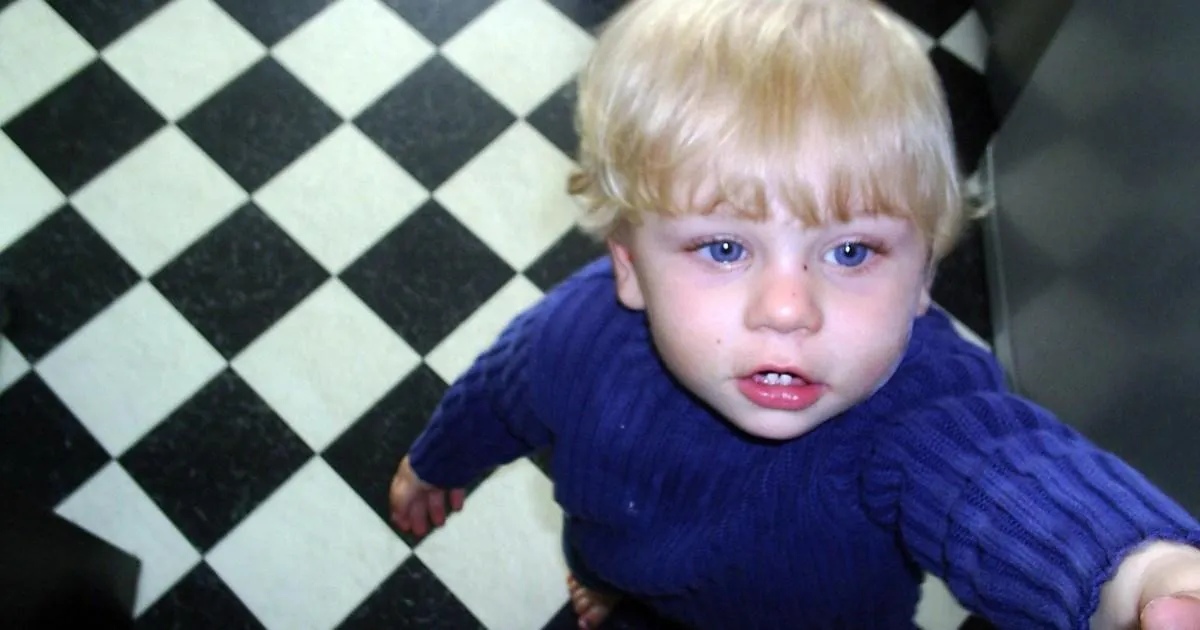
On 3 August 2007, a 17-month-old boy called Peter drew his last breath in a flat in Tottenham, north London. The world came to know him as Baby P, and his death became one of the most shocking and heartbreaking cases in modern British history. Peter had been subjected to violent assaults over a long period, and his small body carried more than fifty injuries—cuts, bruises, fractures, and other wounds that told a story of relentless cruelty. He was on the at-risk register. For eight months, social workers, police officers, and health professionals visited his home around sixty times. Yet nobody saved him. The system failed, and the adults around him failed even more. In 2009, his mother, Tracey Connelly, was jailed at the Old Bailey for causing or allowing his death. Her boyfriend, Steven Barker, was later convicted of cruelty and jailed for 12 years. The public reacted with horror, grief, and anger. How could this happen? How could no one see? Those questions have never fully been answered. Now, more than fifteen years later, Connelly is back before the Parole Board, trying once again to be released. The hearing is being held in public because of the extraordinary public interest in the case. And in her evidence, she has said something that both complicates and deepens the picture. She said she “hated every minute” of hearing how Peter’s death has caused lifelong pain to members of her own family. It is a rare glimpse into the mind of a woman who has been demonised, analysed, and judged for years. Whether her words are genuine remorse or another performance is impossible to know. But they are words, and they carry weight.
The latest parole hearing is actually the second round. In October 2024, two public hearings took place, but the case was adjourned because the panel wanted a fresh psychological assessment and a forensic examination of the mobile phone Connelly had used in the community. She had been recalled to prison in August 2024, after starting a relationship with a man she met online without telling her supervising officers. That was not her first recall. It was her second. During her evidence, Connelly was asked about the labels that have stuck to her for years: manipulative, opportunistic, deceptive. Her response was striking. She said the terminology was not nice, but then added: “As much as I would like to say no, I have lied, I have deceived, so I have to accept that is fair.” She did, however, resist the idea that she was skilful at deceit. She pointed out that her risk management plan had caught her. “I don’t necessarily think I’m that skilful because their risk management plan has worked—they found out I was doing wrong and they called me back for it. I’m back in prison.” She described herself as someone who makes mistakes and gets stuck in a loop she cannot escape. That image of being trapped in a cycle of bad decisions is almost sympathetic. It suggests a lack of cunning, but also a lack of self-control. The hearing also heard private statements from Peter’s family, who are considered statutory victims. They spoke of the ongoing pain, the lifelong impact, and their fear of Connelly being freed. Asked how that made her feel, Connelly said she hated every minute. “I know that their pain and their suffering is on me. I made decisions and choices that led to every moment of their pain and suffering and I can never apologise for that. I understand that my impact on them has been lifelong.” It is hard to know if these are the words of a changed woman or a woman who has learned the right script. Perhaps both.
Connelly’s admissions went further than generic regret. She told the panel that her parenting had been “horrendous”. The hearing was told about a charge of historical neglect from 2018 that was not ultimately proceeded with. Rather than hide behind that technicality, Connelly said she would have “wholeheartedly pleaded guilty” to it. She even said: “I said if they wanted to charge me for all of my children I would have pleaded guilty.” That is a devastating thing to hear. It confirms that Peter’s abuse was not an isolated moment of madness, but part of a broader pattern of neglect and cruelty towards her children. She accepted that she had been physically abusive, that she had neglected their basic needs, that she had turned a blind eye to their suffering, and that she had misled the authorities who might have saved them. If she had been honest with social workers, Peter might still be alive. Other children might have been protected. She chose not to be honest. She chose deception instead. Asked about the future, Connelly was clear: she has no intention of being around children if she is released. “I do not want to be around other people’s children because I know how bad I was with my own,” she said. The bluntness is chilling. It is an admission that she is dangerous to children. It also raises an obvious concern: if she knows this about herself, can she be trusted to avoid situations where children are present? The recall that brought her back to prison in 2024 was caused by her failure to disclose a sexual relationship with a married man she met online. She said she was embarrassed to tell her supervisors because he was married. She also admitted deleting messages, including “personal images”, even though she knew she was not allowed to. The pattern is familiar. She forms relationships, she hides them, she lies, and she gets caught. It is not sophisticated, but it is persistent. And persistence is exactly what makes her risk so difficult to manage.
The psychological assessment presented to the panel was deeply ambivalent. A psychologist concluded that Connelly had changed on the surface, but questions remained over how deep that change runs. That phrase—“on the surface”—captures the central dilemma of her case. She has learned to speak the language of remorse. She can say the right things about responsibility, about understanding the pain she caused, about not wanting to be around children. But below that surface, is there real transformation, or simply another survival strategy? The panel heard about her history of manipulation and deception, including prison romances and secret love letters exchanged with an inmate. These are not the actions of someone who has entirely reformed. They are the actions of someone who still craves intimacy and excitement, even when it means breaking the rules. Yet despite all of this, the panel expressed confidence in the risk management plan and recommended release. This does not mean they believe she is safe. It means they believe her risk can be managed with strict conditions. But her own record suggests otherwise. She was first released on licence in 2013, then recalled in 2015 for breaching her parole conditions. Three further release bids were rejected in 2015, 2017, and 2019. In March 2022, the Parole Board ruled that she was suitable for release, despite expressing concerns about her ability to manipulate and deceive. She was assessed as being at low risk of committing a further offence, and both probation officers and prison officials supported the plan. She left prison in July 2022. It took barely two years for her to be recalled again. That cycle of release, breach, and recall suggests a woman who cannot live within boundaries, no matter how clearly they are set. The question is not whether she has suffered enough. The question is whether the public can be protected from her next mistake. The psychologist’s “surface” comment is a warning. What lies underneath remains unknown.
The public interest in this case is entirely understandable. Baby Peter’s death was not just a private tragedy; it was a national scandal. A series of reviews found that officials missed multiple opportunities to save him. If they had reacted properly to warning signs, he might have lived. The child protection system was supposed to protect him, and it failed. But Connelly was not a passive victim of that failure. She actively deceived the people trying to help. She presented a false front. She hid the violence and abuse that were happening in her home. She made it impossible for anyone to know the truth. This is why her case is so difficult. She is both a perpetrator and a product of a broken system. That does not excuse her, but it explains why her story is so complicated. The parole hearings have been held in public because a judge ruled that there is “substantial public interest” in the case. Most parole hearings are private. But for Baby P, the public needs to see what is happening. They need to know that the woman responsible for his death is not being quietly released. Then-justice secretary Dominic Raab even tried to block her release in 2022, but a judge rejected his appeal. The hearing continues, and the outcome is uncertain. If Connelly is released, she will face strict supervision. But she has already shown that she can breach the rules. If she is kept in prison, she becomes part of a larger problem: the many IPP prisoners who remain locked up long after their minimum terms because the system cannot be sure they are safe. Connelly’s minimum term was five years. She has spent much longer than that in prison, on and off. But the nature of her crime, and her behaviour since, makes it hard to argue that she is simply another victim of an unfair system. She is different. She is the mother of Baby Peter. And the world will never let her forget that.
So what are we to make of Tracey Connelly? She is a woman who allowed her baby son to be tortured to death. She lied to authorities, manipulated professionals, and continued to deceive even after being given multiple chances. She has served her time, but her actions continue to echo. In this latest hearing, she said things that are hard to dismiss. She said she hated hearing about her family’s lifelong pain. She said she would plead guilty to neglect of all her children. She said she does not want to be around children because she knows how bad she was. These are not the words of a woman in denial. They are the words of a woman who has at least begun to see herself clearly. Humanising her does not mean forgiving her. It does not mean minimising what Peter suffered, or what his family has endured, or how the state failed him. It means acknowledging that she is a human being, capable of both harm and remorse, even if the two exist uneasily side by side. Connelly’s choices destroyed a child and devastated a family. No amount of regret can undo that. No psychological report can fully explain it. And no parole decision can bring Peter back. What the parole board must decide is not whether Connelly deserves compassion—she does, in the limited sense that all humans do—but whether the risk of releasing her is acceptable. Her own testimony suggests she is still capable of deceit, still prone to mistakes, still caught in the loop she described. She is not safe. She may never be safe. But she is also not the same woman who left prison in 2013, or even 2022. The surface has changed. The depths are unknown. As the hearing continues, one thing is certain: Baby Peter’s short life and the pain that followed his death will never be forgotten. Whatever happens to Tracey Connelly, she will carry that weight for the rest of her life. And so, in a different way, will the rest of us. Because Peter’s death was not just her failure. It was a collective failure—a reminder that when we look away, children suffer. And that is a lesson that should haunt us all.