
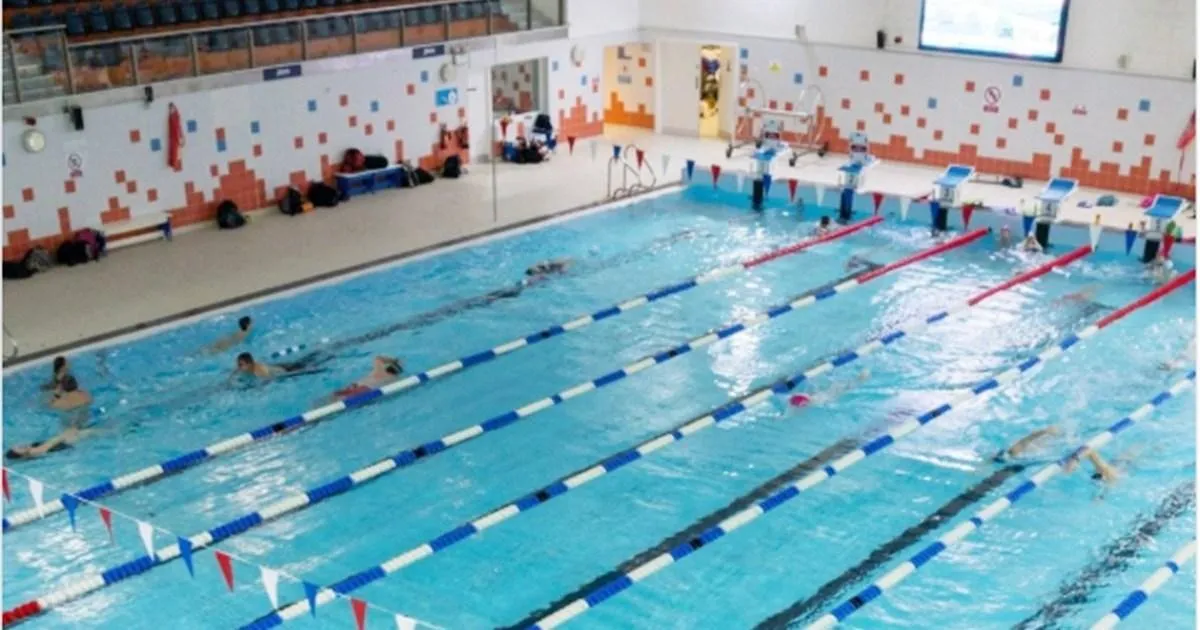
The University of Hertfordshire’s swimming pool and gym complex was thrown into chaos on an otherwise ordinary October morning when a routine maintenance task went horribly wrong. Anthony Brown, a handyman who had worked for the facilities management company Pinnacle FM Limited for seven years, was tasked with topping up the pool’s chemical levels and testing the water. It was the kind of job he had done countless times before, a monotonous but necessary chore that rarely required more than a few minutes of attention. Yet on this particular day, a seemingly harmless decision to make his work easier would trigger a chain of events that turned a quiet campus facility into a scene of emergency response, with a toxic chemical that had once haunted the battlefields of World War I filling the air. Brown, needing to step away briefly, wedged open the chlorine tap with a small piece of wood, ensuring a steady flow while he went to answer a phone call. It was a small, improvised shortcut, the kind of thing that many workers might do without a second thought—but when he returned, the consequences of that simple act were already spiraling out of control.
The scene that greeted Brown when he came back was one of quiet calamity. The chlorine tank had overflowed, spilling its contents across the floor, and in a separate room, sodium bisulfite—a common industrial chemical often used to keep shrimp fresh—had also leaked. Brown’s immediate instinct was to clean up the mess before anyone could be exposed to the hazards. He grabbed a wet vacuum, a machine designed to handle liquid spills, and began to work, moving between the two affected areas. But what he did not realize, and what would later become the focal point of a painful legal and personal ordeal, was that by mixing chlorine with sodium bisulfite in that vacuum, he was inadvertently creating the very conditions for a chemical weapon to be born. The combination produced a compound known as sulfur mustard gas, an amber-colored fluid that acts as a potent blistering agent, capable of causing severe burns to the skin, eyes, and lungs. As the equipment churned the two chemicals together, the reaction released the toxic substance into the air, and Brown, standing there in his work clothes, was the first one to feel its effects. Within minutes, he began to experience the telltale symptoms—a burning sensation in his throat, a stinging in his eyes, and the beginnings of what would become painful lesions on his skin.
Realizing that something was deeply wrong, Brown immediately alerted his manager and dialed 999, the British emergency number, in a state of growing distress. The fire brigade arrived swiftly, and the decision was made to evacuate the entire swimming pool and gym complex as a precaution. Students and staff were hurried out of the building, some in athletic gear, others in swimwear, all confused and anxious as the emergency services worked to assess the situation. The scene must have been surreal—a modern university facility, typically bustling with the energy of young people training, exercising, and socializing, now cordoned off with yellow tape and filled with firefighters in protective gear. Fortunately, the prompt response and the quick dispersal of the gas meant that no one else was seriously harmed. The tribunal judge later noted that the emergency services were quickly satisfied that there were no casualties other than the claimant himself, who required paramedic surveillance for his exposure. The pool was able to be reopened to the public shortly thereafter, but the incident had left Brown physically shaken and emotionally scarred, and it would soon cost him his job.
In the weeks that followed, Pinnacle FM Limited launched a full investigation into the incident. The company’s findings painted a complex picture of responsibility and blame. On one hand, the investigation acknowledged that Brown’s actions, specifically his decision to jam open the chlorine tap and leave it unattended, had created the initial overflow that set the crisis in motion. The tribunal later heard that this was a “deliberate and wilful breach of health and safety rules” and that Brown had acted as the “catalyst” for the entire event. Yet the investigation also revealed a troubling systemic issue: Brown’s entire training for dealing with chemical spills consisted of “essentially one paragraph in a 200-page handbook.” There was no hands-on training, no detailed instructions about the dangers of mixing certain chemicals, and no warning that the wet vacuum he used could become a vessel for a chemical reaction. This lack of preparation made it tragically easy for an experienced employee to make a catastrophic mistake. Despite this, the company decided that Brown’s actions were serious enough to warrant dismissal. He was terminated the following month, and Brown, feeling that he had been unfairly scapegoated for a systemic failure, decided to challenge the decision at an employment tribunal.
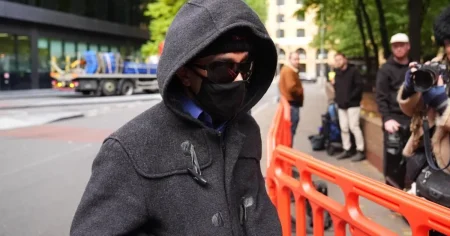
The tribunal hearing, which took place over the following months, was as much about procedure as it was about human fallibility. Employment Judge Cowen presided over the case, where Brown sought to claim wrongful and unfair dismissal. The judge heard detailed testimony about the events of that October morning, the nature of the chemicals, the sequence of errors, and the company’s handling of the aftermath. In her ruling, Judge Cowen conceded that Brown’s training had been woefully inadequate, noting that a single paragraph in a massive handbook could not possibly prepare someone for the complexities and dangers of handling hazardous substances. However, the judge also emphasized that Brown’s own choices—particularly the decision to prop open the valve and walk away—were indefensible from a safety standpoint. While the fault was shared, the judge ultimately concluded that Brown’s actions constituted a serious breach of workplace safety protocols, and the dismissal was therefore justified. Brown’s claims of wrongful and unfair dismissal were dismissed. For Brown, it was a bitter end to seven years of service, leaving him not only with the physical scars of his exposure but also with the emotional burden of losing his livelihood and his reputation.
In the public eye, the incident was a stark reminder of how fragile workplace safety can be, even in environments that seem mundane and harmless. A spokesperson for Pinnacle FM Limited issued a statement emphasizing the company’s commitment to safety: “The safety of our colleagues, clients and customers is our absolute priority. Following this incident, a full investigation was undertaken. At the conclusion of that process, this colleague’s employment was terminated. We take incidents of this nature extremely seriously and are committed to maintaining the highest standards of health and safety across our operations.” The statement was standard corporate fare, but beneath the platitudes lay a deeper truth: that accidents like this are rarely the fault of a single individual, but rather the result of a confluence of factors—human error, inadequate systems, and a culture that sometimes prioritizes efficiency over caution. For Anthony Brown, the road back to ordinary life has been difficult. He must live with the knowledge that a moment of carelessness, a simple shortcut, turned into something resembling a chemical warfare agent. He must also confront the irony that his “good deed” to clean up a spill only made things worse. But perhaps the most human element of this story is that it could happen to anyone. In a fast-paced world, where tasks are often performed by rote and training is often reduced to a paragraph in a manual, the line between routine maintenance and catastrophic accident is thinner than we care to admit. This tale from a university campus serves as a warning that when we take shortcuts with safety, we risk unleashing dangers we never intended—and that even the most ordinary environments can harbor the potential for extraordinary harm.