
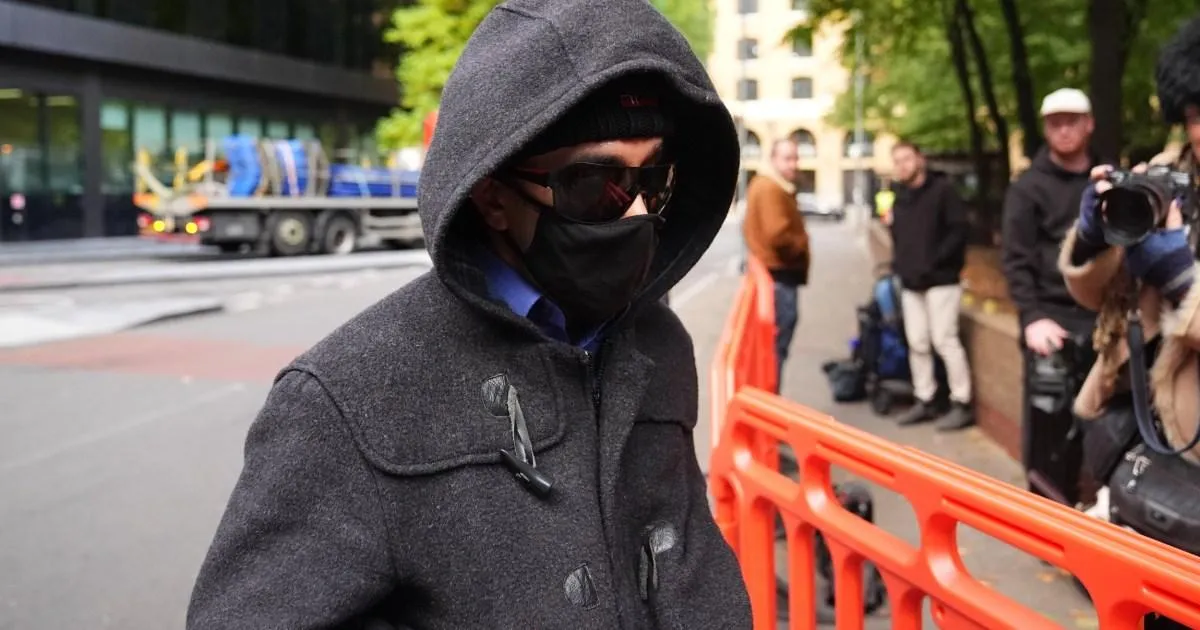
In a courtroom in Southwark, London, a quiet, middle-aged civil servant is standing trial for what could be the most ambitious work-from-home story ever told. Kashim Chowdhury, 55, from Whitechapel in east London, is accused of turning remote working into something far beyond a way of avoiding the daily commute. Between February 2020 and September 2023, prosecutors say, he collected salaries from eight different employers, earning nearly £350,000 while allegedly failing to tell any of them that he was already busy working full-time somewhere else. At one point, the court heard, his contractual obligations added up to seven and a half days a week. The image is hard to shake: a man trying to compress two lives, five jobs, and seven and a half working days into a single body. Prosecutor Lucy Organ told jurors that he made false representations about his existing employment when he applied for the roles, and that no employer would have hired him had they known the truth. Chowdhury denies nine counts of fraud and has pleaded not guilty. The case has rightly attracted attention because it feels both absurd and painfully contemporary. It is absurd because of the obvious impossibility of working that much; contemporary because it grew out of the pandemic-era trust in remote work, when managers often saw only a face on a screen, if that. For the moment, the defendant is presumed innocent. But the details already paint a portrait of someone who may have believed he could manage the unmanageable, one meeting, one sick note, and one discreet video call at a time.
The timeline revealed to jurors reads like a strange administrative fever dream. Chowdhury began working for Tower Hamlets Council in February 2020, before the first national lockdown changed the rhythm of office life. In April 2021, he took on a second job with the Department for Environment, Food and Rural Affairs, known as Defra. For more than a year, those two full-time roles overlapped. Then, in 2022, he added a third position with East London NHS Trust, which he held for four months. After leaving the council, the story did not slow down; prosecutors say he continued working for Defra while also gaining posts at the Department of Health and Social Care, the UK Health Security Agency, the Department for Business and Trade, the Food Standards Agency, and eventually the Home Office. By May 2023, he was allegedly being paid for five full-time jobs at the same time. It is the kind of schedule that would crush even the most energetic person, and it raises an obvious question: how could so many public bodies fail to notice that one man was working around the clock for the state? The court heard that Chowdhury allegedly lied on his applications, never telling employers about his other roles. “Clearly, he would not have been employed by his employers if they had known he had multiple other full-time jobs,” Organ told the jury. Each organisation may have thought it had a dedicated, reliable civil servant. In reality, according to the prosecution, it had one member of a one-man staffing agency, quietly juggling meetings, deadlines, and responsibilities across the government machine.
The logistics of such a double life are almost impossible to imagine, but the prosecution offered a breakdown of how it was allegedly done. Chowdhury is said to have told employers that he needed to work from home because he was caring for his “unwell” mother. In the work-from-home culture that flourished after the pandemic, that excuse would have sounded reasonable, even admirable. But the strain of maintaining so many roles eventually became overwhelming. Ms Organ told jurors that his workload grew “too much to cope with,” and his performance in several jobs suffered. Then came the sick notes. The court heard that he was signed off from some positions with a diagnosis of “mixed anxiety and a depressive disorder.” That diagnosis sits uncomfortably alongside the rest of the story: it is both a real psychological condition and, in this context, a possible tool for fraud. According to the prosecution, Chowdhury did not hand his sick note to all his employers. He could be off work in one job while continuing to log in and be paid for another. The sick note, designed to protect workers who are genuinely struggling, became a way of buying time and space. It is not hard to feel a flicker of sympathy for anyone suffering from anxiety and depression, and if his account of events is accepted, he was a man under enormous pressure. But the prosecution’s case is that this was no unfortunate breakdown; it was a calculated strategy. The image that emerges is of someone drowning in obligations he had created for himself, yet still refusing to let go. He was not just selling his time to the highest bidder; he was trying to sell the same hours over and over again, to different parts of the same employer, the state.
Then came the moment that prosecutors say the mask literally slipped. In May 2023, Chowdhury’s manager at the UK Health Security Agency, Aleesha Adams, arranged a video call to talk about his recent sick leave. At that time, prosecutors say, he was secretly holding down five jobs. When the call began, Chowdhury appeared on camera coughing and blowing his nose, doing his best to look ill. But Adams noticed something odd. His face appeared white, while his neck was a noticeably different colour. During the meeting, she saw the make-up on his forehead begin to separate, revealing his real skin underneath. It was, in the words of Ms Organ, “almost laughable.” The prosecutor told jurors that there could be no doubt he had applied make-up to his face for the Teams meeting, trying to convince his line manager that he was unwell. If the story feels like something from a comedy, it also has a darker edge: it shows how far he was allegedly willing to go to keep his deception alive. As if the make-up were not enough, he also made a second mistake. He logged into the call using a Defra email address, and when Adams asked about it, he claimed it could be an old address. The prosecution says that was a lie, an attempt to hide the fact that he was actively working for another government department while supposed to be off sick from this one. The image of a man in his fifties, wearing foundation on a video call, trying to appear pale and unwell, is unforgettable. It is also a perfect metaphor for the whole case: a carefully constructed surface, cracking under the strain.
The end came not because of a single suspicious manager, but because of the quiet machinery of anti-fraud systems. The court heard that the alleged frauds were eventually uncovered after the National Fraud Initiative, which helps public sector bodies identify financial wrongdoing, alerted Defra. Once that alarm was raised, the details began to pile up. Ms Organ told jurors that, between March 2020 and September 2023, more than £300,000 in credits flowed into Chowdhury’s three bank accounts, while nearly £250,000 was paid out. The financial sums tell their own story, but the legal case rests on a simpler accusation: that he obtained employment and wages dishonestly by making false representations. Chowdhury denies all nine counts of fraud, and his trial at Southwark Crown Court continues. The jurors have heard a remarkable narrative of audacity and invention, but they have not yet heard the full defence. It is possible that the reality is more complicated than the prosecution’s tidy story of greed. Perhaps he was genuinely struggling with mental health, overcommitted and unable to say no. Perhaps he believed, as many people do in the remote work era, that output mattered more than hours. But the prosecution paints him as a deliberate deceiver, a man who used every tool available to him, including illness and the trust of colleagues, to take money he did not earn. Whatever the jury decides, the case has already become a cautionary tale about the vulnerabilities in a system built on remote work and mutual trust.
This story is not just about one man’s alleged wrongdoing; it is also about the strange new world of employment that the pandemic created. Working from home gave millions of people flexibility, freedom, and a better quality of life. But it also opened doors for those who wanted to exploit that flexibility. The case raises uncomfortable questions for every employer who relies on video calls and email updates rather than seeing workers at their desks. How could a contracted week of seven and a half days exist without anyone noticing? Why did no one check his email address or question his repeated absences? How many other people, in offices or kitchens around the country, are doing the same thing, quietly collecting a salary while pretending to work one job? At the same time, there is a human tragedy buried under the absurd details. There is something sad about a man who felt the need to wear make-up to a video call, or who signed himself off sick so he could work somewhere else. If the prosecution is right, he was trapped in a lie of his own making, unable to stop even as the walls closed in. If he is innocent, he has been forced to sit in court while strangers laugh at his expense. The jurors will decide where the truth lies, and the trial continues. But in the meantime, his case has become a powerful reminder that remote work, for all its benefits, depends on a fragile currency of trust. When that trust is broken, it damages not only careers, but the culture that allows millions of people to work from home in the first place. Kashim Chowdhury’s strange tale, with its white make-up and overlapping contracts, will be remembered long after the verdict is read, as a symbol of what can happen when the boundaries between work and life dissolve entirely.