


The community of Millwall in east London is currently gripped by a profound sense of shock and sorrow following the tragic death of 14-year-old Banta Sillah. Just days after the talented young footballer drowned while swimming in the Millwall Outer Dock, the site has become a place of mourning, marked by floral tributes left by grieving friends and family. Banta, who had recently helped his team, Frontline Community FC, win the Tower Hamlets Cup, has been remembered as a wonderful, family-oriented boy with immense potential. His sudden passing has left his loved ones devastated, particularly his mother, who is currently caring for a newborn.
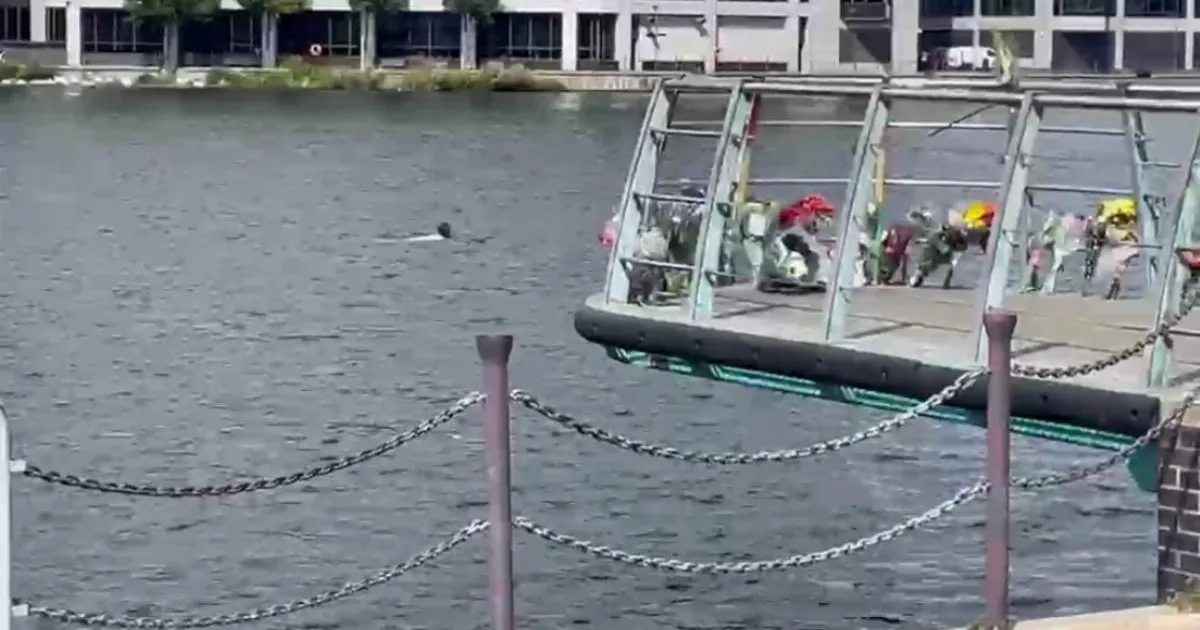
In an unsettling development, the tragedy was punctuated this week by the actions of a man who was seen swimming in the very same dock where Banta lost his life. Onlookers watched in disbelief as the man jumped over a railing and began doing breaststroke near the jetty where the tributes were laid. For many locals, the sight was a painful example of the “idiocy” that persists despite clear warnings. One dog walker expressed the frustration of the neighborhood, noting that while residents frequently report illegal swimming in the area, little action is ever taken to deter those who treat the deep, treacherous water as a recreational pool.
When confronted by reporters, the swimmer claimed he was entirely unaware of the tragedy that had unfolded just forty-eight hours prior. He insisted that he would never have entered the water had he known a child had recently died there, and he expressed his regret, noting that the incident might have appeared as a deliberate statement when it was, in fact, an accident of ignorance. While he acknowledged the danger posed by the deep water, he suggested that the site is in desperate need of official supervision, such as a dedicated lifeguard, to prevent further loss of life.
The dock’s status as an unofficial, yet dangerous, swimming spot has sparked a wider conversation about safety and responsibility in the wake of the heatwave. Long-time residents have pointed out that the area was once patrolled by council-funded wardens, a practice that has since been scrapped. The current signage, which clearly labels the site as a “no-swimming” zone due to the hazards of deep water, appears insufficient to curb the behavior of those looking to cool off. The debate continues to rage between those who believe it is a matter of personal responsibility and those who feel the local council must do more to secure dangerous public waters.
Local leadership has responded with deep empathy and firm warnings. Mayor Lutfur Rahman described the boy’s death as “heartbreaking,” emphasizing the need for families to have urgent conversations with their children about the lethal realities of open-water swimming. He echoed the sentiments of police officials, urging the public to stick to designated, lifeguarded swimming areas rather than risking their lives in urban waterways. The council, meanwhile, has committed to providing support to Banta’s family as they navigate the unimaginable pain of burying a child who was such a vibrant part of their community.
As police continue their inquiries into the incident, the tragedy serves as a grim reminder of the unpredictable nature of open water. Detective Superintendent Oliver Richter has reiterated that while the death is not being treated as suspicious, it is a stark warning to the public to stay vigilant during periods of warm weather. For the people of Millwall, the events of this week have been a traumatic collision of recklessness and grief. The community remains in mourning, hoping that the loss of a young, promising life will finally prompt the necessary changes to ensure that no other family has to endure such a senseless tragedy in the future.