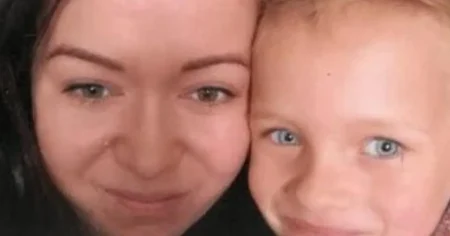



For nearly three decades, the disappearance of Patricia Lashley was a wound that never healed—a mystery that haunted her seven children, her extended family, and the close-knit community of Dudley in the West Midlands. Patricia, a mother of seven who was known affectionately to those who loved her as Pat or Jade, was last seen near her home on Hall Street in September 1998. She simply vanished, leaving behind a life that had touched many corners of the United Kingdom, with ties to London, Wales, Newcastle, and Scotland, and a trail of questions that no one seemed able to answer. For years, her family endured the agonizing uncertainty of not knowing whether she was alive, whether she had chosen to leave, or whether something far more sinister had occurred. Then, in a quiet courtroom at Wolverhampton Crown Court, the truth finally began to emerge in the most painful way imaginable. Trevor Dunkley, a 66-year-old man who police believe knew Patricia, stood in the dock and admitted to murdering her. He also pleaded guilty to preventing her lawful burial. As the court heard those words, Patricia’s relatives watched from the public gallery, their decades of waiting colliding with a reality that was both devastating and, in some strange way, a form of release. The confession, made during a police interview, had finally brought the case to a resolution—but it also opened a door onto a grim and deeply unsettling chapter that had remained hidden for almost thirty years.
The details of what happened to Patricia Lashley were laid bare in court with chilling clarity, and they painted a picture of a death that had been deliberately concealed in the most callous way. Dunkley’s own barrister, Balbir Singh, told Judge Michael Chambers KC that Patricia’s body had been placed into the cellar of a property after she was killed. There, in the darkness and damp, her remains decomposed over time, hidden from the world and from the family who desperately wanted to find her. Then, somewhere between nine months and a year after the murder, Dunkley moved the remains again—this time disposing of the skeleton in bins, as though she were nothing more than refuse. The court was told that the body had never been recovered, and the judge directly asked whether Patricia’s remains had been found. The answer was a stark and sorrowful “no.” For Patricia’s family, this revelation must have been almost unbearable. To lose a mother, a sister, a daughter, and to spend years not knowing what had happened is a torment in itself. But to learn that her body had been hidden in a cellar and then thrown away like rubbish adds a layer of indignity to an already tragic story. The charges admitted by Dunkley covered a period between September 22 and September 28, 1998, meaning the murder occurred within days of her disappearance. The confession, according to his barrister, came at a time when there was no real evidence of what had happened—suggesting that Dunkley chose to unburden himself of this secret after years of carrying it, perhaps driven by guilt, perhaps by something else entirely.
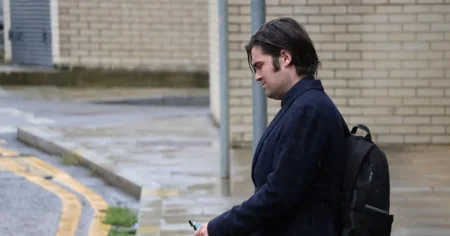
In the courtroom, the emotional weight of the moment was palpable. Dunkley, described as wearing round-rimmed glasses and a grey sweater, showed no emotion as the guilty pleas were entered. He stood in the dock, a man whose ordinary appearance belied the extraordinary and horrific acts he had admitted to. His lack of visible feeling stood in stark contrast to the quiet grief and tension emanating from the family members who had come to see justice finally take its course. Several members of Patricia’s family were present, their presence a testament to the enduring love they still held for her after all these years. They watched as Judge Michael Chambers KC addressed Dunkley directly, acknowledging the gravity of what had just occurred. In a moment that must have resonated deeply with those who had waited so long, the judge told Dunkley that he had shown “courage” in pleading guilty. It was an unusual and striking choice of words—courage, after so many years of silence, after hiding a body, after allowing a family to suffer in uncertainty for nearly three decades. But perhaps the judge was acknowledging that, by finally admitting the truth, Dunkley had spared the family the further ordeal of a lengthy trial, with all its painful evidence and cross-examination. The guilty plea meant that Patricia’s family would not have to sit through weeks of testimony, reliving the details of her death in public. It meant that they could begin the process of mourning, knowing that the person responsible had been held accountable, even if the full truth of what happened may never be known.
Patricia Lashley was more than just a name in a court report or a case number in a police file. She was a woman with a rich and complicated life, a mother of seven children who loved her and who have carried her memory with them through the years. She was known by many names—Pat, Jade, Vanessa, Tricia, and sometimes the surname Bradford—reflecting a life that had taken her to different parts of the country and connected her to different communities. She had links to London, Wales, Newcastle, and Scotland, and she was described as someone who was known locally in Dudley, where she lived on Hall Street. The fact that she used multiple names suggests a life that may have been marked by complexity, perhaps by movement, perhaps by challenges that many of us cannot fully understand. But none of that diminishes the fundamental tragedy of her death. She was a human being, a mother, a woman with her own story, her own dreams, and her own struggles. And she deserved to live her life without being murdered and hidden away in a cellar. Her family, who have waited since September 1998 for answers, have had to endure not only the loss of Patricia but also the anguish of not being able to lay her to rest. There is no grave to visit, no place where they can go to feel close to her, no physical marker of her life and death. Instead, they have only memories and the knowledge that, somewhere, her remains were discarded in bins, never to be found. That is a particularly cruel form of grief, one that denies the family the rituals of mourning that so many of us take for granted.
The legal proceedings now move toward their conclusion, but the journey to justice has been long and winding. Dunkley has been remanded in custody and will be sentenced on November 6, a date that will mark the end of one chapter and the beginning of another for Patricia’s family. The judge has made clear that the sentence for murder is life imprisonment, and he will be required to set a minimum term that Dunkley must serve before the Parole Board can even consider his release. A pre-sentence report has been ordered, and Dunkley was told that it is in his interests to cooperate with its preparation. For a man of 66, a life sentence is a significant punishment, but it can never undo the harm he has caused. It cannot bring Patricia back, and it cannot give her family the closure they so desperately deserve. The judge’s words to Dunkley—acknowledging his courage in pleading guilty and promising appropriate credit for that plea—suggest that the court will take his admission into account when determining the minimum term. But even with that credit, the reality is that Dunkley will likely spend the rest of his life in prison, a fate that, while just, feels hollow in the face of such a profound loss. Patricia’s family, who have shown remarkable strength throughout this ordeal, will have to live with the knowledge that their mother’s killer was finally brought to justice, but that the full story of her final moments may remain forever shrouded in mystery.
As the courtroom emptied and the reality of the day’s events settled in, there was a sense that something important had been achieved, even amid the sadness. For almost thirty years, Patricia Lashley’s family had been trapped in a limbo of unanswered questions, waiting for a phone call, a letter, a confession, anything that would tell them what had happened to their beloved mother. On this day, they finally got an answer—a painful, brutal, and heartbreaking answer, but an answer nonetheless. The man who took Patricia’s life and then tried to erase every trace of her existence has now admitted his guilt, and in doing so, he has given her family the only justice they are ever likely to receive. The community of Dudley, too, will feel the weight of this resolution. A mystery that has lingered over the town for decades has been solved, but it brings no comfort, only a confirmation of the worst fears that many must have harbored. In the end, this story is not just about a crime and a punishment. It is about the enduring love of a family who never gave up hope, who kept Patricia’s memory alive, and who showed up in court to face the man who took her away from them. It is about the fragility of life and the cruelty that can exist in the human heart. And it is a reminder that, even when justice is delayed, it can still arrive—though it can never fully heal the wounds that were inflicted so many years ago. Patricia Lashley may never have a proper grave, but her name will not be forgotten, and her family will carry her with them always, holding onto the love that no crime can ever destroy.